Top Trusted LED High Lumen Wall Light Supplier & Exporter

Global Industrial Whitepaper: High-Resilience Photometric Systems, Advanced Optical Integration, & Strategic OEM/ODM Capacity

High Lumen Industrial & Commercial Luminaires

Explore our top-tier engineering solutions, featuring industry-leading lumen efficiency, waterproof configurations, and intelligent controllers built for extreme environments.

1. The Global Landscape of High Lumen Wall Lighting

In modern architectural planning and heavy industrial design, the strategic installation of structural luminaires has shifted from simple illumination to complex environmental control. High lumen LED wall lights represent the apex of this paradigm shift. Throughout global commercial construction, logistics nodes, and heavy manufacturing sites, these specialized lighting fixtures are expected to perform continuously under highly unstable operational parameters.

Current macroeconomic projections highlight a dramatic surge in demand for outdoor structural LED systems. Urban modernization projects across Europe and North America call for low-glare, high-efficacy systems that integrate cleanly with intelligent building management networks. Concurrently, rapid industrial expansion in Southeast Asia and the Middle East demands ruggedized, highly efficient lighting that can endure extreme ambient heat, dynamic humidity levels, and structural vibrations. By replacing inefficient high-pressure sodium (HPS) and metal halide fixtures with advanced solid-state LED systems, international enterprises achieve substantial reductions in operational energy consumption while meeting strict net-zero targets.

"The transition to high-lumen, solid-state luminaires is no longer just an energy-saving update; it is now a critical step in building intelligent, resilient industrial infrastructure."

Understanding the precise visual and environmental needs of complex working spaces is key to optimizing layout efficiency. Industrial operators are increasingly recognizing the impact of light quality on employee alertness, accuracy, and overall safety. A high lumen wall light must deliver uniform lux levels across horizontal and vertical tasks, eliminating dark zones and minimizing harsh shadows. Modern lighting schemes rely on precise optical design—using specialized refractors and targeted beam shaping—to project light exactly where it is needed, preventing light spill and reducing skyglow.

Furthermore, the financial impact of maintenance downtime in modern high-throughput environments makes luminaire reliability highly critical. When a lighting fixture fails in a busy automated sorting center, a heavy marine engine yard, or a chemical processing plant, the cost of replacing it goes far beyond the price of the hardware. It involves renting specialized lifting gear, stopping production lines, and redirecting maintenance teams. Therefore, global sourcing managers prioritize buying from verified manufacturers who can prove their build quality with certified testing data.

3,000,000+
Annual Production Capacity (Sets)
$100M+
Annual Sales Turnover (USD)
190 Lm/W
Maximum Luminous Efficacy
38 KM
Proximity to Ningbo Shipping Port

To achieve high lumen output that stays stable over decades of operation, engineers must balance thermal management, drive electronics, and optical design. An LED emitter is naturally a heat-sensitive semiconductor; its light output and operating lifespan drop significantly if its junction temperature exceeds design limits. Our R&D center addresses this challenge by designing custom heatsinks using high-grade ADC12 die-cast aluminum, which features excellent thermal conductivity. By pairing these heatsinks with advanced thermal interface materials, we keep internal operating temperatures well below safety limits even in hot, non-ventilated spaces.

Equally important is the driver technology that powers these high-lumen systems. Rapid fluctuations in line voltage, high-energy surges, and electromagnetic interference can quickly degrade standard driver circuits. Our engineering team integrates high-reliability driver units that feature robust built-in surge protection (up to 6kV/10kV), active power factor correction (PFC > 0.95), and extremely low total harmonic distortion (THD < 15%). These advanced electrical safeties ensure that our luminaires run smoothly on unstable power grids without causing interference in sensitive diagnostic or communications equipment.

2. Engineering Resilient Luminaires & Optical Science

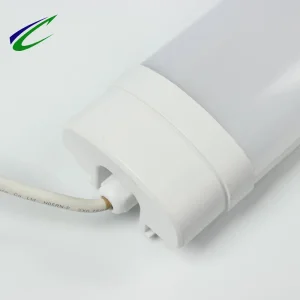
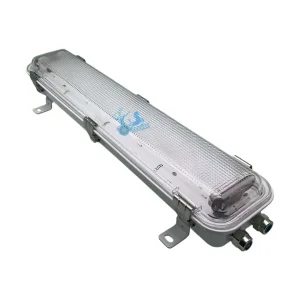
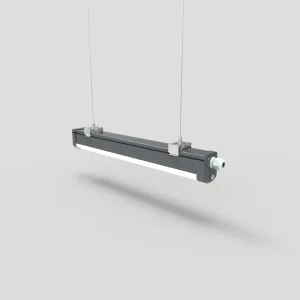
Our company specializes in developing and manufacturing high-durability IP66 and IP65 Tri-proof lighting fixtures, as well as indoor and outdoor ceiling systems. We focus on scientific management, guided by our core values: "Credit from Sincerity, Business from Quality, People First". By combining continuous technological innovation with advanced automated production, we deliver highly reliable lighting systems to the global market.

To maintain strict quality control, we operate an independent, in-house tooling and testing facility. Our specialized laboratory is equipped with a darkroom, integrating sphere spectrometers, goniophotometers, and automated IP waterproof testing setups. Every new design undergoes rigorous testing to verify luminous efficacy, color consistency, light distribution patterns, and long-term waterproof seal reliability.

3. Vertically Integrated Manufacturing: The Chinese Factory Edge

The Chinese manufacturing sector has evolved far beyond simple assembly operations. Today, it stands as a world-class model of integrated supply chains, advanced production technologies, and logistics efficiency. At the center of this industrial ecosystem is our state-of-the-art facility, where we control every stage of manufacturing—from initial raw materials to finished, high-performance luminaires.

In-House Injection & Compression Molding

Unlike factories that outsource their components, we operate our own injection molding, blister forming, and compression molding workshops. This complete in-house control allows us to manufacture custom enclosures of varying lengths, shapes, and materials (including premium polycarbonate, PMMA, and ABS) while maintaining strict quality standards and keeping production costs highly competitive.

Fast-Track OEM/ODM Customization

Backed by a dedicated R&D engineering team, we rapidly turn client drawings and reference samples into functional prototypes. This direct control over tooling and optical development enables us to adjust light distribution patterns, modify driver housings, and customize mounting brackets to meet specific project demands without long design delays.

Strategic Port Proximity & Logistics

Located just 38 kilometers from Ningbo Port, our facility provides a major logistical advantage for international shipments. This close proximity minimizes inland transit times, lowers domestic freight costs, and protects delicate electronic shipments from unnecessary handling, ensuring reliable and efficient delivery to our global partners.

4. Localization Blueprints: Multi-Scenario Engineering

High lumen LED wall lights and tri-proof systems must be tailored to the specific environmental challenges of each location. A fixture designed for a clean commercial space will quickly fail if installed in a corrosive chemical plant or an offshore platform. Our IP66 and IP65 systems are engineered with specialized materials and seals to ensure long-term performance across a wide range of demanding environments:

  • Industrial Processing & Food Grade Sanitation: Designed for chemical storage facilities, bakeries, commercial kitchens, and cleanrooms. These environments require housings that can withstand high-pressure washdowns, acidic sanitizers, and airborne grease without losing seal integrity.
  • Marine & Offshore Environments: Built for engine rooms, vessel decks, and offshore drilling platforms. These areas require robust IK10 impact resistance, explosion-proof construction, and specialized coatings to prevent corrosion from saltwater exposure.
  • Public Infrastructure & Transit Networks: Ideal for subways, train stations, tunnels, and underground parking garages. These locations require 24/7 continuous operation, high dust protection, and reliable emergency battery backups.

From sub-zero cold storage facilities to high-temperature production floors, our customized optical packages deliver consistent, reliable lighting where safety and performance are critical.

In public transit and infrastructure applications, light fixtures must also resist vandalism and accidental impacts. Our polycarbonate housings are rated for IK10 mechanical impact protection, ensuring they can absorb heavy physical blows without exposing live electrical parts. The dustproof design prevents ambient dirt and brake dust from building up inside the fixture, preserving thermal efficiency and light output over years of continuous service.

For cold-storage warehouses and outdoor areas in extreme climates, we engineer our fixtures with specialized gaskets and driver components that remain flexible and functional at temperatures as low as -30°C. This prevents the seals from cracking and leaking when subjected to rapid temperature changes, ensuring reliable operation in the most demanding conditions.

5. Global B2B Procurement Paradigms and Architectural Trends

The global B2B procurement landscape for commercial and industrial lighting is shifting focus from initial purchase price to total cost of ownership (TCO) and environmental sustainability. Modern procurement managers, working under corporate ESG mandates, now require products that offer high efficiency, ease of maintenance, and fully documented safety compliance. They seek manufacturing partners who can provide verified environmental product declarations (EPDs) alongside standard safety certifications.

To meet these demanding compliance standards, our manufacturing operations are fully certified under the BSCI social audit standard and the ISO9001:2000 quality management system. Our product lines carry recognized international safety and performance marks, including TUV GS, CE, ROHS, LVD, EMC, and SAA. These certifications ensure our clients can import and install our systems on major commercial projects worldwide without regulatory delays or safety concerns.

Looking forward, the integration of smart building technologies is shaping the future of industrial lighting. Modern facilities require luminaires that can communicate with building automation networks to optimize energy use. Our R&D team is meeting this demand by developing smart, connected lighting systems featuring integrated motion sensors, daylight harvesting controllers, wireless WiFi app management, and multi-CCT tuning. These features allow operators to adjust light levels and color temperatures to match changing facility needs, significantly reducing energy consumption while improving occupant comfort.

6. Engineering FAQ for Procurement Directors

Get expert answers to common questions about choosing, installing, and maintaining high-lumen, high-durability LED lighting systems in demanding industrial environments.

Q1: What defines a "high lumen" LED wall light, and how does it prevent optical degradation over time?
A high lumen LED wall light is defined by its ability to deliver high luminous efficacy (typically over 140 lm/W to 190 lm/W) at high operating currents. To prevent early light loss and color shifts, we mount our LED chips on highly conductive metal-core PCBs and use die-cast aluminum housings for efficient heat dissipation. This design keeps the LED junction temperature low, ensuring the system maintains at least 90% of its initial light output (L90) over a 50,000-hour operating lifespan.
Q2: How does the difference between IP65 and IP66 ratings impact installation in industrial zones?
IP65 rated fixtures are protected against dust entry and low-pressure water sprays from any direction, making them suitable for standard outdoor areas and washdown bays. IP66 rated fixtures provide a tighter seal, protecting internal components against high-pressure water jets and heavy seas. For extreme installations like offshore platforms, ship engine rooms, or chemical washdown zones, we recommend IP66 or IP68 rated fixtures to prevent moisture ingress and internal component damage.
Q3: Why is in-house plastic and mold production critical for product quality?
Operating our own injection molding and tooling workshops allows us to monitor and control every step of the plastic fabrication process. We can verify raw material purity, adjust molding parameters, and control wall thickness to prevent warping and internal stresses. This level of quality control ensures our polycarbonate and PMMA diffusers maintain high impact resistance and optical clarity, resisting yellowing and cracking even under prolonged exposure to UV radiation and industrial chemicals.
Q4: How do custom aluminum linear LED channels help manage thermal performance?
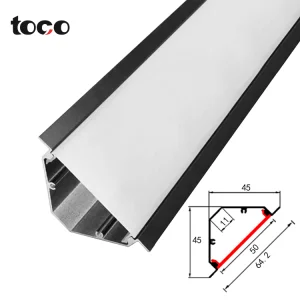
Aluminum profiles act as structural mounting elements and highly effective thermal conductors. By mounting LED light strips directly within specialized aluminum channels, heat is transferred quickly away from the delicate LED chips and dissipated into the surrounding air. This thermal management prevents hot spots, helps maintain uniform light output along the entire length of the fixture, and extends the operational lifespan of the light source.
Q5: What certifications are required for importing lighting fixtures into the European and Australian markets?
For entry into the European Union, products must carry the CE mark, which requires compliance with the RoHS, LVD, and EMC directives. TUV GS certification provides an additional layer of independent safety verification. For the Australian and New Zealand markets, products must carry the SAA safety mark and meet local wiring and energy efficiency standards. Our product lines are fully tested and certified under these international programs to ensure smooth import and installation.
Q6: How does proximity to Ningbo Port improve delivery times and lower shipping costs?
Our facility is located just 38 kilometers from Ningbo Port, one of the world's largest container shipping hubs. This close proximity allows us to load containers at our factory and transfer them to the shipping terminal within hours. This direct connection reduces domestic transport fees, avoids transit delays at intermediate warehouses, and minimizes handling, ensuring safe and reliable delivery to our global distribution partners.
Q7: Can your tri-proof lights withstand corrosive environments like salt air or chemical processing plants?
Yes, our specialized tri-proof lights are engineered for corrosive environments. We use chemical-resistant plastics, stainless steel mounting clips, and anti-corrosion exterior coatings. These materials prevent the housing from degrade and cracking when exposed to salt-laden sea air, alkaline cleaning agents, or airborne acids in chemical storage and industrial processing facilities.
Q8: How do smart controls like motion sensors and WiFi dimming improve system efficiency?
Smart controls allow the lighting system to adjust automatically to changing occupancy and natural light levels. Integrated motion sensors dim or turn off fixtures in unoccupied zones, while daylight sensors adjust light output to match incoming sunlight. Adding WiFi and network control enables facility managers to schedule operating times, monitor energy consumption, and adjust color temperatures (CCT) remotely, reducing total energy use by up to 60% compared to standard, uncontrolled lighting systems.