Executive Summary: The Evolution of Beam-Adjustable Downlighting
In contemporary architectural design, spatial configurations dictate the light layout, rather than physical luminaires imposing limits on space. Historically, specifiers and contractors had to stock multiple downlights with fixed beam angles (15°, 24°, 36°, or 60°) to fulfill distinct illumination tasks like task-focused spot lighting, generic ambient lighting, or artwork accenting.
Optimizing Spatial Versatility
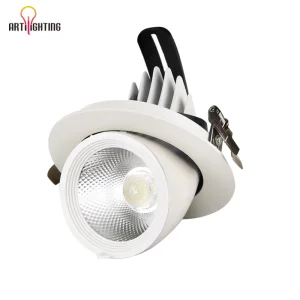
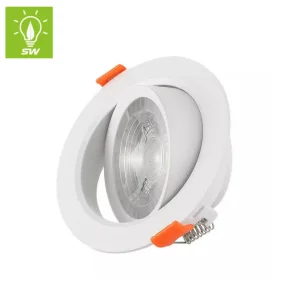
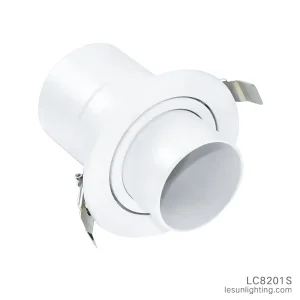
By utilizing adjustable beam angle down lights, architects can adjust the light spread post-installation. Optical mechanical systems within the luminaires enable seamless focus manipulation, facilitating simple onsite customization without requiring physical disassembly.
This mitigates common challenges related to layout modifications, repositioning of furniture, or updates to retail displays, helping lighting designers preserve spatial integrity over the lifespan of a building.
Dynamic Optical Innovations
Our dual-lens mechanics and COB (Chip-on-Board) technologies deliver smooth transitions across varying beam distributions, minimizing light spill and keeping glare below recommended thresholds (UGR < 19 or UGR < 7 for anti-glare lines).
Integrating tunable color temperatures (5CCT technology) with physical beam adjustment provides a single product variant that meets diverse indoor and outdoor illumination criteria.
Macro-Industry Lighting Solutions
Different commercial sectors require tailored lighting setups. Our variable-focus downlights are engineered to adapt to these technical requirements across primary industries.
Luxury Retail & Galleries
High-end boutiques and museum displays require high color fidelity (CRI > 90 or CRI > 96) and localized focus control.
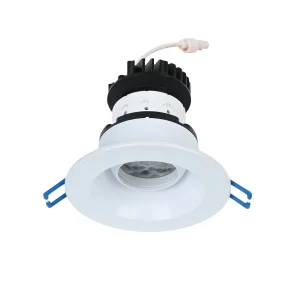
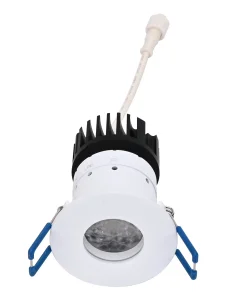
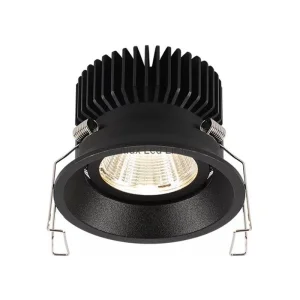
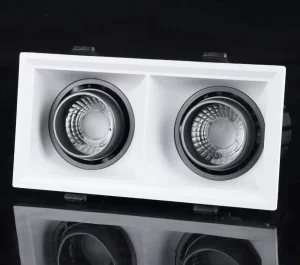
Our mini adjustable downlights project defined beams onto products or artwork, avoiding unnecessary glare or light spillage into walkways. This highlights textures and colors to optimize visual presentation.
High-End Hospitality
Hotels require customizable lighting profiles that support shifts from vibrant daytime configurations to intimate evening settings.
With dimmable drivers (including DALI-2, 0-10V, and Phase-Cut configurations) coupled with adjustable mechanical apertures, hotels can transition from accentuating architectural details to delivering soft, diffuse ambient light across common spaces.
Commercial Office Environments
Modern workplace design prioritizes employee comfort and productivity. Low-UGR fixtures with dynamic, adjustable distributions can be calibrated to target desks, pathways, or meeting areas.
This minimizes screen reflections and ocular strain, supporting green building certification systems like LEED and WELL.
Global Commercial & Industrial Market Status
The international lighting market is moving quickly toward decarbonization, material efficiency, and modular field-adjustable luminaires. Compliance protocols, including the European Eco-Design Directive and energy consumption thresholds in North America, have accelerated this technological shift.
Logistical and Warehousing Cost Reductions
Distributors and installers traditionally managed large inventories of fixed-angle luminaires. By transitioning to adjustable beam designs, companies can standardize their stock, significantly reducing warehousing footprints and mitigating capital tied up in slow-moving product variations.
Sustainable Building Lifecycles
As tenants move or office configurations change, fixed lights are often discarded, creating e-waste. Dynamic downlights allow spaces to adapt without replacing physical infrastructure. Simply adjusting the luminaire’s lens settings matches the new spatial layout, cutting waste and supporting circular economy initiatives.
3,000,000+
Annual Production Capacity (Sets)
100M+
Annual Sales Revenue (RMB/USD)
38 KM
Proximity to Ningbo Deep-water Port
100%
Independent Optical & Mold R&D
Technical Deep Dive: Manufacturing and Testing Capabilities
As a specialized lighting developer and manufacturer, we manage the entire production cycle in-house. Our facilities translate theoretical optoelectronic models into certified structural designs.
In-House Injection & Molding
We run dedicated injection, blister, and compression molding workshops for all lamp housings. This structural control allows us to build thermal sinks and mechanical focus assemblies that sustain precise optical alignment over thousands of adjustment cycles.
Photoelectric & Darkroom Testing
Every new design undergoes evaluation in our integrated darkrooms. We verify spatial intensity layouts using integrating sphere spectrometers, goniophotometers, and advanced colorimetric diagnostic systems.
BSCI & ISO9001 Systems
Our operations adhere to the ISO9001:2000 Quality Management System and are BSCI certified. This guarantees clean supply chains, standard manufacturing pathways, and consistent product quality for bulk orders.
Quality Management and Certification Summary:
We operate under a scientific management approach emphasizing "Credit from Sincerity, Business from Quality, and People First". Our products are engineered and manufactured in compliance with international standards, holding certifications including TUV GS, CE, RoHS, LVD, EMC, and SAA.
Modern lighting must withstand harsh environments. Our robust engineering ensures reliability across locations requiring ingress protection and corrosion resistance.
High-Humidity Spaces
In saunas, commercial kitchens, bathrooms, and swimming pools, ambient moisture and heat degrade typical LED components. Our IP65 and IP66 tri-proof and downlight models utilize moisture-sealed enclosures and silicone gaskets to protect optoelectronics from premature failure.
Sub-Surface & Transit Sites
Subways, tunnels, underground parking garages, and transit corridors require continuous operation in dusty conditions. Our robust dust-tight housings prevent particulate accumulation on internal reflector surfaces, ensuring consistent light output.
Heavy Industrial Facilities
Coal mines, warehouses, manufacturing facilities, and canteens expose lights to vibration, moisture, and dust. Our fixtures are engineered with impact-resistant materials and robust thermal management systems, helping them withstand voltage fluctuations and industrial ambient temperatures.
Geographical Logistics Advantage: Based 38 kilometers from Ningbo Port, we utilize efficient supply lines to ensure prompt worldwide shipping to Europe, North America, Southeast Asia, Australia, and the Middle East.
Technical Roadmap: The Future of Dynamic Beam Control
Our R&D team is continually developing new technologies. We are integrating advanced software, optical systems, and materials to shape the future of smart illumination.
IoT-Enabled Digital Beam Shaping
The industry is moving toward digital control systems that eliminate the need for manual mechanical adjustments.
Our upcoming development models integrate micro-opto-electromechanical systems (MOEMS) and liquid lens technology. These systems enable specifiers to adjust beam spreads remotely via DALI-2 protocols, wireless BLE mesh systems, or automated building management interfaces.
Tunable White & Spectral Fidelity (5CCT)
We are expanding our 5CCT (2700K/3000K/3500K/4000K/5000K) field-switchable selectors.
By combining tunable spectral distribution with variable beam angles, we provide unified downlights capable of mirroring natural circadian cycles, supporting human-centric lighting solutions (HCL) in healthcare, retail, and corporate environments.
Architectural Specifier Q&A
Technical answers to key questions asked by lighting engineers, specifiers, and procurement directors.
How is optical uniformity maintained across the entire focus range?
Our adjustable beam downlights utilize dual-lens optical structures. The primary collimator lens works in tandem with a movable secondary micro-prismatic lens. As the secondary lens shifts relative to the COB chip, it reshapes the wave-front while maintaining a smooth light distribution curve. This prevents center-spot yellowing and minimizes color-over-angle variations, keeping color temperature consistent across the beam.
What dimming protocols are compatible with your adjustable downlights?
We provide dimming solutions to suit various control systems. Our standard specifications support phase-cut (leading/trailing edge), 0-10V, and DALI-2 digital addressing protocols. The dimming drivers are engineered to reduce ripple currents, providing flicker-free dimming down to 1% or 0.1% for broadcast studios and high-speed photography applications.
How does structural thermal management affect the product's lifespan?
Adjustable optical assemblies create insulation layers that can trap heat. We design our housings using die-cast aluminum alloys with high thermal conductivity. The heatsink is modeled in-house using CFD (Computational Fluid Dynamics) software. This keeps junction temperatures below 85°C in ambient environments up to 45°C, ensuring a calculated L80B10 operating life of over 50,000 hours.
Can you customize housing designs for historic building retrofits?
Yes. Our in-house mold R&D center, injection workshops, and compression processes allow us to develop custom mechanical solutions based on client drawings or samples. We can adapt bezel styles, spring clips, and trim shapes to accommodate non-standard ceiling cutouts while maintaining standard performance specifications.
Which IP ratings are recommended for outdoor wall and ceiling installations?
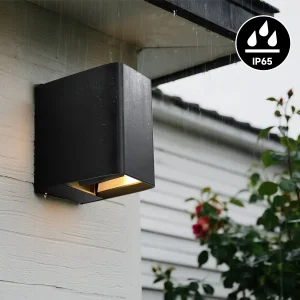
For exposed outdoor locations, we recommend our IP65 or IP66 models, which protect against wind-blown dust and heavy water ingress. For sheltered outdoor applications like building eaves or soffits, our IP44 square downlights offer protection against splashes and moisture while keeping dust out of internal optical chambers.
 Ledlot Lighting