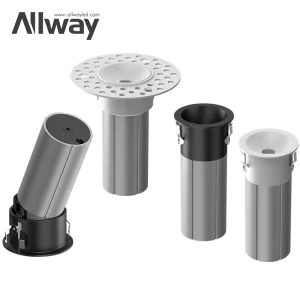
1. The Technology and Evolution of Recessed Architectural Downlighting
The architectural lighting landscape has experienced a monumental paradigm shift over the past decade. Recessed mount downlights, once viewed as simple utility fixtures designed to provide basic ambient illumination, have evolved into highly sophisticated tools essential for spatial design, visual comfort, and functional partitioning. In modern high-end hotels, corporate offices, and luxury residential projects, downlights must integrate seamlessly into structural ceilings while delivering optimized optics, glare reduction, and robust thermal performance.
The shift from traditional halogen and compact fluorescent lamp (CFL) systems to light-emitting diode (LED) configurations has allowed manufacturers to explore advanced packaging architectures. Specifically, Chip-on-Board (COB) packaging technology has become the industry standard for architectural spotlights due to its ability to concentrate a large matrix of LED junctions into a single, compact light-emitting area. This concentrated luminous flux enables precise beam angle management, allowing lighting designers to create dramatic, high-contrast environments with minimal stray light.
"True architectural integration is achieved when the light source itself remains invisible, leaving only the illumination visible. Glare control, chromatic stability, and high color fidelity (CRI Ra ≥ 90) represent the foundational requirements of modern luminaires."
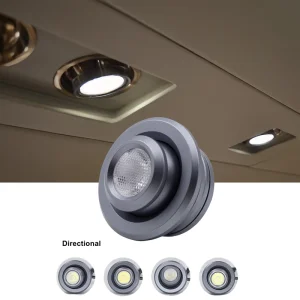
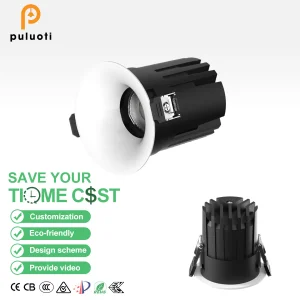
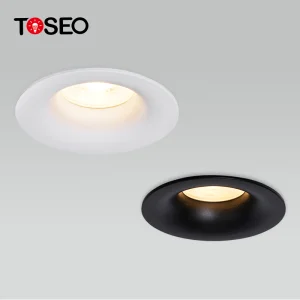
Furthermore, modern optical control systems have advanced beyond basic reflector configurations. Manufacturers now employ multi-faceted reflectors, total internal reflection (TIR) lenses, and anti-glare honeycomb louvers to achieve optimal Unified Glare Ratings (UGR < 19). By deep-regressing the COB source within the aluminum housing and utilizing custom baffle designs, stray light is effectively absorbed, preventing visual discomfort and enhancing biological productivity in commercial applications.
2. Key Mechanical and Optical Sourcing Parameters
For lighting procurement specialists and system integrators, selecting the ideal downlight involves evaluating multiple mechanical, electrical, and thermal variables:
Housing Materials & Thermal Dissipation
Premium downlights utilize aerospace-grade aluminum (such as 6063-T5 die-cast or CNC-machined aluminum) to optimize heat dissipation. High thermal conductivity protects the driver's electrolytic capacitors and maintains low junction temperatures at the LED chip, preventing rapid lumen depreciation.
Ingress Protection (IP Ratings)
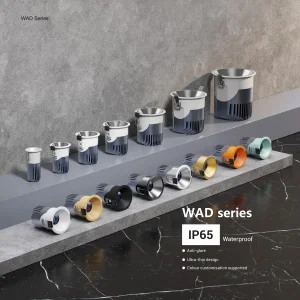
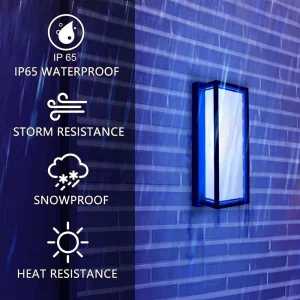
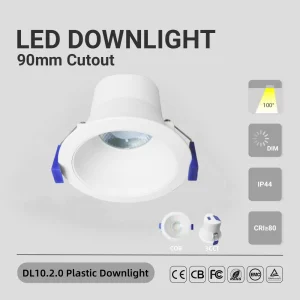
Standard downlights typically carry an IP20 rating. However, macro environments demand high ingress protection. Under wet, steam-rich, or dust-heavy scenarios—such as kitchens, bathrooms, saunas, hospitals, warehouses, and outdoor canopies—fixtures must support IP44, IP65, or IP66 Tri-proof specifications to ensure long-term stability and dust resistance.
Dimming Drivers & System Integration
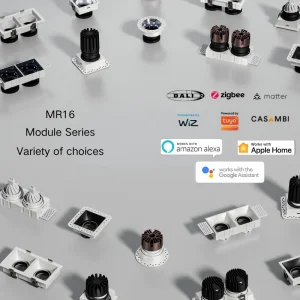
Architectural downlights must support advanced commercial dimming protocols. High-performance projects require flicker-free dimming down to 0.1%, integrating seamlessly with DALI-2, 0-10V, Phase-cut, or wireless smart protocols (Tuya, Zigbee, Apple HomeKit) to adapt illumination dynamically.
To ensure high color fidelity, downlights must exhibit consistent color rendering. The Color Rendering Index (CRI, Ra) measures a light source's ability to reveal the true colors of objects compared to natural daylight. For luxury hotels, retail showcases, and museums, sourcing products with CRI ≥ 95 (and R9 red value > 80) is crucial to preserving the vibrancy of materials, artwork, and interior finishes.
3. China's Manufacturing Powerhouse: Supply Chain Ecosystem & Production Efficiency
China remains the undisputed global hub for LED lighting production, particularly for complex architectural fixtures like adjustable recessed downlights and high-performance Tri-proof luminaires. The concentration of component suppliers, surface-treatment specialists, chip packaging factories, and testing facilities gives Chinese factories an unparalleled competitive advantage in speed-to-market, cost control, and customization capability.
A key pillar of this manufacturing efficiency is vertical integration. Advanced factories do not simply assemble pre-fabricated parts; they control the entire production pipeline. This includes in-house R&D centers, independent mold research and development workshops, and dedicated injection molding, blister molding, and compression molding facilities. Having complete control over the housing processes enables rapid prototyping, allowing custom specifications (such as unique trim dimensions, customized heat sinks, or specialized driver brackets) to move from conceptual drawings to physical golden samples in a fraction of the time required by Western competitors.
"By localizing mold design, die-casting, mechanical assembly, and photoelectric validation within a single ecosystem, manufacturers can optimize production costs while maintaining structural consistency."
Furthermore, logistical infrastructure plays a key role in global supply chain reliability. Modern Chinese manufacturing hubs are strategically positioned near major deep-water ports. For instance, being located just 38 kilometers away from the Ningbo Port provides a massive logistics benefit. Proximity to port facilities dramatically reduces domestic transport times, minimizes handling damage, and lowers shipping rates for volume buyers, ensuring containers are loaded, processed, and dispatched efficiently to European, North American, Australian, and Middle Eastern markets.
High-performance recessed downlights and vapor-proof luminaires are deployed across diverse, demanding settings. System engineers and architects require targeted solutions designed for specific environments:
Harsh Industrial & High-Humidity Zones
Bathrooms, saunas, industrial kitchens, hospitals, and canteens demand robust moisture resistance. Here, heavy-duty IP65/IP66 downlights and Tri-proof fixtures prevent dust and water ingress, ensuring safe operation. In manufacturing settings—such as assembly workshops, bakeries, materials warehouses, and coal mines—rugged, explosion-proof, and dust-resistant housings protect key electrical components.
High-End Hospitality & Art Galleries
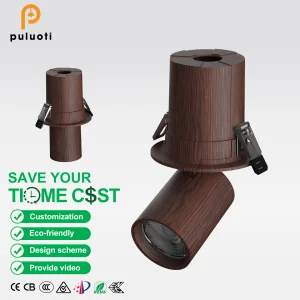
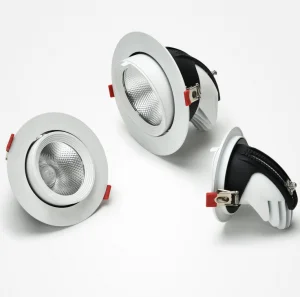
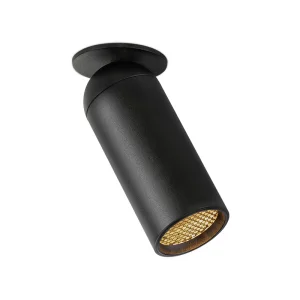
Hotel lobbies, rooms, and corridors require comfortable, low-glare lighting. Precise gimbal downlights with adjustable beam angles allow designers to highlight artwork and architectural features. High CRI values (Ra ≥ 95) and warm color temperatures (2700K - 3500K) create inviting, high-end atmospheres that appeal to guests.
Public Infrastructure & Transport Hubs
In high-traffic areas like subways, tunnels, underground parking structures, river banks, and docks, luminaires must run continuously. These scenarios require robust housing designs that resist ambient vibrations, salt spray, and moisture, ensuring steady performance and reducing maintenance costs.
To satisfy modern commercial safety codes, these fixtures undergo strict fire and thermal safety testing. Materials are evaluated to prevent flame spread, and electrical components feature short-circuit, over-current, and thermal-overload protections. These safeguards ensure downlights operate reliably across commercial, public, and industrial environments.
Ledlot Lighting stands as a high-tech LED enterprise integrating design, development, production, and sales. Focusing on middle-to-high-end global markets, we ensure exceptional quality, manufacturing flexibility, and robust supply chain integration.
3,000,000+
Annual Production Capacity (Sets)
100 Million+
Annual Sales Revenue
38 KM
Proximity to Ningbo Deep-Water Port
100%
In-House Testing & Verification
We operate with a commitment to scientific management: "Credit from Sincerity, Business from Quality, People First". By investing in manufacturing technology and testing infrastructure, we bring advanced design and performance to our global clients.
Our facility features a modern photoelectric testing laboratory, including an independent darkroom, advanced integrating sphere spectrometers, and IP waterproof level testers. These tools allow us to verify critical metrics—such as luminous efficacy, color consistency (SDCM < 3), beam angle accuracy, and thermal performance—under real-world conditions.
Our manufacturing setup features specialized workshops for injection molding, blister molding, and compression molding of lamp housings. This allows us to offer versatile casing options in various lengths, shapes, and materials (polycarbonate, die-cast aluminum, PMMA). This vertical integration helps us optimize production costs, control quality, and respond quickly to custom drawing and sample requests.
Ledlot Lighting is ISO9001:2000 and BSCI certified. Our products comply with CE, ROHS, SAA, TUV GS, LVD, and EMC standards, ensuring reliable safety and performance for international projects.
What are the benefits of choosing COB (Chip-on-Board) LEDs over SMD (Surface Mounted Device) LEDs in recessed downlights?
COB LEDs feature multiple LED chips packaged closely together on a single ceramic or aluminum substrate, creating a unified, high-density light source. This design is ideal for downlights and spotlights, as it allows for precise beam control and high center-beam candlepower (CBCP). SMD LEDs, while highly efficient, scatter light over a wider area, making them better suited for diffuse general illumination. COB arrays deliver clear, single-shadow beams without the multiple shadows common to SMD configurations, which is essential for accent lighting.
How do deep-recessed and honeycomb filter downlights improve Unified Glare Rating (UGR)?
UGR measures glare and visual discomfort in indoor environments. A UGR value below 19 is standard for offices, while premium installations often target UGR < 16. To achieve this, fixtures use deep-recessed designs that set the LED light source back from the ceiling plane, hiding the emitter from direct sightlines. Adding a black honeycomb louver or anti-glare baffle absorbs stray light rays, focusing the beam downward. This minimizes side glare and ensures high visual comfort.
Why are IP65 and IP66 ratings required in humid settings like saunas and kitchens?
Humid spaces contain constant steam, moisture, and dust, which can enter standard IP20 downlights. This can lead to electrical shorts, metal oxidation, and condensation on the lens, reducing performance. IP65 downlights protect against dust and low-pressure water jets, while IP66 fixtures resist high-pressure water spray. Using silicone gaskets, corrosion-resistant housings, and waterproof cable seals prevents moisture ingress, ensuring safe operation in high-humidity areas.
What is the typical shipping lead time, and how does proximity to Ningbo Port benefit buyers?
Typical manufacturing lead times range from 25 to 35 days, depending on order size and customization. Being situated only 38 kilometers from the Ningbo Port provides a substantial logistics advantage. We can transport goods from our factory to the container terminal in under two hours, lowering domestic shipping costs and minimizing transit risks. This proximity allows for quick loading and departures, helping global distributors and contractors meet tight project schedules.
How do custom tooling and in-house molding capabilities support lighting projects?
Architectural projects often require custom modifications, such as unique housing finishes, custom dimensions, or specialized mounting hardware. With our in-house R&D center and injection molding, blister molding, and compression molding setups, we can produce custom tooling directly. This vertical integration allows us to refine designs and produce custom samples quickly, bypassing external tooling suppliers and helping clients speed up project approvals.
What quality testing equipment is used to verify luminaire performance?
We verify the physical and electrical specifications of every production run using state-of-the-art testing equipment. This includes integrating sphere spectrometers for checking luminous flux, CCT, CRI, and spectral distribution; goniophotometers in our darkroom for mapping photometrics and beam distribution; and pressurized water chambers for IP testing. These systems ensure our downlights and Tri-proof fixtures meet international standards before dispatch.
Premium Architectural Downlight & Spotlight Showcase (Group B)
 Ledlot Lighting