Explosion Proof Tri-proof Lighting Factories & Factory

Industrial Safety Engineering: High-Efficiency IP66 & IP65 HazLoc Solid-State Lighting Systems

Global Industrial Status & Explosion Proof Tri-Proof Market

Decoding safety requirements and regulatory forces driving solid-state lighting integration.

The convergence of modern automation, smart factories, and stringent workplace safety mandates has elevated the global demand for specialized lighting. Traditional heavy industries—such as petrochemical refineries, offshore gas drilling rigs, military logistics centers, underground coal mines, and chemical processing facilities—operate within volatile, high-risk environments. In these settings, atmospheric mixtures of flammable gases, volatile vapors, or combustible dust particulates present persistent hazards. The adoption of robust, engineering-grade Explosion Proof Tri-proof Lighting represents a critical safety countermeasure, engineered to prevent internal electrical arcs or thermal energy from triggering external disasters.

Concurrently, the manufacturing landscape is experiencing a regulatory transition. Worldwide safety bodies (including OSHA, CENELEC, and national safety departments) enforce strict compliance under standard frameworks such as the European ATEX directives, the global IECEx system, and North American UL844 classifications. As factories push toward energy conservation and carbon neutrality, legacy lighting systems—such as high-pressure sodium (HPS), metal halide, and conventional fluorescent tubes—are rapidly being phased out. Modern solid-state LED systems are now the standard, offering substantial thermal dissipation benefits, an extended operational life cycle, and reduced energy footprints.

On a macro-economic level, localized application conditions dictate distinct product designs. In the Asia-Pacific region, heavy infrastructure investments in subways, high-speed rail tunnels, and coastal shipping docks drive the consumption of high-ingress-protection, anti-corrosion luminaires. In North America and Europe, the food processing, pharmaceutical, and chemical industries prioritize hygienic compliance and corrosion resistance, driving demand for NSF-compliant materials and chemically inert housings. The ability of specialized manufacturers to customize designs to meet these regional requirements has become a key competitive differentiator.

3,000,000+
Annual Production (Sets)
100M+
Annual Export Sales (RMB)
38 KM
Proximity to Ningbo Port
ISO9001
Quality System Standard

Advanced Engineering & Manufacturing Infrastructure

Our commitment to rigorous testing and vertically integrated production control.

As a leading lighting enterprise specializing in the development, production, and sales of high-performance IP66 and IP65 Tri-proof lights, as well as specialized indoor and outdoor ceiling lamps, we are dedicated to advancing safety technologies. Our operations are guided by our core philosophy: "Credit from Sincerity, Business from Quality, People First". By combining scientific management principles with ongoing research and development, we consistently bring advanced and highly reliable products to the global industrial market.

Our facility features a vertically integrated manufacturing environment designed to maintain product quality and optimize production costs. We operate an independent mold research and development center alongside a dedicated plastic injection molding workshop, blister molding systems, and compression molding capabilities. This enables us to design and manufacture custom enclosures of varying lengths, geometries, and materials (such as polycarbonate, PMMA, and marine-grade stainless steel) to suit diverse industrial applications. By managing our tooling and injection processes in-house, we are able to provide high-quality products at competitive price points.

Precision R&D & Testing

Our facility houses an advanced optical darkroom equipped with integrating sphere spectrometers, goniophotometers, and automated IP65/IP66/IP67 ingress testing equipment. Every lighting module undergoes rigorous testing to verify luminous efficacy, color consistency, and thermal stability in extreme ambient temperatures.

Global Compliance

We maintain comprehensive quality systems, including BSCI certification and ISO9001:2000 compliance. Our export-ready models are certified under major international standards, including TUV GS, CE, ROHS, LVD, and EMC. We continually update our certifications to meet evolving global market requirements.

Efficient Logistics

Located just 38 kilometers from Ningbo Port, our facility benefits from streamlined maritime logistics. This proximity allows for efficient shipping to destinations across Europe, the Americas, Southeast Asia, Australia, the Middle East, and Africa.

Technical Evaluation: Tri-Proof vs. Explosion-Proof Systems

Understanding the distinct engineering principles that differentiate standard industrial protection from hazardous location safety.

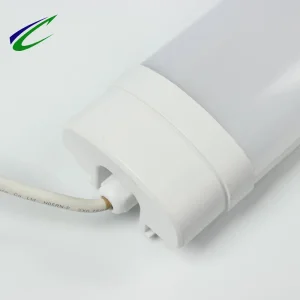
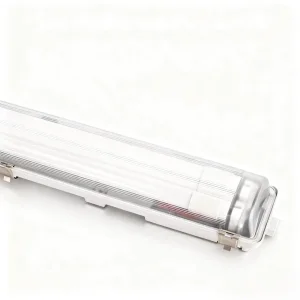
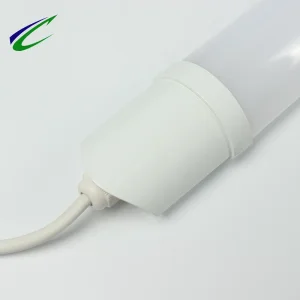
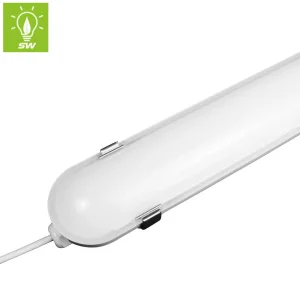
In industrial engineering, selecting the correct lighting system requires a clear understanding of safety ratings. Standard "Tri-proof" luminaires are designed to protect against three specific environmental hazards: moisture (waterproof), dust (dustproof), and physical corrosion (corrosion-proof). These fixtures typically utilize rubber gaskets, silicone seals, and non-corrosive polymeric shells to maintain ingress ratings of IP65, IP66, or IP67. While highly effective for general industrial workshops, warehouses, and outdoor walkways, they are not designed to contain internal electrical explosions in volatile atmospheres.

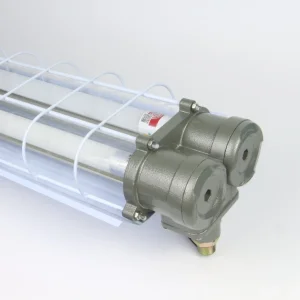
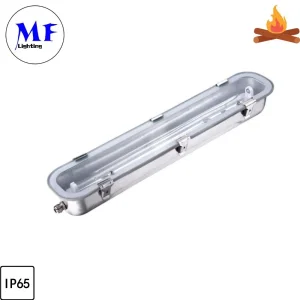
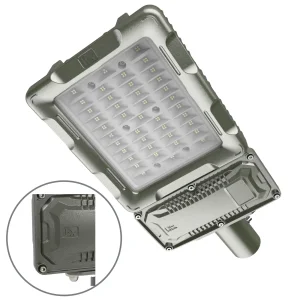
True Explosion-Proof (Ex-rated) lighting is engineered to operate safely in atmospheres containing flammable gases, vapors, or combustible dusts. These luminaires are constructed with heavy-duty housings—often made from die-cast aluminum or thick-walled stainless steel—and feature tempered glass lenses. The internal joints and flame paths are designed to cool escaping combustion gases, preventing them from igniting the surrounding environment. By combining these explosion-proof features with tri-proof protection (water, dust, and corrosion resistance), our specialized fixtures deliver high safety performance in demanding environments like coal mines, paint spray booths, and chemical plants.

Specification Parameter Industrial Tri-proof (Standard) Explosion-Proof Tri-proof (Advanced) Applicable Environments
Ingress Protection Rating IP65, IP66 (Dust-tight, Jet-water protection) IP66, IP67, IP69 (Submersion & high-pressure jet-wash) Wet workshops, outdoor spaces, wash-down zones
Explosion Safety Classification Not Rated (No Ex protection) ATEX Zone 1/21, Zone 2/22, IECEx, UL844 Class I/II Div 2 Petrochemical plants, gas pipelines, grain silos
Impact Resistance Class IK07 to IK08 (Medium mechanical impact protection) IK10 (Heavy-duty polycarbonate/stainless steel housing) Mining tunnels, heavy industrial floors, railways
Corrosion Resistance Class Standard PVC/ABS housing, galvanized clips UV-stabilized resins, 304/316L Stainless Steel, anti-corrosive coatings Marine docks, offshore platforms, chemical plants
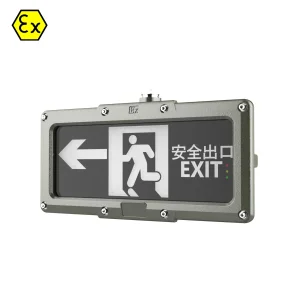
Emergency Module Capability Optional internal battery (typically 1.5 - 3 hours) Integrated Ex-compliant battery, self-testing, 30W/40W/60W configurations Emergency evacuation routes in hazardous environments

Localized Application Scenarios & Engineering Challenges

How we design and adapt products to perform reliably in extreme environments.

Industrial applications present distinct engineering challenges that require tailored lighting designs. In high-temperature and high-humidity environments like saunas and commercial steam rooms, standard LED arrays can suffer from thermal degradation and accelerated driver failure. To address this, our high-temperature sauna luminaires utilize isolated aluminum drivers and high-temperature-resistant gaskets, ensuring stable operation under continuous thermal stress.

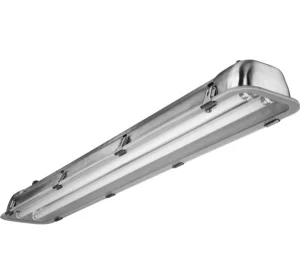
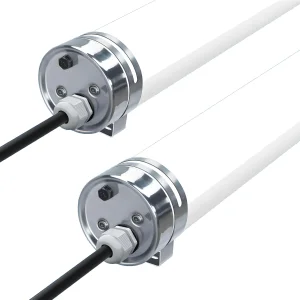
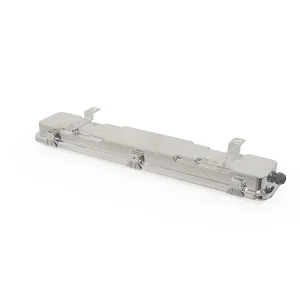
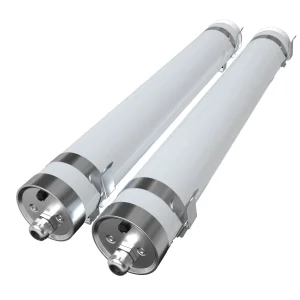
In contrast, underground coal mines, subways, and railway tunnels present risks from combustible gases, coal dust accumulation, and heavy mechanical impacts. For these applications, we utilize IK10-rated stainless-steel linear tube fixtures. The heavy-duty steel housing protects the internal light sources from physical impacts, while dust-tight seals prevent combustible particulates from making contact with internal electrical components.

For large-scale infrastructure projects, such as underground parking garages, municipal squares, bridges, docks, and river banks, exposure to constant moisture and salt corrosion is a key concern. In these environments, our anti-corrosion, IP66-rated linear lights provide a reliable solution. They are engineered to resist salt spray corrosion, preventing moisture ingress and ensuring long-term operational reliability in coastal regions.

Technological Roadmap & Future Outlook

Innovations in intelligent control systems and high-efficiency optical designs.

The industrial lighting sector is transitioning from standard illumination to smart, connected lighting networks. Our current R&D efforts are focused on integrating intelligent controls into our explosion-proof tri-proof product lines. By incorporating microwave radar induction and DALI-2 dimming protocols directly into our hazardous location batten fixtures, we help industrial operators reduce energy consumption by providing lighting only when and where it is needed.

Our material science roadmap focuses on upgrading our polycarbonate and glass-reinforced plastic (GRP) housings. We are refining our formulations to improve resistance to UV exposure, heavy physical impact, and chemical solvents, which helps prevent premature discoloration and cracking in harsh environments. Additionally, we are optimizing our thermal management designs to support higher lumen outputs within compact, sealed enclosures, ensuring long-term reliability even under continuous operation.

We are also working to optimize our production workflows. By expanding our automated assembly lines and implementing real-time quality control tracking, we aim to increase our annual output from 3 million sets to 5 million sets over the next three years. This growth will allow us to support larger projects while maintaining short delivery timelines through Ningbo Port.

Industry Insights & Frequently Asked Questions

Clear, technical answers to common questions about selecting and installing safety lighting.

What makes a light both "Explosion Proof" and "Tri-proof" simultaneously?

A dual-rated luminaire combines two distinct engineering standards. The "Explosion-proof" rating indicates that the housing is structurally built and certified (e.g., ATEX or IECEx) to prevent any internal electrical spark or explosion from escaping and igniting the surrounding environment. The "Tri-proof" rating confirms that the enclosure is sealed against dust ingress, water spray, and corrosion. This combined protection is essential in industries like chemical processing, where fixtures must withstand both volatile vapors and high-pressure washdowns.

Why are IP66 and IP69 ratings critical for food processing and chemical plants?

IP66 ratings ensure the lighting fixtures remain completely sealed against dust and high-pressure water jets. The IP69 (or IP69K) rating indicates that the luminaire can withstand high-pressure (up to 100 bar), high-temperature (80°C) washdown procedures commonly used in hygienic environments like food processing plants, canteens, and pharmaceutical facilities.

What customization options are available for OEM/ODM clients?

Our integrated R&D facility and dedicated mold workshop allow us to support a wide range of customization requests. We can adjust fixture dimensions, modify mounting brackets, integrate microwave radar sensors, add emergency battery backups (in 30W, 40W, or 60W configurations), and custom-configure optics or color rendering properties.

How does the factory control manufacturing quality and production costs?

We maintain quality control by handling key manufacturing steps in-house, including mold development, plastic injection, and compression processes. This vertical integration reduces logistics costs, minimizes defects, and ensures high consistency. Final verification is conducted in our own darkroom and integrating sphere spectrometry labs to confirm compliance with ISO9001 and TUV standards.

Can the radar induction ceiling lights be deployed in high-risk zones?

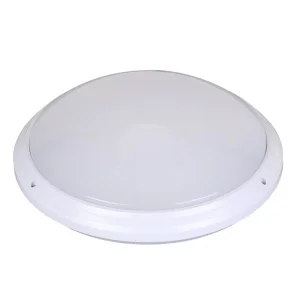
Yes. Our radar induction ceiling lamps are specifically designed with explosion-proof construction and encapsulated sensor modules. This allows them to detect occupancy and automatically adjust light output in locations such as underground parking structures, corridors, and material warehouses without compromising safety or risk of electrical ignition.

All Explosion Proof Tri-proof Lighting Products