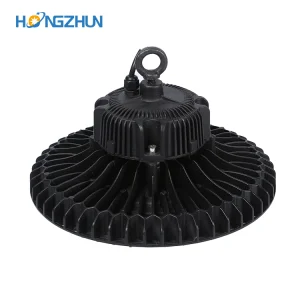
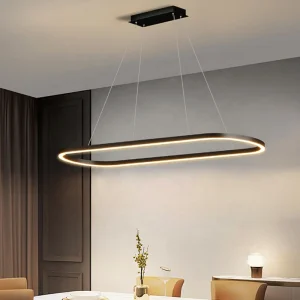
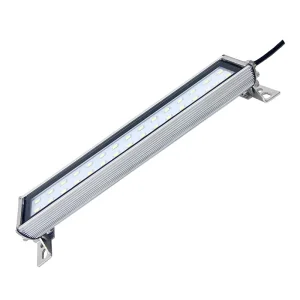
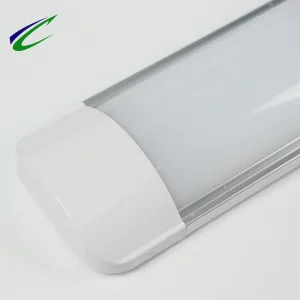
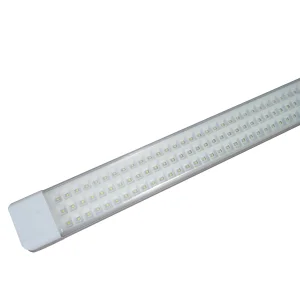
The global transition toward sustainable smart cities has positioned LED Outdoor Post Lights as key elements of municipal infrastructure, architectural planning, and commercial landscape design. According to recent industrial data, the market is undergoing a significant migration from traditional high-pressure sodium (HPS) and metal halide (MH) fixtures to high-efficacy LED lighting networks. This shift is driven not only by the need for up to 70% energy savings, but also by the demand for structural integration within smart grid layouts, human-centric municipal design, and dark-sky compliant lighting schemes.
Historically, outdoor luminaire design focused strictly on raw luminous output. Today, the focus has shifted to photometric precision, color rendering index (CRI > 80), glare reduction (UGR control), and optical beam configurations tailored to minimize light pollution. Manufacturers in China, leveraging state-of-the-art optoelectronic ecosystems and highly integrated manufacturing processes, supply over 65% of the world's outdoor post top luminaires. These systems must withstand harsh environment factors, including thermal cycling, UV exposure, salt air corrosion, and heavy precipitation, requiring advanced materials like low-copper die-cast aluminum alloys and high-grade polycarbonate/poly(methyl methacrylate) (PMMA) lenses.
Key Industry Development Trends
1. Integration of Smart Cities and IoT Controls
Modern outdoor post lights are no longer isolated systems. The deployment of Zhaga Book 18 and NEMA 7-pin receptacles has enabled plug-and-play installation of smart node controllers. These nodes facilitate cellular (NB-IoT/LTE-M) or mesh network (Wi-SUN/Zigbee) communications. This allows municipal operators to monitor energy consumption, program custom dimming profiles based on pedestrian traffic density, and receive automated maintenance alerts when thermal thresholds are exceeded or driver failure occurs.
2. Dark Sky Compliance and Wildlife-Friendly Spectra
Light pollution is a major environmental concern. International Dark Sky guidelines demand zero upward light output (U-0 rating in BUG classification). Consequently, modern LED post top luminaires utilize customized optic shields and downward-directed light guides. Additionally, the industry is shifting toward warm-spectrum CCTs (2200K - 2700K) to limit blue-wavelength emissions. This choice helps protect nocturnal wildlife and human circadian rhythms while maintaining adequate lux levels for safety.
3. Circular Economy & Modular Repairability
Consistent with European Union Ecodesign requirements, top-tier LED post light manufacturers are adopting modular design concepts. Instead of sealed units that require complete disposal upon failure, components like the LED engine, driver tray, and surge protection device (SPD) can be replaced independently. This approach reduces the total cost of ownership (TCO) and extends the functional lifespan of structural assets beyond 10-15 years.
4. Material Resilience and Coastal Treatment
Luminaires installed in coastal settings face rapid corrosion from saltwater exposure. Leading manufacturers use multi-stage powder coat finishes—such as chromate conversion treatments followed by electrostatic architectural powder coating—to withstand 1000+ hours of salt spray testing (ASTM B117 standards).
Enterprise Engineering & QA Infrastructure
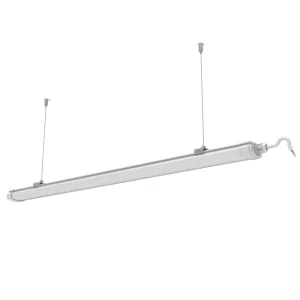
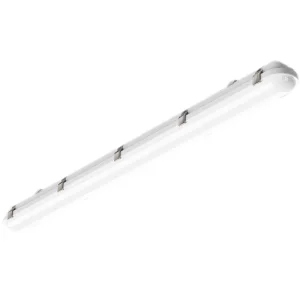
Our organization stands as a premier lighting enterprise specializing in the development, production, and sales of high-performance IP66 and IP65 Tri-proof lights, along with high-reliability indoor and outdoor architectural lighting fixtures. Guided by our scientific management philosophy—"Credit from Sincerity, Business from Quality, People First"—we continuously drive technical innovation to ensure our systems deliver optimal optical efficacy and mechanical reliability in harsh environments.
Advanced R&D and Photoelectric Testing
We operate an independent mold research and development center alongside a dedicated optoelectronic testing facility. Our advanced testing infrastructure features a specialized darkroom and precise instrumentation, including:
Integrating Sphere Spectrometers: For analyzing luminous flux, color temperature (CCT), color rendering index (CRI), and spectral power distribution.
IP Waterproof Tester: Validates structural integrity up to IP65 and IP66 ingress protection ratings.
Goniophotometer: Generates accurate IES/LDT photometric files required by lighting designers and municipal engineers for Dialux calculations.
To maintain high manufacturing standards, we invest in advanced testing instrumentation every year, ensuring our status as a certified high-tech enterprise.
Global Certifications & Quality System
Quality and regulatory compliance are central to our operations. Our manufacturing facilities are certified under the BSCI framework and the ISO9001: 2000 quality management system. Our architectural and industrial luminaires carry major international certifications, including:
TUV GS, CE, ROHS, LVD, and EMC. We continuously expand our certification matrix to satisfy the changing compliance landscapes of our international markets.
Environmental conditions dictate design specifications. Our IP66 and IP65 Tri-proof lighting and outdoor post top systems are engineered for diverse, demanding environments:
Wet & Moisture-Prone Indoor Areas
Engineered for bathrooms, saunas, professional kitchens, hospitals, bakeries, and canteens. These systems prevent internal condensation, resisting high humidity and hot water washdowns.
Industrial & Heavy-Duty Production
Optimized for production workshops, assembly lines, coal mines, and heavy equipment zones where vibration, airborne dust, and high temperatures require durable housings.
Transit Infrastructure & Transit Corridors
Engineered for high-frequency operations in tunnels, subways, aisles, bridges, and underground parking garages. These areas require 24/7 reliability, glare suppression, and easy cleaning.
Harsh Outdoor & Municipal Environments
Designed for plazas, parks, camping grounds, river bank docks, and shipping docks. These fixtures are built to withstand UV degradation, wind shear, and salt spray.
Strategic Manufacturing Capabilities
We support mid-to-high-end global markets with complete in-house manufacturing, quality assurance, and logistics networks:
OEM/ODM Customization
Backed by a dedicated R&D team, we develop and produce bespoke systems matching specific customer drawings, IES light distributions, or physical golden samples.
Cost Engineering
Operating in-house injection molding and metal fabrication workshops allows us to optimize production costs while maintaining high quality standards and competitive pricing.
Process Versatility
We support injection molding, blister molding, and compression molding of lamp housings, accommodating diverse geometry requirements, custom lengths, and advanced engineering polymers.
Rapid Global Logistics
Located just 38 kilometers from Ningbo Port, we manage efficient container loading and maritime dispatch to minimize lead times for major international logistics hubs.
Technology Roadmap & Future Outlook
As outdoor architectural lighting moves toward deeper system integration, our engineering team is focused on four key technologies:
Adaptive CCT Tuning and Dynamic Dimming: Integrating dual-channel drivers with optical engines to adjust output color temperature based on seasonal shifts or real-time atmospheric conditions.
Micro-Prismatic Glare Control: Refining optical lenses to redirect high-angle light into uniform, glare-free footprint distributions (UGR < 19).
Eco-Design and Sustainable Materials: Increasing the use of post-consumer recycled aluminum alloys in housing structures and transitioning to biodegradable packaging materials.
Active Thermal Safety Controls: Embedding NTC thermistors on the LED PCBs to dynamically adjust driver output current if structural temperatures exceed critical thresholds, protecting system lifetimes in extreme climates.
Technical Q&A / Frequently Asked Questions
What is the significance of the 5-Year DALI-2 Dimmable Trunking and linear post light system warranty?
Our 5-year warranty is backed by rigorous accelerated life testing (ALT) in our integrated photoelectric labs. By utilizing premium components—including top-tier SMD2835 chipsets, high-efficiency drivers (PF > 0.95), and robust metal core PCBs—we ensure that our systems maintain lumen maintenance standards (L80B10) over 50,000 operational hours without color shifting or driver degradation.
How does your factory control housing quality for custom blister and compression molding?
We operate our own injection molding, blister molding, and compression molding workshops. This complete vertical integration lets us monitor polymer melting points, shot pressure, and cooling parameters. Every batch of polycarbonate (PC) and PMMA undergoes thermal stress tests to prevent cracking, discoloration, and structural deformation when exposed to UV radiation and ambient outdoor heat.
What certifications do your fixtures carry for European municipal projects?
Our entire outdoor and tri-proof product line is fully certified under TUV GS, CE, ROHS, LVD, and EMC. We also maintain BSCI and ISO9001:2000 quality system compliance. This ensures our luminaires meet the strict safety, optical efficiency, and environmental requirements mandated by European public utility networks.
How does proximity to Ningbo Port affect lead times and logistics costs?
Being located only 38 kilometers from Ningbo Port significantly reduces inland transit times and drayage fees. We can load containers directly at our facility and dispatch them to the maritime terminal within hours, offering faster shipping and lower shipping costs for our global partners.
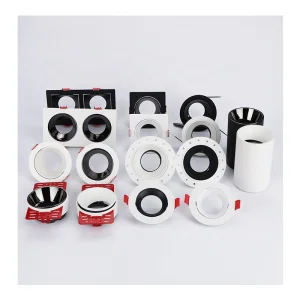
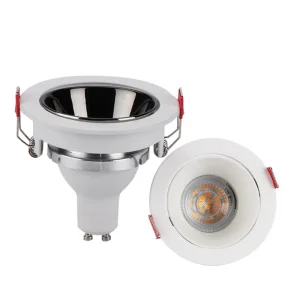
High-Performance Ingress Protected Systems & Downlights
Heavy-duty dust-tight, vapor-tight, and highly adjustable architectural spotlights for demanding environments.
 Ledlot Lighting