Engineered to withstand extreme environmental stress, including high moisture, mechanical impacts, and chemical corrosion.
Understanding the transition from standard illumination to resilient industrial-grade hardware architectures.
The demand for advanced industrial-grade luminaires has experienced rapid transformation over the past decade. Globally, heavy industrial plants, maritime vessels, deep-mine shafts, municipal water networks, and intensive chemical processing facilities are moving away from legacy high-intensity discharge (HID) lamps towards robust solid-state LED systems. Among these, the IP68 and IP66 waterproof-rated luminaires represent the highest tier of engineering, designed to maintain photometric performance under persistent liquid immersion and dust infiltration.
Market intelligence indicates that the global market for waterproof industrial lighting is expanding at a Compound Annual Growth Rate (CAGR) of over 8.2%. This growth is heavily supported by massive infrastructure investments across developing countries and strict regulatory actions regarding worker safety in the European Union and North America. Modern facilities require lighting systems that not only reduce energy consumption but also operate reliably under extreme physical stress. In chemical plants, offshore oil rigs, and food manufacturing facilities, lighting failures directly lead to operational downtime, expensive emergency maintenance, and significant safety hazards.
China has established itself as the global hub for heavy-duty LED fabrication. By co-locating raw material refiners, optical research clusters, automated injection molding plants, and advanced testing darkrooms, Chinese factories have created an efficient supply chain. This ecosystem allows manufacturers to deliver high-performance luminaires that comply with global compliance standards (such as TUV GS, CE, RoHS, SAA, and ETL) at competitive prices. As search intent transitions from simple price metrics to overall value and durability, selecting the right Chinese manufacturer requires a clear understanding of their engineering capabilities, testing facilities, and material supply chains.
Advanced scale operations and regional component supply chains enable manufacturers to offer top-tier components like Osram/Bridgelux chips and MeanWell drivers at highly competitive price points.
Use of advanced materials including marine-grade copper-free aluminum, UV-stabilized polycarbonate, and customized fluorosilicone gaskets prevents degradation under harsh conditions.
Experienced design teams utilize internal injection, blister, and compression molding capabilities to adapt physical fixtures to custom dimensions and challenging environments.
An in-depth analysis of physical sealing, thermal dynamics, and optical reliability in harsh environments.
In industrial luminaire design, ingress protection ratings are often misunderstood. While an IP65 fixture can handle light low-pressure water sprays, and an IP66 rating covers high-pressure water jets (such as washdowns in food processing), IP68 requires continuous submersion under specific pressure conditions. Achieving a reliable IP68 rating involves careful planning across several engineering areas:
Under submersion, ambient hydrostatic pressure constantly forces liquid through any structural joint. Premium factories use continuous-pour polyurethane gaskets or molded silicone seals that fit securely into CNC-milled channels. To prevent seals from drying out or degrading, premium fixtures use fluorosilicone compounds. These materials resist temperature shifts, UV exposure, and exposure to industrial chemicals like hydrocarbons and cleaning solutions.
When an LED luminaire is turned on, the heat generated by the diodes and driver raises the internal air temperature, causing it to expand. When turned off, the air cools and contracts, creating an internal vacuum. Without proper design, this pressure cycle pulls moisture through the seals. High-quality IP68 luminaires feature hydrophobic, vapor-permeable breathing membranes. These valves allow air pressure to balance while completely blocking liquid water.
Marine environments require materials that resist galvanic corrosion. Pure die-cast aluminum alloys must receive multi-stage chromate conversion coatings and electrostatic polyester powder finishes to prevent oxidation. In chemical storage zones or food production lines where acidic sanitizers are used, housings made of 316L stainless steel or specialized engineered polymers (like PMMA or high-impact polycarbonate) are necessary to protect the internal components.
How IoT integration, smart driver systems, and material innovations are shaping the next generation of industrial fixtures.
The industrial lighting sector is transitioning from standard power delivery to intelligent, connected systems. Driven by global demand for reduced energy usage and real-time operations, manufacturers are adding digital features directly to waterproof light fixtures. The primary focus is the integration of smart sensing and DALI-2/Zigbee IoT wireless protocols into waterproof housings. This allows operators to monitor performance, dim lights based on occupancy, and receive alerts before a driver or chip fails, which helps reduce maintenance costs.
Another area of focus is the driver. Standard drivers are vulnerable to voltage surges and high thermal stress. The industry is moving towards smart, programmable, encapsulated drivers with 10kV surge protection. These units are cast in thermal epoxy resin, shielding them from moisture, vibration, and dust, while ensuring efficient heat dissipation. This design is critical for maintaining a stable lifespan of over 50,000 to 100,000 hours in hot environments, such as factory roofs or metal processing facilities.
On the optical side, standard diffuser plates are being replaced by custom-engineered polycarbonate or PMMA lenses. These lenses control light output to reduce glare (keeping UGR values low) while maximizing efficacy (exceeding 140 lm/W). This ensures that warehouses, assembly areas, and loading docks receive clear, uniform lighting that improves worker safety and productivity.
Super-hydrophobic and anti-static coatings prevent dirt and dust accumulation, ensuring maximum light output in dusty warehouses and processing plants.
Integrated wireless controls allow monitoring, automated dimming, and heat management in large industrial spaces.
Equipped with surge-protected, potted drivers, these systems withstand electrical noise and spikes common in heavy industrial setups.
Learn how our manufacturing processes, R&D centers, and compliance testing ensure reliable industrial products.
Our company specializes in the development, manufacturing, and distribution of IP66 and IP65 Tri-proof lighting, alongside a wide range of indoor and outdoor ceiling fixtures. Guided by our core philosophy of "Credit from Sincerity, Business from Quality, People First", we continuously modernize our facilities, invest in research, and upgrade our manufacturing technology to deliver highly reliable products.
Our operations feature an independent, dedicated mold research and development center, which allows us to customize designs, develop prototypes, and adjust production tools quickly. Our manufacturing facilities are fully equipped for injection molding, blister molding, and compression molding of lamp housings. This allows us to work with various shapes, lengths, and materials (including polycarbonate, PMMA, and ABS) to meet specific project needs. An integrated manufacturing setup helps us control production costs, maintain quality, and offer flexible pricing for high-volume orders.
We maintain an in-house testing lab to verify the quality of our products. This facility features advanced measuring systems, including an integrating sphere spectrometer, high-precision darkrooms for goniophotometric data, and dedicated IP waterproof testing chambers. We continuously update our equipment to remain a certified high-tech manufacturer. Our facilities comply with BSCI and ISO9001:2000 quality management standards, and our products carry certifications like TUV GS, CE, RoHS, LVD, and EMC. With an annual capacity of 3 million sets and 100 million RMB in sales, we reliably export to markets across Europe, the Americas, Southeast Asia, Australia, the Middle East, and Africa.
Explore how our heavy-duty lighting systems perform in challenging operational environments.
Our IP66 and IP65 Tri-proof fixtures provide reliable lighting for subways, railway tunnels, pedestrian underpasses, and bridge structures, resisting persistent moisture and vibration.
Built for harsh industrial zones, coal mines, assembly lines, and material warehouses, our fixtures resist airborne particles, impact, and high ambient temperatures.
Ideal for commercial kitchens, food processing plants, bakeries, saunas, and healthcare clinics, our sealed housings handle high humidity and regular washdowns.
Get answers to common technical, sourcing, and logistics questions about our LED products.
The difference lies in their resistance to dust and water. IP65 fixtures handle low-pressure water sprays from any direction, making them suitable for standard outdoor use. IP66 fixtures protect against high-pressure water jets, ideal for washdown zones like food production plants. IP68 fixtures are designed to be completely dust-tight and can withstand continuous underwater submersion at specified depths and durations, making them suitable for pools, marine use, and deep pits.
Condensation occurs during thermal cycling when internal air cools and draws in external humidity. We address this by using hydrophobic, vapor-permeable breathing valves in our fixtures. These vents allow pressure to balance naturally while keeping out liquid water, preventing condensation from forming on the optical lens.
With our in-house injection, blister, and compression molding capabilities, we customize lighting systems based on customer drawings or physical samples. We can adjust fixture lengths, shapes, casing materials (such as polycarbonate or PMMA), and select specific LED chips, driver brands, and mounting configurations for different environments.
Our factory maintains BSCI and ISO9001:2000 quality management certifications. Our lighting products are fully certified under TUV GS, CE, RoHS, LVD, EMC, and SAA standards, ensuring they meet the safety, environmental, and performance requirements of European, Australian, and global markets.
Our annual production capacity reaches 3 million sets, allowing us to manage large orders efficiently. Our factory is located just 38 kilometers from Ningbo Port, one of China's major shipping hubs. This proximity provides convenient access, fast custom clearance, and reliable shipping times for international logistics.
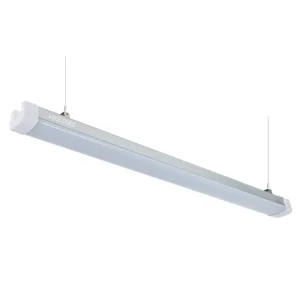
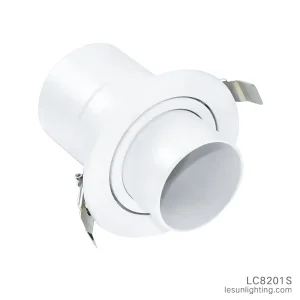
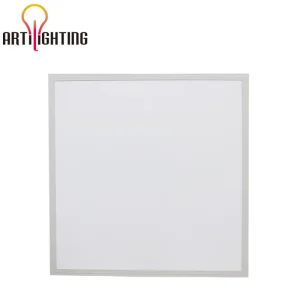
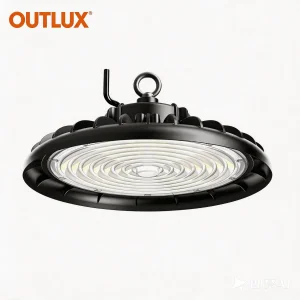
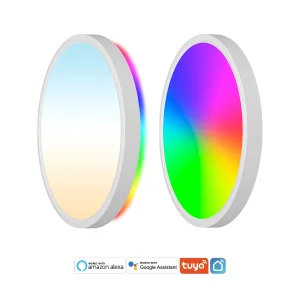
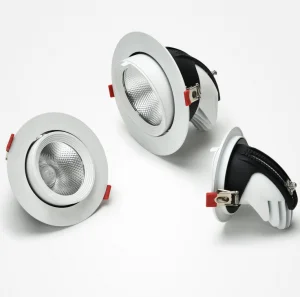
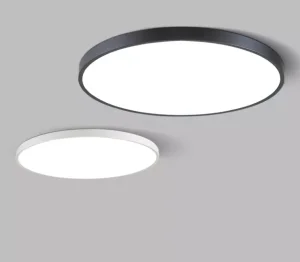
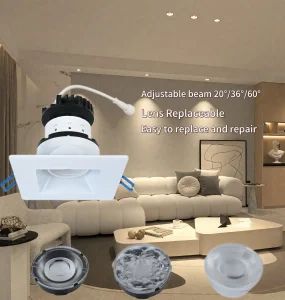
An array of smart, adjustable, and specialized ceiling, downlight, and panels engineered for modern commercial layouts.