A Technical Whitepaper on Safety, Efficiency, and ATEX Compliance in the Bulgarian Industrial Ecosystem
In modern industrial facilities, light is more than just visibility; it is a fundamental pillar of operational safety and structural resilience. In areas prone to volatile gases, explosive vapors, or dense particulate clouds, traditional luminaires pose a direct ignition threat. For engineering leads, facilities directors, and procurement managers in Bulgaria, navigating the complexities of ATEX Directive 2014/34/EU and national safety codes demands highly specialized equipment designed to contain internal failures and prevent thermal or electrical ignition triggers.
This technical whitepaper details the architectural, material, and electrical specifications of high-performance explosion-proof and tri-proof lighting solutions. Engineered directly for the rigors of Bulgarian heavy industry, this guide illustrates how proper device selection minimizes operational downtime, ensures absolute worker safety, and secures multi-decade return on investment (ROI).
Analyzing local localized risks from heavy chemical hubs to marine logistics corridors
Bulgaria's transition toward a high-tech manufacturing and processing hub has amplified the necessity for certified explosion-proof equipment. Distinct industrial sectors face disparate hazards:
For instance, at major processing sites like the Lukoil Neftohim refinery in Burgas, or the chemical complexes around Devnya, operations involve handling explosive hydrocarbons with low ignition points. These areas necessitate lighting structures categorized under strict T-ratings (typically T5 or T6), ensuring that the outer surface temperature of the fixture never exceeds 85°C to 100°C under continuous load.
Conversely, the underground copper and gold mines of Srednogorie present challenges related to mechanical vibrations and dense, conductive dust clouds. Fixtures deployed here require robust impact resistance—typically rated at IK10 mechanical protection—coupled with hermetically sealed optical chambers. This prevents airborne particulates from penetrating internal circuit boards, mitigating dust-cloud explosions.
Decoding the technical divisions of explosive safety standards for European markets
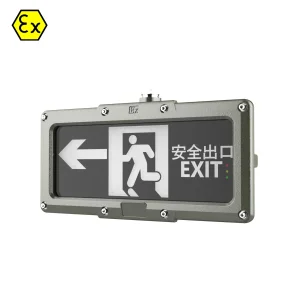
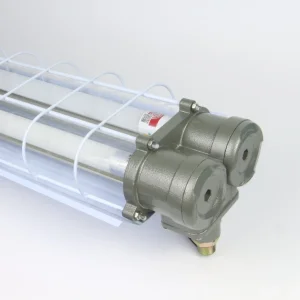
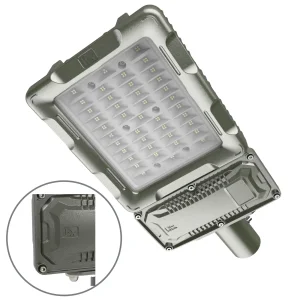
Engineered for environments where explosive gas mixtures are likely to occur during normal operations, utilizing flameproof structures and encapsulated control drivers.
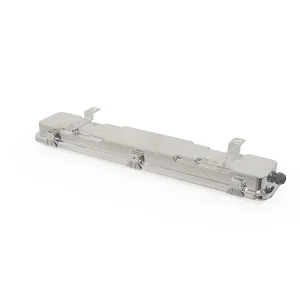
Tailored to completely isolate electrical contacts from conductive or flammable dusts (coal, metal dust, grains) with precision-molded silicone gaskets and secure locking mechanisms.
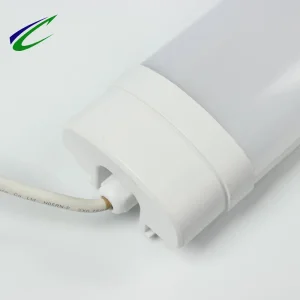
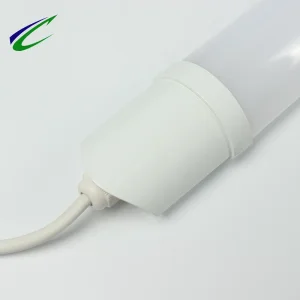
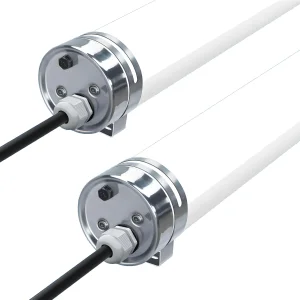
Specially designed tubular profiles featuring smooth exterior finishes that withstand 100-bar water jets at temperatures up to 80°C, typical in strict food hygiene plants.
A key concept under E-E-A-T principles is recognizing that "Tri-proof" and "Explosion-proof" serve separate but complementary purposes. Tri-proof (Waterproof, Dustproof, and Corrosion-resistant) is suitable for harsh industrial sites without volatile gas, while Explosion-proof units must carry legal certification showing they can withstand and contain internal gas/vapor detonations without igniting surrounding flammable atmospheres.
Our research and development facility incorporates complete testing regimes to guarantee these attributes. We operate integrating spheres, spectroradiometer instruments, and dedicated ingress chambers where fixtures undergo high-pressure water blasting and environmental cycling tests. These processes ensure conformity to international safety norms such as the European CE directives, RoHS, and local Bulgarian industrial safety guidelines.
How vertically integrated production controls costs, customization, and thermal performance
Maintaining a high level of reliability requires full control over production variables. Our operations feature a dedicated injection molding facility, custom compression molding tools, and an advanced darkroom for precise photometric modeling. By avoiding external outsourcing for mechanical castings, we maintain rigorous control over dimensional tolerances and material blends.
Additionally, our in-house optical center allows us to custom-engineer lighting profiles. Whether adjusting beam angles for high-bay warehouse corridors in Sofia or shaping linear distribution curves for highway tunnels, our optical engineers customize internal reflectors and diffuser sheets to minimize glare and optimize output (lumen-per-watt efficacy).
Streamlined logistics routes from Ningbo Port direct to Bulgarian distribution centers
Efficient supply chain planning is vital for major capital projects. Located just 38 kilometers from Ningbo Port, our manufacturing facility is positioned to minimize transit times and inland transportation expenses. Export shipments to European entry points—primarily the Port of Varna, the Port of Burgas, or land-bound Sofia terminals—benefit from direct maritime routes and simplified customs procedures.
Supported by an annual manufacturing capacity of 3 million sets and an ISO 9001:2000 certified management system, we manage orders of all sizes without compromising delivery timelines. Our operations are fully BSCI-compliant, providing transparency and meeting the ethical procurement requirements of major European energy conglomerates and public infrastructure contractors.
Explore our industrial-grade luminaires certified for heavy commercial environments
The next generation of autonomous and sensory-driven hazard lighting systems
Industrial lighting is evolving from passive hardware to integrated smart systems. In hazardous areas, upgrading to smart lighting helps minimize operator intervention, reducing risks in sensitive areas.
Our technological development focuses on three primary areas:
Expert clarifications on technical parameters, compliance, and industrial installation
Tri-proof lighting is engineered to withstand water, dust, and corrosive vapors (IP65 to IP69), making it suitable for cleanrooms, warehouses, and outdoor sites. Explosion-proof lighting is structurally designed and certified (via ATEX/IECEx) to prevent an internal electrical spark or thermal failure from escaping and igniting flammable gases or dust in surrounding areas.
Our explosion-proof line includes products designed for Zone 1, Zone 2 (gas hazards, Group IIA, IIB, IIC), and Zone 21, Zone 22 (dust hazards). Always consult your project’s hazard classification map to match the specific certification code on the product label with your local zone requirements.
With our in-house R&D team and dedicated molding workshops, we select raw materials to match local requirements. For environments with organic solvents or alkaline vapors, we use specific PMMA or polycarbonate blends. In highly acidic environments or offshore applications, marine-grade stainless steel (316) housings are recommended.
We are located 38 kilometers from Ningbo Port, which allows us to process and dispatch ocean freight orders efficiently. Standard shipping transit times to the ports of Varna or Burgas range between 30 and 40 days, while urgent project samples can be sent via air freight directly to Sofia Airport.
Connect with our engineering support team to receive specialized photometric files, custom product designs, and wholesale pricing tables.