Kenya's Industrialization & The Demand for Safety Lighting
An in-depth analysis of structural shifts in East Africa's primary economic engine and the critical role of specialized lighting infrastructure.
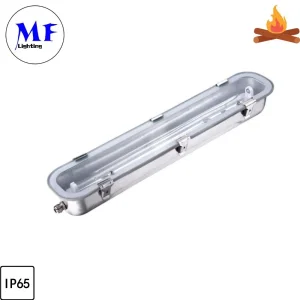
Kenya is undergoing a rapid industrial transformation. Under the nation's long-term development plans, the government is prioritizing manufacturing, food security, and infrastructure development. The expansion of Special Economic Zones (SEZs) in Athi River, Dongo Kundu in Mombasa, and Naivasha has led to an influx of large-scale manufacturing plants, logistics hubs, and processing facilities. This industrial acceleration has heightened the demand for durable, explosion-proof, and tri-proof lighting systems capable of operating safely in harsh, volatile, and high-moisture environments.
Agricultural Processing & Mill Dust Hazards
As a leading global exporter of tea, coffee, and horticultural products, Kenya houses massive processing plants across Kericho, Kiambu, and Eldoret. Grain milling and tea leaves processing generate high concentrations of combustible organic dust. Standard lighting fixtures can trigger devastating dust explosions in these conditions. Our dust-proof and explosion-proof linear systems mitigate these hazards, ensuring safe, continuous factory operations.
Geothermal Energy Development in Rift Valley
The Great Rift Valley region, particularly Olkaria and Naivasha, serves as the epicentre of geothermal power generation in Africa. Geothermal power plants operate in high-humidity, high-temperature settings with hydrogen sulfide (H₂S) gas present. These corrosive, damp conditions destroy standard fixtures. The installation of hermetically sealed, anti-corrosive, IP69K rated tri-proof lighting is vital to preserve operational integrity.
Maritime Logistics at Mombasa & Lamu Ports
Mombasa Port acts as the key maritime gateway for East and Central Africa. Marine docks, underground shipping berths, and coastal storage zones deal with relentless saltwater exposure and high relative humidity. The application of IK10 impact-rated and marine-grade stainless steel tri-proof light fixtures prevents water intrusion and galvanic corrosion, keeping port supply chains active 24/7.
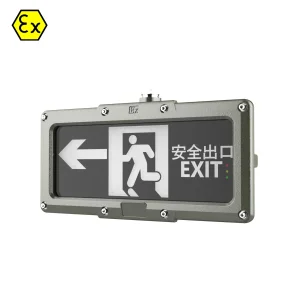
Furthermore, Kenya's mining sector, including the extraction of titanium in Kwale and coal resources exploration, requires specialized illumination equipment that meets strict global safety standards. Reliable emergency escape route signaling, zone-specific lighting classification, and rugged housings are mandatory under the Occupational Safety and Health Act (OSHA 2007) of Kenya to safeguard the lives of local workers.
Global Lighting Paradigms & Smart Integration
Adapting international safety innovations and energy efficiency protocols for immediate deployment within East African infrastructures.
Globally, the industrial lighting market has shifted from basic illumination to integrated smart systems. The modern standard demands that explosion-proof and tri-proof lighting provide not just lumens, but intelligence, high efficacy, and minimal lifecycle costs. The rise of Industrial Internet of Things (IIoT) has introduced smart sensors directly inside heavy-duty light housings.
100M+
Annual Sales (RMB)
3 Million
Annual Capacity (Sets)
IP69K
Highest Ingress Standard
38 KM
Distance to Ningbo Port
Key Global Trends in Industrial Safety Lighting
Radar Motion Induction: Standard continuous high-wattage lighting is being replaced by radar-activated dimming profiles. Radar waves penetrate dust, mist, and humidity, ensuring full brightness the moment personnel enter a zone and dropping to 10-20% standby power during idle hours.
Thermal Resilience & Heat Dissipation: Modern LEDs generate localized heat which, if trapped, reduces diode lifespan. The incorporation of customized die-cast aluminum alloys and heat-conducting engineering plastics has dramatically improved heat dispersion, allowing continuous operation in temperatures exceeding 55°C.
Harmonic Distortion Reduction: Clean electrical grids in modern industrial zones demand low Total Harmonic Distortion (THD < 15%). Energy-efficient LED drivers protect the factory's main power distribution network from electromagnetic interference (EMI) and power fluctuations.
Understanding the mechanical properties, ingress protection limits, and material choices that separate standard fixtures from industrial-grade safety assets.
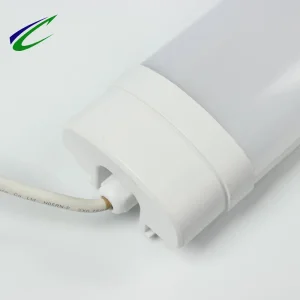
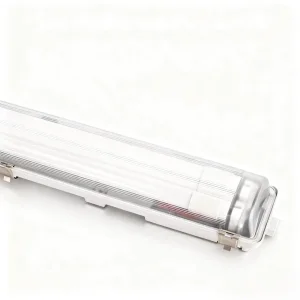
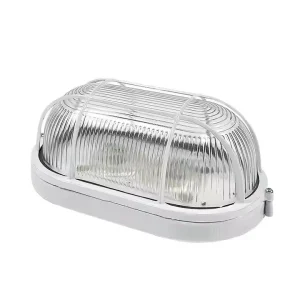
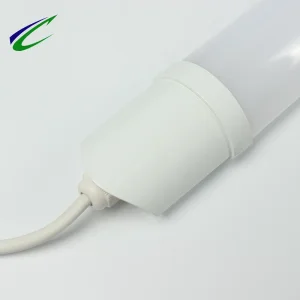
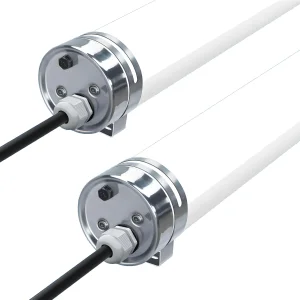
The term "Tri-proof" refers to protection against water, dust, and corrosion. When combined with explosion-proof specifications, the fixture is designed to contain any internal spark or thermal energy within its housing, preventing it from igniting volatile gases or materials in the surrounding atmosphere. Here is an overview of the materials and production methodologies that define our product lines:
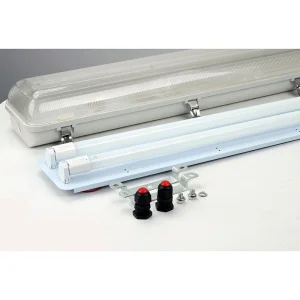
Our manufacturing facility features dedicated injection molding, blister molding, and compression molding workshops. Having complete control over the housing production allows us to meet specific mechanical requests regarding structural shape, physical length, and base materials:
Polycarbonate (PC) vs. PMMA Diffusers
We utilize high-grade, UV-stabilized Polycarbonate (PC) and PMMA covers. PC covers offer high impact resistance (IK08 to IK10), protecting the fixture from falling debris or accidental tool strikes. PMMA covers are optimized for chemical resistance, especially in environments exposed to synthetic oils, acidic gases, and industrial detergents.
Corrosion-Resistant Gaskets & Latches
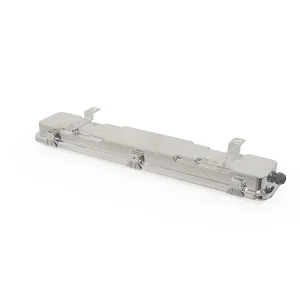
Standard rubber seals degrade quickly when exposed to atmospheric chemical compounds. We use high-performance, co-extruded silicone gaskets that maintain physical elasticity across temperatures ranging from -30°C to +80°C. Coupled with marine-grade 316 stainless steel latches, our linear fixtures maintain structural integrity for over 50,000 operational hours.
Explosion-Proof Electrical Isolation
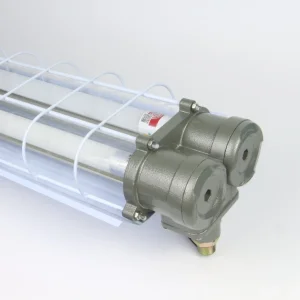
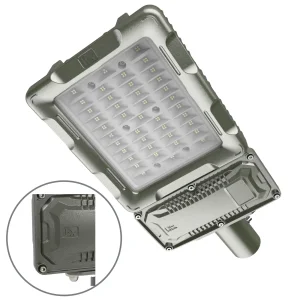
Our hazardous location lines utilize spark-free driver encapsulation and heavy-duty flame-retardant internal components. By physically separating the driver chamber from the LED light source, we prevent heat build-up and eliminate electrical sparking risks under variable load conditions.
Ledlot Lighting (Zhengning): Production Capabilities & Verification
Our corporate infrastructure, R&D framework, quality control, and testing protocols conform to strict international standards.
Ledlot Lighting (Zhengning Lighting) is a specialized lighting manufacturer focused on the design, production, and international export of IP66, IP65 Tri-proof lights, and robust indoor/outdoor industrial ceiling luminaires. Driven by our corporate management philosophy of "Credit from Sincerity, Business from Quality, People First", we integrate technology and manufacturing expertise to deliver reliable lighting solutions worldwide.
Our production and development capabilities are backed by an independent mold research and development center alongside modern photoelectric testing systems. To guarantee that every batch meets global performance ratings, our quality assurance process uses a dedicated darkroom, integrating sphere spectrometers for precise luminous flux measurement, and automated IP waterproof level testers.
System Certifications
Our company is certified under the ISO9001:2000 Quality Management System and has passed the BSCI (Business Social Compliance Initiative) audit, demonstrating our commitment to standardized manufacturing and responsible labor practices.
Global Product Compliance
To facilitate smooth import and compliance verification within Kenya and the wider East African Community, our products carry safety certifications from TUV GS, CE, ROHS, LVD, EMC, and SAA.
Efficient Logistics Engine
Our manufacturing facility is located just 38 kilometers from Ningbo Port, one of the world's major shipping gateways. This logistical proximity enables efficient export processes, shorter ocean transit times, and lower shipping costs for our clients in Kenya.
Tailored Lighting Solutions for Kenya's Core Industries
Specific installation templates and product configurations matching localized environmental conditions.
Industrial locations have distinct environmental conditions. A one-size-fits-all lighting fixture often leads to premature failures, high maintenance costs, and potential safety hazards. Below are four key application templates designed specifically for Kenya's commercial and industrial environments:
Standard Application Templates & Installation Methods
Tea & Coffee Dry-Processing Units (Kericho, Nyeri, Meru): These dust-heavy workspaces require IP65 or IP66 dust-proof linear lighting fixtures. The housings must feature smooth external geometries to prevent dust accumulation, combined with high color-rendering index (CRI > 80) LEDs to assist workers with accurate crop grading.
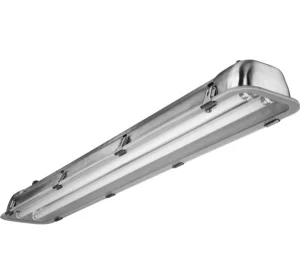
Coast Region Port & Cold Storage Facilities (Mombasa): Docks and cold-storage rooms require IP67 to IP69K tubular lights with corrosion-resistant end caps. These fixtures must resist both highly humid environments and aggressive chemical cleaning agents used in food-grade maritime areas.
Geothermal & Thermal Power Stations (Naivasha, Olkaria): High-temperature and high-humidity areas require fixtures constructed with anti-corrosive plastics or stainless steel bodies. These units are built to resist hydrogen sulfide gas and steam intrusion while running on heat-tolerant internal drivers.
Urban Commercial Developments & Underground Parking (Nairobi, Kisumu): Underground parking areas and commercial corridors benefit from energy-efficient, radar-induction ceiling lights. Integrated motion sensors dim the lighting to minimal levels during off-peak hours, reducing communal energy consumption by up to 80% for commercial properties.
Expert answers to technical, regulatory, and mechanical questions from project managers and engineers in Kenya.
What is the difference between IP65, IP66, IP67, and IP69K ratings for industrial spaces?
IP (Ingress Protection) ratings define how well a fixture keeps out solids and liquids. IP65 protects against low-pressure water jets from any direction. IP66 protects against high-pressure water jets, making it suitable for outdoor environments and washdown zones. IP67 certifies protection against temporary immersion in water up to 1 meter deep. IP69K is the highest standard, protecting against high-temperature (up to 80°C), high-pressure (up to 100 bar) water jets used in strict hygienic cleaning procedures.
How do explosion-proof luminaires protect grain mills and tea processing plants in Kenya from dust ignition?
Organic dusts (like tea dust, flour, and coffee chaff) can become combustible when suspended in the air. Standard lighting fixtures can trigger an explosion if dust gets inside and contacts high-temperature components or electrical arcs. Our explosion-proof lights use dust-tight enclosures and temperature-limiting designs. This prevents internal ignition sources from contacting the surrounding dust-laden atmosphere.
Are plastic linear fixtures suitable for marine and chemical environments?
Yes, high-grade plastic linear fixtures made from specialized Polycarbonate (PC) or PMMA housings are highly resistant to salt spray, humidity, and chemical exposure. Unlike traditional metal housings, they do not rust or suffer from galvanic corrosion. For environments exposed to aggressive industrial cleaners or petroleum derivatives, PMMA housings provide the best long-term durability.
What certifications are required to import these industrial lighting products into Kenya?
To import lighting products into Kenya, they must comply with the Kenya Bureau of Standards (KEBS) Pre-Export Verification of Conformity (PVoC) program. Our products carry CE, RoHS, TUV GS, and ISO9001:2000 certifications, which simplifies verification, ensures compliance with local safety regulations, and facilitates Customs clearance at Mombasa Port or Jomo Kenyatta International Airport (JKIA).
How does radar motion induction improve efficiency in high-bay warehouses?
Radar sensors detect movement through dust, vapor, and thin walls, unlike standard PIR (Passive Infrared) sensors that require a direct line of sight. When a forklift or worker enters the radar detection zone, the fixture switches to full power instantly. After a preset period of inactivity, the lighting dims to a low standby level (e.g., 10-20% brightness), reducing energy consumption and extending the service life of the LEDs.
Can Ledlot custom-manufacture fixtures according to client-provided drawings?
Yes. With our in-house injection molding and tooling workshops, we can develop and manufacture customized lighting enclosures, lengths, and mounting options based on your technical drawings or physical samples. We provide end-to-end design, prototyping, and volume production services.
Complete High-Durability Catalog
Explore our full range of certified industrial lighting solutions, including chemical-resistant, heat-proof, emergency backup, and smart motion-sensing models.
 Ledlot Lighting