Explosion Proof & Tri-proof Lighting Manufacturers & Exporters serving Ghana

Providing heavy-duty, ATEX/IECEx compliant LED lighting solutions engineered for Ghana's mining, offshore oil & gas, marine ports, and cocoa processing hubs.

Get Technical Consult & Quote Now

Ghana’s Industrial Growth & The Safety Mandate for Class-Approved Luminaires

As the leading gold producer in Africa and a growing hub for offshore oil and gas production, Ghana's industrial landscape demands severe-duty infrastructure. Operating in locations like Obuasi, Tarkwa, and the offshore Jubilee Field requires equipment that stands up to intense tropical humidity, high salt mist levels, and volatile gases.

Critical Factor: High moisture combined with volatile organic compounds (VOCs) or coal dust generates a dual-risk environment. Standard IP-rated lighting is bound to fail prematurely under these extreme conditions.

In addition, the Ghana Standards Authority (GSA) and local mining regulations enforce strict safety parameters for hazardous operations. Heavy-duty explosion-proof lighting is not just a regulatory mandate; it is a structural necessity to prevent catastrophic failures, maintain worker safety, and preserve uninterrupted production runtimes.

Gold Refining & Underground Mining (Tarkwa & Obuasi)

Underground shafts present dangerous configurations of dust and potential explosive gases. Proper ATEX Zone 1/21 and Zone 2/22 lighting guarantees safe working conditions deep underground.

Offshore Jubilee & TEN Gas Fields (Takoradi Port)

Offshore drillships and platform topsides require marine-grade copper-free housing and IK10 impact protection to resist constant exposure to saline moisture and mechanical impacts.

Cocoa Processing & Warehousing (COCOBOD Hubs)

Combustible organic cocoa dust is highly explosive when suspended in closed zones. Our Class II division rated linear lights isolate electrical heat, preventing dust ignition.

Explosion-Proof vs. Tri-Proof Lighting

Understanding the critical differentiation parameters for heavy-duty industrial luminaires.

Performance Metric Tri-Proof Lighting (IP65 / IP66 / IP69) Explosion-Proof Lighting (ATEX / IECEx / Class I Div 2)
Primary Protective Mechanics Triple resistance: dust-tight ingress protection, jet-water sealing, and anti-corrosive outer treatment. Flame-arresting housing that completely isolates interior arcs, sparks, and heat from external explosive atmospheres.
Target Environments High humidity zones, washdown areas, commercial facilities, food processing and wet spaces. Refineries, offshore oil drilling platforms, chemical manufacturing plants, mines, and paint spray booths.
Ingress & IK Shock Ratings IP65 to IP69; IK08 to IK10 polycarbonate lens. IP66 minimum; robust tempered glass or reinforced housing; IK10 high-impact protection.
Key Advantage for Ghana Projects Cost-effective moisture-proofing for high-humidity coastal zones like Tema and Accra. Uncompromised safety in methane-heavy shafts and volatile oil cargo areas.
IP66 / IP69
Ingress Protection Standard
IK10
High Impact Durability
BSCI & ISO
Quality Management Systems
3,000,000
Annual Production Capacity (Sets)

Overcoming Ghana’s Severe Climatic & Electrical Constraints

Specifying LED lighting solutions customized to tackle local environmental vulnerabilities.

Grid Fluctuations & Voltage Dips

Fluctuating grids across West Africa stress electrical drivers. Our custom-engineered driver boards operate on wide-range voltage profiles (AC 90V - 305V or low-voltage DC options) to insulate components against sudden power spikes and harmonics.

Saline-Rich Marine Environments

Tema Harbor and Takoradi ports undergo intense salt-fog corrosion. We offer marine-grade 316 stainless steel fittings, double-baked anti-corrosive powder coatings, and heavy blister-molded housings to prevent galvanic corrosion.

Severe Tropical Ambient Temperatures

Persistent tropical heat degrades LEDs fast. Our structural mold designs isolate the driver casing from the LED module and utilize heavy aluminum heat-sinks, keeping junction temperatures well under safe limits for maximum operational life.

Why Procurement Professionals Partner with Our China Factory

We are a high-tech lighting enterprise specializing in the development, production, and sale of premium IP66, IP65 Tri-proof lights, as well as high-performance indoor and outdoor industrial ceiling lamps. Our engineering philosophy stands firm on: **"Credit from Sincerity, Business from Quality, and People First"**.

Operating an independent mold research and development center alongside an advanced photoelectric testing facility, we maintain absolute control over the production loop. Our state-of-the-art darkroom is equipped with integrating sphere spectrometers, IP waterproof level testers, and goniophotometers to ensure accurate lumen delivery and structural integrity.

BSCI & ISO9001

Certified production lines conforming to international ethical and quality criteria.

Full Testing Setup

In-house darkroom, spectrometer tests, and high-pressure IP jet testers.

Our Value Architecture

  • Customization Capability: Backed by a professional R&D division, we fabricate directly from drawings or user-provided physical samples.
  • Direct Cost Control: With our dedicated injection molding and structural assembly departments, we eliminate middle-tier markups.
  • Broad Multi-Formity: Processes including injection molding, blister molding, and compression molding support customizable shapes, materials, and lengths.
  • Logistics Advantage: Situated only 38 kilometers from Ningbo Port, our facility ensures rapid shipping routes to Ghana's major ports.

Heavy-Duty Products Designed for Challenging Ghanaian Environments

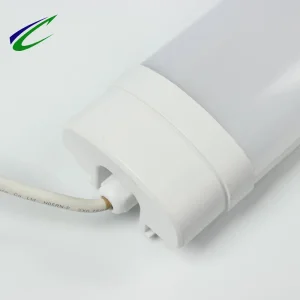
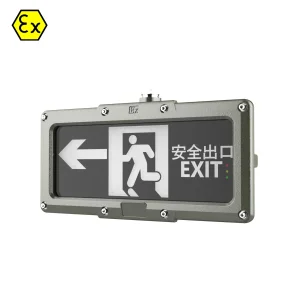
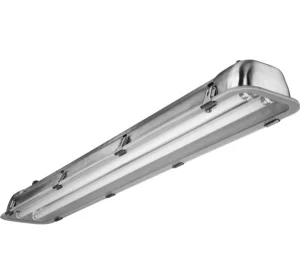
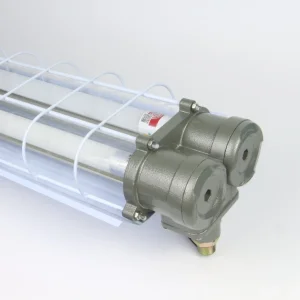
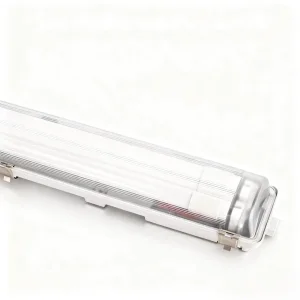
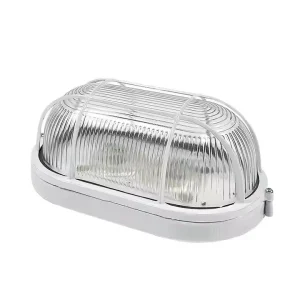
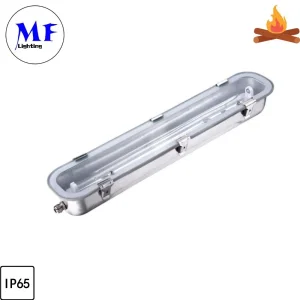
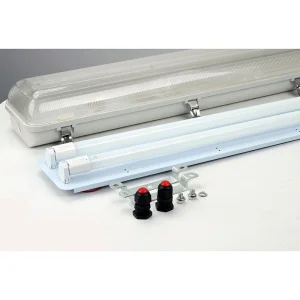
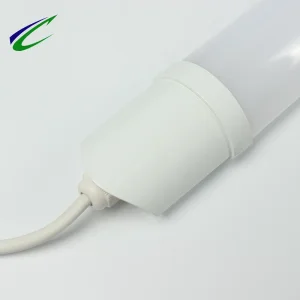
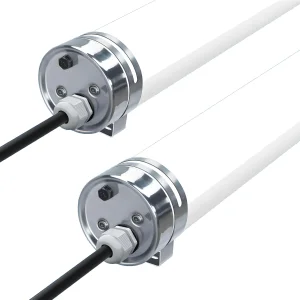
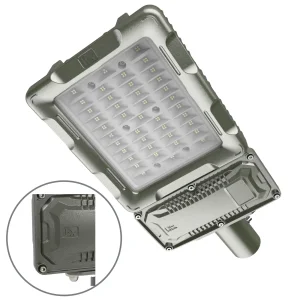
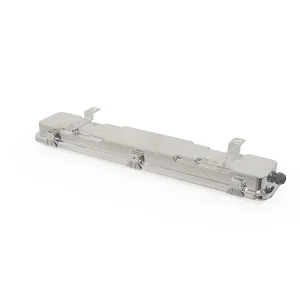
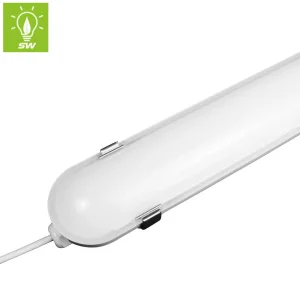
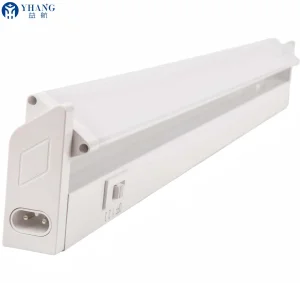
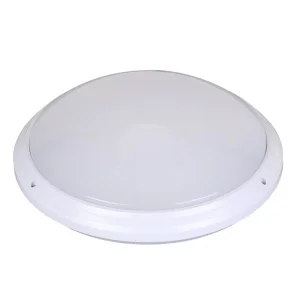
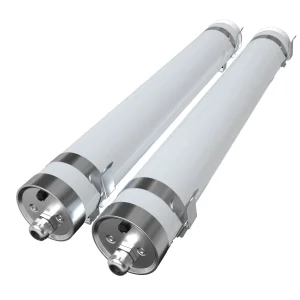
Explore our complete range of certified vapor-tight, dust-proof, and explosion-proof linear and bay lighting products.

Global Enterprise Sourcing & Supply Chain Integrity

A roadmap for supply chain directors to evaluate international compliance, shipping lead times, and total cost of ownership (TCO).

Demanding Technical Compliance Standards

Industrial projects in Ghana operating under international financing (such as the World Bank, IFC, or European investment banks) are bound by rigorous compliance protocols. Safe operations demand lighting that meets BSCI factory audits and contains valid certifications: CE, ROHS, SAA, TUV GS, LVD, and EMC.

By implementing these rigorous standard protocols, lighting designs ensure high durability under continuous thermal cycles. Our products are exported to demanding markets in Europe, America, Southeast Asia, Australia, and Africa, maintaining an annual capability of 3 million sets to support bulk commercial requirements.

Fact: Purchasing from verified BSCI & ISO9001:2000 certified manufacturing plants minimizes product failure risks, safeguarding operational continuity across mining sites.

Thermal Isolation Architecture

LED light engines are separated from power units to ensure efficient thermal dissipation in warm atmospheres, preventing common early failures.

Customizable Housing Material

Configure housing with custom materials: polycarbonate, robust stainless-steel, or corrosion-resistant plastic to meet your budget and environment.

Technical FAQ & Engineering Reference

Detailed technical answers to common questions about selecting and installing explosion-proof and tri-proof lighting in high-humidity regions.

Q1: What are the main differences between ATEX / IECEx and IP-rated Tri-Proof lighting fixtures?
ATEX and IECEx ratings certify that a fixture is physically constructed to prevent internal sparks or thermal build-ups from igniting gas, vapors, or dust in the surrounding air. In contrast, standard Tri-Proof lights (IP65, IP66, IP67, IP69) are sealed against external dust, water jet penetration, and light physical corrosion, but do not feature the spark-containment properties required for designated hazardous zones.
Q2: How does high coastal humidity in places like Tema and Takoradi affect LED life, and how do you prevent it?
High humidity combined with sea salt mist accelerates the corrosion of standard aluminum housings and can degrade driver circuitry. We counter this by using anti-corrosion blister-molded housings, stainless-steel clips, and applying conformal coatings to all internal PCB boards to block moisture ingress.
Q3: Can your fixtures tolerate the frequent power sags and surges common on the West African electrical grid?
Yes. Our drivers are engineered with wider input voltage tolerances (up to 305VAC) and feature surge protection devices (SPD) of 4kV to 10kV. This protects sensitive LED chips from the high-voltage spikes and grid sags often experienced in industrial areas.
Q4: What parameters must be specified for organic dust hazards, such as in Ghanaian cocoa warehouses?
For organic dusts like cocoa or grain, fixtures must meet Class II Division 1/2 or Zone 21/22 requirements. Crucially, the exterior surface temperature (T-rating) of the fixture must remain low (typically T5 or T6 / ≤100°C) to prevent the dust layer from smoldering or igniting.
Q5: Do you offer custom product development from engineering drawings?
Yes, we provide full OEM and ODM services. Thanks to our in-house mold R&D center and injection molding workshops, we can develop, test, and manufacture custom lighting housings based on your engineering drawings or physical samples.