Industry Whitepaper: Surface Mount LED Technology & Global Market Analysis
An authoritative guide to manufacturing protocols, supply chain efficiency, and architectural application paradigms.
3,000,000+
Annual Production Capacity (Sets)
100M+ RMB
Annual Sales Turnover
38 KM
Proximity to Ningbo Deepwater Port
100%
BSCI & ISO9001:2000 Compliant
1. Global Commercial & Industrial Market Landscape
The global transition from traditional legacy lighting systems to advanced solid-state illumination solutions has positioned Surface Mount Device (SMD) LED technology at the core of sustainable construction and industrial infrastructure. Today, governments and global enterprises face stringent decarbonization mandates alongside escalating energy costs. In response, modern facility managers, general contractors, and electrical wholesalers are prioritizing luminaires that deliver high luminous efficacy (measured in lumens per watt, or lm/W) alongside extended L70 lifetime values.
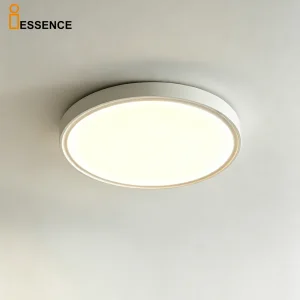
Surface mount LED lights, which are directly secured to circuit boards or structural surfaces, offer crucial advantages over suspended and traditional socketed fixtures. By reducing profile thickness, optimizing heat dissipation directly through the mounting plane, and utilizing high-performance thermoplastic and aluminum housings, surface-mounted architectures are uniquely suited to withstand harsh, high-vibration, high-moisture, and dust-prone settings. Consequently, global market reports project sustained growth in the demand for IP-rated linear systems, vapor-tight batten fittings, and low-glare surface panels across major commercial hubs in Europe, North America, and Southeast Asia.
Information Gain Insight: The integration of surface mount technologies in industrial sectors contributes up to a 65% reduction in facility-wide electrical consumption when paired with modern intelligent controls (DALI, 0-10V dimming) and daylight harvesting sensors. Our products conform to rigorous CE, ROHS, and SAA standards to meet this global paradigm shift.
2. The Chinese Factory Advantage: Quality, Efficiency & Logistic Density
For international procurers, sourcing surface mount LED fixtures involves balancing upfront capital expenditures with long-term reliability. Factories located within China's eastern coastal industrial clusters offer unprecedented supply-chain integration. Our production facilities exploit these micro-economies of scale by retaining key operations under one roof. Unlike assembly-only shops, we manage an independent injection molding workshop, specialized blister molding, and compression molding processes for lamp housings. This deep vertical integration translates directly to rigorous quality control over materials like polycarbonate (PC) and poly(methyl methacrylate) (PMMA), as well as shorter lead times for custom tooling.
Geographic positioning also dictates global distribution efficiency. Situated a mere 38 kilometers from Ningbo Port—one of the busiest and most technologically advanced deepwater ports in the world—our factory minimizes domestic drayage costs and eliminates transport delays. For volume importers in Europe, North America, and Australia, this location provides direct access to fast-shipping lanes, lowering total landed costs (TLC) and simplifying supply chain management.
In-House Tooling & R&D
Our mold R&D center designs custom injection templates based on client samples or CAD drawings, reducing product launch cycles.
Darkroom & Integrating Spheres
Complete optoelectronic validation using spectroradiometers and goniophotometers to ensure accurate lumen outputs and IES files.
Environmental Stress Testing
In-house IP waterproof testers and thermal chambers test fixtures under extreme moisture, rain, and heat variables.
3. Localized Applications: High-Protection Tri-Proof & Indoor Lighting
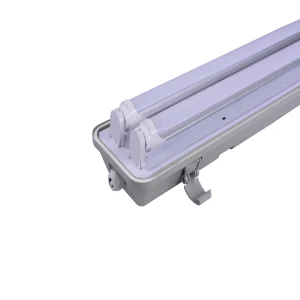
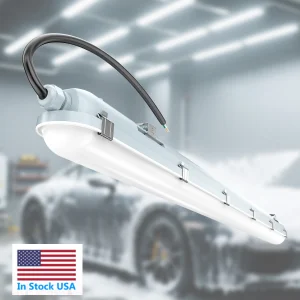
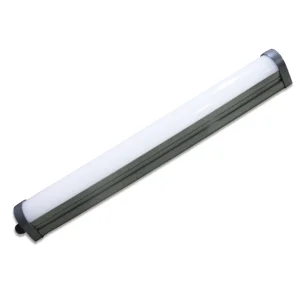
Selecting the appropriate fixture requires matching the product's environmental resistance to the spatial conditions of the site. Tri-proof luminaires (rated IP65 and IP66) are specifically designed to remain impervious to moisture, water intrusion, and dust accumulation. They are critical in commercial kitchens, bakeries, medical facilities, sanitization tunnels, and high-humidity spaces like saunas and indoor swimming complexes. Under sanitization routines, these fixtures resist high-pressure water jets and cleaning solvents.
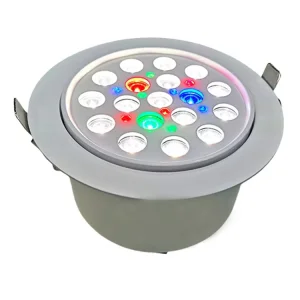
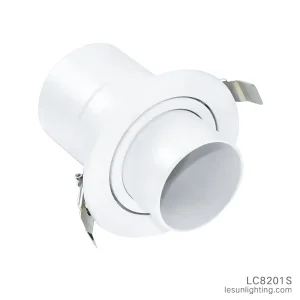
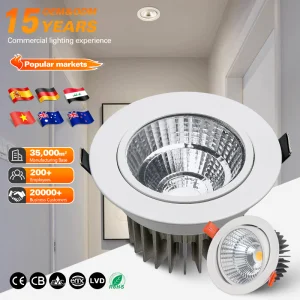
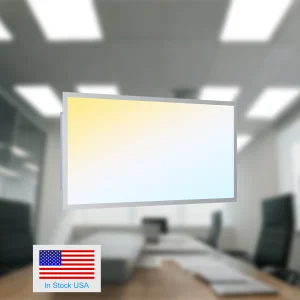
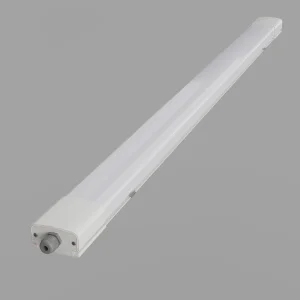
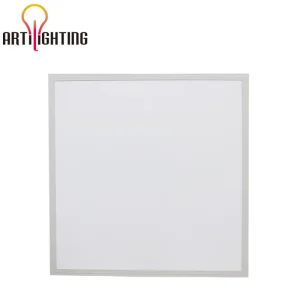
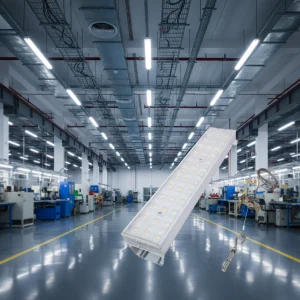
Conversely, modern indoor environments like office buildings, retail boutiques, and public transits focus on human-centric lighting designs. In high-end jewelry shops, where directional sparkle is vital to highlight gemstone facets, recessed and rotating accent lights with premium Color Rendering Indices (CRI > 90) are essential. For commercial offices and warehouse depots, low-UGR (Unified Glare Rating < 19) panels mitigate visual fatigue and improve workplace productivity. Transition spaces—such as subway corridors, parking garages, bridges, and river docks—require robust surface-mount batten fixtures that balance high physical impact resistance (IK ratings) with continuous, long-term efficiency.
 Ledlot Lighting