Top Trusted LED Spot Light Manufacturer & Suppliers
Empowering global enterprises with industrial-grade, precision-engineered optical solutions. Pioneering high-efficiency luminaires built for extreme durability, severe environments, and optimal human-centric performance.
Featured Industrial & Commercial Lighting Solutions
Discover our top-tier solid-state lighting arrays custom-designed to streamline modern architectural and commercial visual performance.
Comprehensive Architectural Guidance: LED Spotlights and Downlights
A technical whitepaper analyzing modern solid-state lighting arrays, thermal dynamics, and structural reliability.
As the architecture of commercial and industrial infrastructure evolves, the demand for highly optimized, energy-efficient, and long-lasting illumination systems has reached an unprecedented scale. Modern commercial spaces, high-density residential properties, and hazardous industrial workshops require specialized lighting devices. Among these, LED spotlights, slim downlights, and tri-proof luminaires represent the critical intersection of modern material engineering and optoelectronics.
Selecting a highly qualified manufacturer is not merely a procurement challenge; it is a foundational step in ensuring the durability of building infrastructure. An expert manufacturer should possess a vertically integrated supply chain, a robust engineering core, and advanced photometric validation equipment to maintain strict control over performance metrics. This whitepaper analyzes the mechanical, thermal, and optical components that define top-tier LED spotlights and commercial downlights, providing corporate buyers with a clear roadmap for sourcing and application engineering.
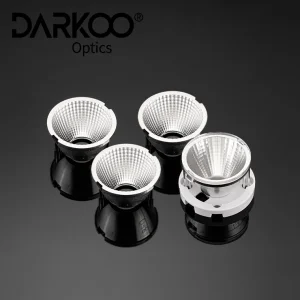
Key Optical Fact: The implementation of chip-on-board (COB) technologies, combined with precision-designed PMMA or polycarbonate reflectors, allows modern spotlights to deliver tightly controlled beam angles. This layout minimizes light scatter and maximizes Center Beam Candlepower (CBCP), making it ideal for directional accent lighting in architectural environments.
State-of-the-Art Production & Vertical Supply Chain Integration
Our organization has systematically unified primary production phases inside a highly controlled factory footprint to optimize value and quality control. By operating our own specialized injection molding, blister molding, and compression molding workshops, we ensure that every lamp housing, diffractor, and structural gasket conforms to strict engineering tolerances. This extensive integration limits our reliance on third-party hardware component suppliers, maintaining a streamlined cost structure while ensuring uniform quality.
Managing the mold production process allows our design engineers to rapidly prototype customized lighting enclosures. Whether adapting an aluminum chassis for heat dissipation or developing custom anti-glare louvers for low-UGR panel fixtures, our independent mold R&D center handles the complex geometry requirements. This vertical framework allows us to balance flexible custom output with high production volume, securing a stable annual manufacturing capacity of 3 million lighting units.
Why Sourcing From China Manufacturers Offers Decisive Market Advantages
Analyzing the core logistics, supply chain efficiency, and technological superiority of integrated Chinese production hubs.
Geographic and Logistic Positioning
Located only 38 kilometers away from the Port of Ningbo, one of the world's primary deepwater container ports, we operate a highly efficient export framework. This proximity minimizes inland freight transit times and lowers port-to-factory container shipping fees. It allows us to rapidly dispatch high-volume container shipments directly to Europe, North America, Southeast Asia, Australia, and the Middle East, reducing international logistics lead times by several critical days.
Unmatched Manufacturing Versatility
Our dynamic engineering capabilities cover injection molding, blister molding, and compression molding of lamp housings. This technological flexibility enables us to manufacture diverse geometries, customized lengths, and specific material configurations. We adapt our lines to produce polycarbonate (PC) and poly(methyl methacrylate) (PMMA) housings optimized for chemical resistance, UV stabilization, or heavy impact protection (up to IK10 standards) based on project demands.
Collaborative R&D and Prototyping
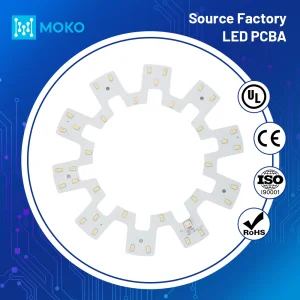
We work closely with client engineering departments to design, prototype, and manufacture custom luminaires based on detailed technical drawings or raw samples. Our in-house research and development team integrates driver designs, circuit layout optimizations (custom PCB designing), and customized optical configurations. This collaborative structure helps global project partners reduce time-to-market for complex architectural and industrial lighting designs.
Comprehensive Photoelectric Laboratory and Advanced Testing Infrastructure
Ensuring complete product reliability through rigorous scientific measurements, spectral analysis, and environmental simulations.
Under our operational philosophy of "Credit from Sincerity, Business from Quality, People First," we maintain strict quality control measures. We operate a fully equipped, in-house photoelectric laboratory, featuring advanced testing instruments and a dedicated darkroom for precise photometric evaluation. This facility allows our technicians to run comprehensive performance validations on all designs, ensuring that published data match real-world operation.
Our quality control center is equipped with a high-precision integrating sphere spectrometer. This instrument measures critical optical metrics, including luminous flux, color temperature (CCT), Color Rendering Index (CRI, Ra), R9 values, and chromaticity coordinates. By tracking spectral distribution metrics, we keep color consistency within strict MacAdam Ellipse steps. This ensures that every LED spot light or downlight batch provides consistent color temperature across commercial installations.
Environmental Durability Testing: Our testing laboratory contains dedicated ingress protection (IP) test chambers. Here, we expose our IP65 and IP66 tri-proof and outdoor fixtures to high-pressure water jets and dense dust environments. This step verifies the integrity of silicone seals and structural enclosures under harsh industrial conditions before manufacturing.
Furthermore, we perform comprehensive thermal testing to monitor heat sink efficiency, junction temperatures (Tj), and driver component thermal loads. By utilizing advanced thermal imaging cameras and multi-channel temperature loggers, we optimize the design of die-cast aluminum heat sinks. Keeping junction temperatures within target limits directly extends the L70 lifetime of our LED chips, ensuring reliable operation for over 50,000 hours.
Optimizing solid-state lighting deployments across diverse commercial, industrial, and municipal environments.
Industrial Warehousing & Workshops
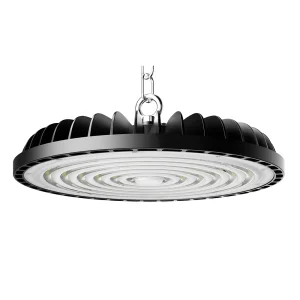
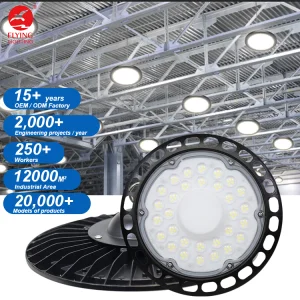
Our IP65 and IP66 tri-proof lights, alongside UFO high bay fixtures, are engineered for high-ceiling warehouses, production facilities, assembly lines, and mechanical workshops. Built to resist moisture, airborne dust, and vibration, these luminaires ensure consistent illumination. This high reliability reduces maintenance downtimes and supports worker safety and task accuracy in demanding production settings.
Commercial Offices & Retail
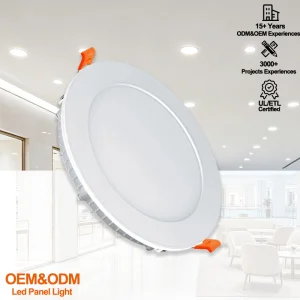
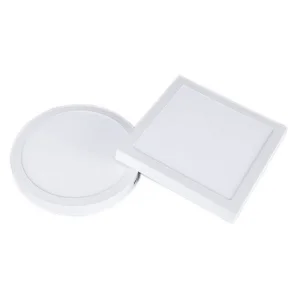
Our ultra-slim panel lights, adjustable spot downlights, and hexagon black panel lights are designed to create comfortable, low-glare office and retail environments. Engineered for a low Unified Glare Rating (UGR), these systems help minimize eye strain. They provide clean visual support for productivity in corporate workspaces, design studios, high-end retail showrooms, and modern galleries.
Extreme Environmental Settings
Designed for locations with strict moisture and dust standards, our durable tri-proof lights perform reliably in food processing bakeries, industrial kitchens, municipal swimming centers, tunnels, subways, and mining access routes. These sealed, corrosion-proof assemblies prevent environmental wear, protecting electrical components from damage and extending the system's operational life.
Global Industry Trends: Smart Drivers, Tunable White, and Glare Mitigation
Staying at the forefront of global technological transitions in solid-state lighting systems.
The global solid-state lighting sector is moving beyond simple lumen output to focus on lighting quality, adaptive control, and human-centric design. In commercial and residential spaces, the integration of 5CCT (Correlated Color Temperature) tunable architectures is becoming standard. By allowing field selection between warm white (2700K) and cool daylight (6500K), facilities can adjust lighting profiles to align with circadian rhythms, improving alertness in work hours and comfort in resting spaces.
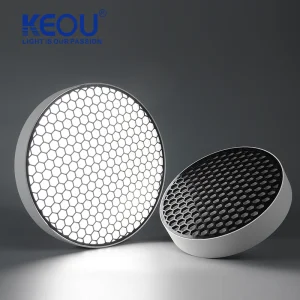
Simultaneously, glare mitigation has emerged as a key metric for premium indoor spaces. Regulatory bodies increasingly enforce strict limits on glare, calling for a Unified Glare Rating (UGR) under 19, or even under 16 for high-focus task environments. Meeting these targets requires advanced reflector shielding, micro-prismatic diffusers, and specialized structural designs, such as our hexagon anti-glare ceiling systems. These innovations prevent direct visual access to the LED chip, providing comfortable, indirect illumination.
Technological Integration: Modern driver configurations now incorporate dual-stage topologies that eliminate visible ripple and high-frequency flicker. This design protects sensitive optical equipment and supports stable, comfortable lighting. It ensures compatibility with smart dimming standards, including 0-10V, Triac, and digital addressable lighting interfaces (DALI).
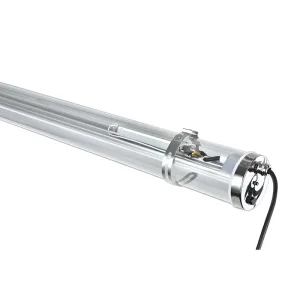
On the industrial side, resilience remains a primary focus. Fixtures now require high impact protection ratings, such as IK10, to survive mechanical stresses in busy factories. Additionally, corrosion-proof tubular designs using specialized technopolymer outer jackets are replacing standard metal enclosures in corrosive atmospheres. These industrial improvements help facilities reduce routine maintenance costs and maintain dependable operation in challenging environments.
Technical FAQ: Strategic Sourcing Insights for Industrial Systems
Addressing the core technical, compliance, and design queries of professional procurement managers.
What structural differences differentiate IP65, IP66, and IP69K ratings?
These ratings indicate increasing levels of protection against water and dust entry. An IP65 rating signifies protection against low-pressure water jets from any angle. IP66 indicates protection against high-pressure water jets, suitable for heavy seas or heavy washdowns. IP69K, the highest level, certifies that the enclosure can withstand close-range, high-pressure, high-temperature washdowns (typically 100 bar at 80°C). This rating is essential for food processing and medical spaces requiring sanitization.
How does your laboratory measure color consistency across manufacturing batches?
We use a high-precision integrating sphere spectrometer and goniophotometer to verify the spectral power distribution of each production lot. We sort LEDs using a strict binning process to keep color variations within a 3-step or 5-step MacAdam Ellipse. This controls chromaticity variations, ensuring consistent color output across multiple fixtures in a single installation.
Why is the proximity to Ningbo Port significant for global shipping operations?
Our location just 38 kilometers from the Port of Ningbo simplifies inland transport logistics. This proximity lowers container trucking costs, speeds up export dispatching, and helps secure reliable cargo boarding. These factors combine to provide more predictable shipping schedules for international buyers.
What customized design options are available for specialized corporate projects?
Our in-house R&D team provides comprehensive customization services. We can adjust printed circuit board (PCB) layouts, modify drivers for specific voltages, build custom wire harnesses, and design unique brackets. Additionally, our injection and compression molding facilities can manufacture bespoke housings using client technical drawings or sample components.
Which international quality and social responsibility certifications do you maintain?
Our manufacturing facilities and products comply with major global standards. We hold ISO9001:2000 Quality Management and BSCI (Business Social Compliance Initiative) certifications. Our commercial and industrial luminaires are fully certified under TUV GS, CE, RoHS, LVD, EMC, and SAA, meeting the strict imports requirements of European Union, Australian, and global markets.
Premium Spotlights and Specialized Downlights Collection
Explore our high-performance directional spotlights, flexible linear drivers, and low-UGR architectural fixtures.
 Ledlot Lighting