OEM/ODM LED Kitchen Lighting Manufacturer & Factory

Industrial-Grade, Smart LED Solutions Engineered for Commercial Kitchens, Food Processing Plants, and High-Performance Architectural Environments

Scientific Manufacturing Infrastructure

Our engineering facility implements rigorous testing paradigms to assure photometric accuracy, structural durability, and lifetime reliability.

3M+
Annual Set Capacity
100M+
Annual Sales (RMB)
IP66
Ingress Certification
38km
Distance to Ningbo Port

Global Standards Compliance

Fully compliant with TUV GS, CE, ROHS, LVD, EMC, SAA, and BSCI social responsibility guidelines, facilitating direct compliance clearance.

Optoelectronic Metrology

Equipped with internal Darkrooms, Integrating Sphere Spectrometers, and IP Ingress Testers to calibrate chromaticity coordinates and thermal load profiles.

In-house Tooling & Molding

Active compression, injection, and blister molding workshops ensure total control over polycarbonate (PC) and polymethyl methacrylate (PMMA) housings.

Engineering Resilient Kitchen Environments: The Science of High-Ingress LED Systems

In modern industrial architectural design, commercial food prep corridors, sub-level kitchens, and sanitary manufacturing floors present an aggressive set of operational threats to electronic systems. High relative humidity, concentrated airborne lipids, thermal gradients, and intense washdown protocols quickly compromise standard commercial-grade luminaires. As a pioneering OEM/ODM LED Kitchen Lighting Manufacturer & Factory, we design light fixtures specifically engineered to withstand these structural and environmental pressures while maintaining optimal photometric output.

"Our core management paradigm rests upon the pillars of 'Credit from Sincerity, Business from Quality, and People First.' By consolidating state-of-the-art optoelectronic diagnostic tools, automated mold design centers, and flexible manufacturing pipelines, we deliver lighting solutions that meet the rigid environmental criteria of international safety and performance agencies."

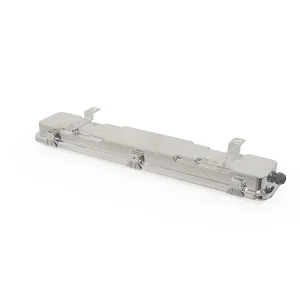
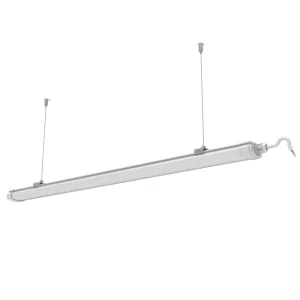
High-reliability kitchen illumination demands specific structural features. Standard indoor downlights decay rapidly when exposed to humidity and grease vapors. To address this, our flagship engineering pipeline focuses on heavy-duty IP66 and IP65 Tri-proof (waterproof, dustproof, and corrosion-resistant) lights. These fixtures are uniquely qualified for bathrooms, saunas, clinical processing wards, commercial canteens, military facilities, commercial bakeries, food material silos, assembly workshops, and critical logistics nodes.

1. Advanced Materials & Housing Physics: Injection, Blister, and Compression Molding

Achieving structural resilience against persistent ambient moisture and aggressive chemical sanitation agents starts with high-performance polymer selection. Our in-house injection molding and compression fabrication facilities process high-grade Polycarbonate (PC) and acrylic compounds. These materials offer unique engineering advantages:

  • Thermal Stress Management: Our engineering ensures the housing coordinates its expansion index with siliconized seals to prevent structural stress and leaks when subjected to temperature shifts.
  • Chemical and Vapor Shielding: Enclosures must resist corrosive sanitization protocols using chlorinated water, quaternary ammonium compounds, or high-temperature steam.
  • Optic Diffuser Engineering: We design frosted and micro-prismatic diffusers to mitigate direct glare (maintaining a low Unified Glare Rating UGR < 19) while optimizing light transmission efficiency.

2. The Technology Roadmap: IoT Integration, Dynamic Controls, and Circadian Systems

The global culinary and hospitality industry is shifting from static, high-consumption metal halide or early fluorescent solutions to smart, dimmable LED systems. Our engineering department continues to develop new technologies, with a roadmap focused on several key areas:

  • DALI-2 and smart dimming protocols: Enabling digital control interfaces to orchestrate localized illumination scenarios.
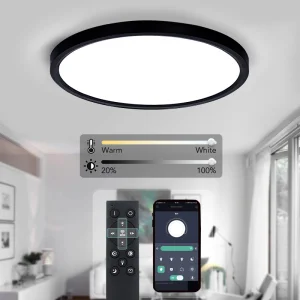
  • Wireless APP and IoT Gateways: Integrating secure Tuya, Zigbee, or Bluetooth Mesh controllers to allow remote diagnostic telemetry and zoning.
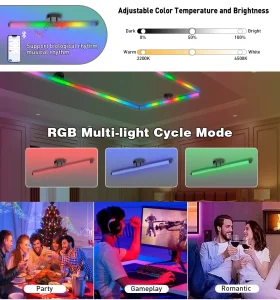
  • Dynamic CCT and Spectral Tuning: Tunable systems ranging from warm 3000K for public spaces to crisp 4000K or daylight 6500K for high-precision food preparation and inspection.
  • Circadian Lighting Systems: Emulating natural daylight shifts to help regulate melatonin production, reducing workplace fatigue for commercial kitchen workers on extended shifts.

3. China Factory 4.0: Supply Chain Resilience and Lean Production Metrics

Operating a vertically integrated industrial complex in East China allows us to optimize supply chain cost and speed. Our manufacturing facilities utilize advanced automated pick-and-place SMT pipelines for LED chip assembly, alongside dedicated injection molding workshops. This provides significant operational advantages:

  1. Direct Cost Optimization: Producing our own housings, custom metalwork, and PCB boards eliminates intermediary supply markups, passing savings directly to global distributors.
  2. Rigorous Testing Protocols: Every batch is validated inside our darkrooms using integrating sphere spectrometers, IP waterproof test booths, high-temperature aging chambers, and surge analyzers.
  3. Logistics Advantage: Situated only 38 kilometers from Ningbo Port, we ensure efficient global shipping lanes to major markets across Europe, North America, Southeast Asia, Australia, and the Middle East.
Our facility maintains an annual production capacity exceeding 3,000,000 sets of lights, generating over 100,000,000 RMB in annual turnover. This high capacity allows us to support large-scale industrial rollouts and long-term OEM contracts with consistent lead times.

Macro Environmental Solutions

From sanitary food preparation kitchens to hazardous mining corridors, our fixtures are designed to perform reliably in demanding structural environments.

Food Processing & Canteens

Waterproof, dustproof, and corrosion-resistant luminaires that withstand high-pressure washdowns and chemical sanitizers without yellowing or degradation.

Hazardous & Heavy Industry

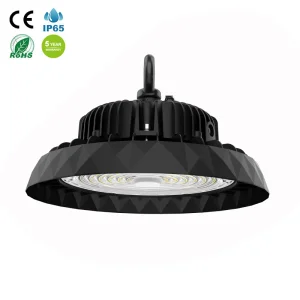
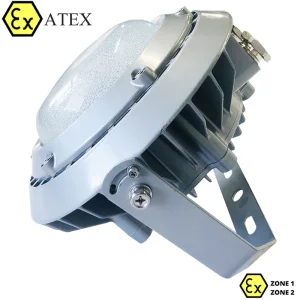
Certified explosion-proof models suited for gas stations, petrochemical refineries, chemical storage, coal mines, and grain handling facilities.

Transit & Infrastructure

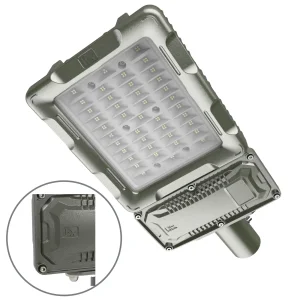
Engineered for public transportation hubs, tunnels, subway stations, bridges, waterfront docks, parks, and high-vibration parking facilities.

Sourcing Guide: Key Criteria for Industrial Kitchen and Wet-Room Lighting

When procurement executives evaluate LED manufacturers for high-moisture facilities, analyzing standard datasheet metrics is only the baseline. A comprehensive review of systemic design components is required to ensure long-term durability and safety:

A. Luminous Efficacy vs. Thermal Management

High-intensity LEDs generate localized heat at the junction point. If thermal dissipation pathway designs are inadequate, the LED chip will experience rapid lumen depreciation and color shifting. Our fixtures combine high-conductivity aluminum PCBs with specialized cooling fins to maintain junction temperatures well below critical thresholds, enabling stable operation across extended duty cycles.

B. Photometric Quality: Color Fidelity (CRI) and Spectral Power Distribution

In commercial kitchens and clinical environments, accurate color rendering is critical for food safety inspections and visual task performance. We supply downlights and linear fixtures with high Color Rendering Index metrics (CRI Ra > 90 / R9 > 50). This ensures natural color reproduction, helping workers evaluate food freshness and read instrument displays clearly.

C. Certified Ingress Protection (IP Code) Integrity

Understanding the difference between IP65 and IP66 rating mechanics is key to matching products to application sites. IP65 enclosures protect against low-pressure water jets from any direction. IP66 enclosures protect against high-pressure, heavy water spray. Our tri-proof products use high-elasticity silicone gaskets and compression glands to maintain waterproof performance over years of use.

"Our factory has successfully completed BSCI social responsibility audits and ISO9001:2000 quality management certification. Additionally, our main lighting catalog is certified by TUV GS, CE, ROHS, LVD, and EMC, providing verified compliance for international distributors."

Industrial Kitchen & Safety Lighting Q&A

Providing clear, expert answers to key technical questions on specification, testing, and regulatory compliance.

Why is IP65/IP66 structural sealing critical in commercial kitchen lighting?

Commercial kitchen environments feature high levels of airborne grease, humidity, and steam. Standard indoor lighting lacks adequate sealing, allowing grease vapors to penetrate the housing, settle on electrical circuits, and create potential fire or shock hazards. Our IP65 and IP66 rated Tri-proof luminaires utilize specialized silicone gaskets and chemical-resistant polycarbonate housings to prevent vapor ingress, ensuring safe and reliable operation under demanding conditions.

How does high Color Rendering Index (CRI) impact food safety and operations?

In food preparation and packaging facilities, accurate color rendering is essential for quality control. High CRI (CRI Ra > 90) lighting enables staff to accurately assess the freshness of raw ingredients, monitor cooking progress, detect discoloration, and verify cleanliness. Standard industrial lighting can distort color perception, which may lead to missed details during quality inspections.

What safety certifications are required for exporting luminaires to European markets?

Luminaires exported to Europe must carry CE markings, which verify compliance with LVD (Low Voltage Directive) and EMC (Electromagnetic Compatibility) directives. TUV GS certification provides third-party verification of product safety, while RoHS compliance confirms that hazardous materials are kept below strict limit thresholds. Our complete certification portfolio covers these requirements, helping global distributors streamline import and compliance clearance.

How does your factory manage cost controls while maintaining premium product standards?

We operate in-house injection, compression, and blister molding workshops to manufacture our own fixture housings. By producing these key structural parts internally rather than outsourcing them, we reduce markup costs, ensure raw material consistency, and maintain tight control over dimensional tolerances and build quality.

What parameters are verified during factory optoelectronic testing?

Every product batch undergoes testing in our internal darkroom using integrating sphere spectrometers. We verify total luminous flux output, luminous efficacy (lm/W), color temperature (CCT) stability, and color coordinates. Additionally, fixtures are subjected to high-pressure waterproof testing and electrical surge testing to confirm field reliability before shipment.

How do your customization options assist architectural buyers with custom project specifications?

Our dedicated R&D team can develop custom products using client-provided blueprints, technical specifications, or physical samples. We adjust driver boards, configure custom LED arrays, modify color temperatures, and customize housing materials to meet specific architectural requirements, offering a highly responsive customization pipeline.