Modern urban planners, municipal developers, and green enterprise procurers no longer view pathway lighting as a mere utility. Today, outdoor solar illumination is recognized as a cornerstone of sustainable, decentralized municipal infrastructure. As global initiatives align to meet net-zero carbon goals, the reliance on high-efficiency photodiode technologies combined with localized photovoltaic harvesting has intensified. Navigating this shift requires partnership with a CE certified manufacturer capable of delivering robust engineering, verified lumen output, and predictable structural lifespans.
Off-grid systems mitigate risks associated with municipal utility failures, line surges, and infrastructure aging, ensuring uninterrupted safety for pedestrian networks, pathways, and corporate campuses.
Modern architectural pathways integrate high-purity monocrystalline panels, leveraging high absorption coefficients and adaptive MPPT charge controllers to maximize energy collection even under overcast skies.
Through certified regulatory pathways like the CE (LVD/EMC), GS, and RoHS, products undergo rigorous testing, ensuring physical impact tolerance, electrical isolation safety, and electromagnetic harmony.
Procurement processes in institutional lighting have shifted focus from upfront capital expenditures (CAPEX) to lifecycle operational metrics (TCO). Procurement managers representing European and American distribution pipelines enforce strict requirements based on regulatory compliance, material traceability, and manufacturing transparency. To support long-term operations, pathway lighting systems must integrate robust technologies capable of resisting wind loads, extreme thermal ranges, and chemical exposure (such as coastal salinity).
Our enterprise maintains compliance with the CE, LVD, EMC, ROHS, and SAA directives. Every pathway luminaire and industrial lighting system passes thorough verification protocols overseen by accredited testing bodies like TUV, confirming the safety of internal circuitry, battery integration, and photobiological emissions.
Backed by verified BSCI (Business Social Compliance Initiative) audits, our production lines follow strict ethical manufacturing practices. In an industry where transparent ESG reporting is essential, our supply chain ensures that raw materials—from structural polymers to solar cells—are responsibly sourced.
Borrowing advanced structural engineering from our IP66 and IP65 industrial tri-proof lights, our outdoor luminaires are designed to withstand challenging environments. The housings, created using specialized blister and compression molding processes, resist dust ingress, water jet impact, and prolonged UV degradation.
Developing a reliable solar-powered pathway luminaire requires careful engineering across four core subsystems: the photovoltaic panel, the energy storage unit, the intelligent charge controller, and the LED engine. Over-specifying components leads to unnecessary capital cost, while under-specifying leads to premature system failures, especially during seasonal dips in solar irradiance.
Monocrystalline panels, featuring conversion efficiencies up to 22%, are selected for solar pathway systems to maximize energy density. Their low temperature coefficient ensures performance remains stable at high operating temperatures, optimizing energy yield in confined spatial envelopes.
Lithium Iron Phosphate (LiFePO4) chemistry is utilized for its safety and cycle life, delivering over 3,000 cycles at 80% Depth of Discharge (DoD). Integrated Battery Management Systems (BMS) protect against over-charging, over-discharging, and thermal runaway, maintaining stability across deep discharge cycles.
Maximum Power Point Tracking (MPPT) charge controllers continuously track the V-I curve of the solar array, increasing charging efficiency by up to 30% compared to standard PWM controllers. This ensures systems harvest sufficient energy under low-light or partially shaded conditions.
Municipalities and enterprise developers require complete lighting solutions designed for long-term integration. A typical urban development project includes diverse layouts, requiring specialized optics and form factors. By utilizing in-house tool design, injection molding, and photometric engineering, our solutions scale smoothly from pedestrian boardwalks to heavy industrial corridors.
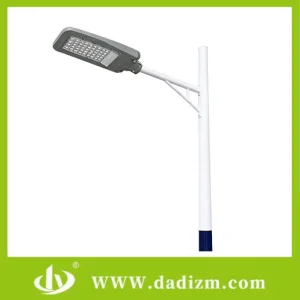
For public parks, plazas, and city squares, solar pathway lights provide safe illumination without the disruption and cost of trenching grid cables. The clean integration of the photovoltaic panel, battery, and LED source preserves architectural aesthetics while reducing installation overheads.
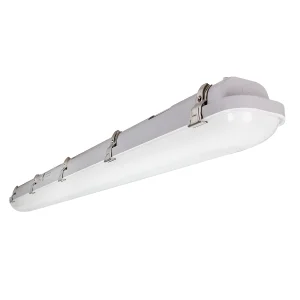
Leveraging our experience in manufacturing IP66/IP65 tri-proof lights, our outdoor luminaires are engineered to operate in challenging environments. Suitable for saunas, kitchens, pools, marine docks, and river banks, our designs prevent internal moisture condensation and seal out corrosive air.
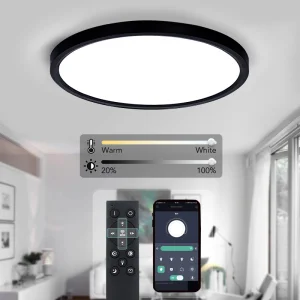
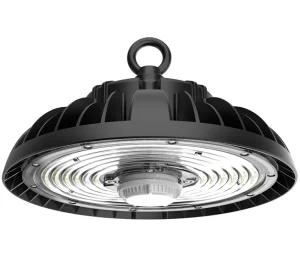
Large-scale commercial campuses, subways, warehouses, and underground parking lots benefit from modular pathway systems. By integrating dimming schedules and motion tracking, these systems reduce energy consumption, align with corporate ESG goals, and support carbon audit requirements.
The durability of our products is backed by advanced testing equipment and structured quality control workflows. In our dedicated research and testing center, electrical and optical engineers analyze every batch using specialized instruments to guarantee stable, real-world performance.
We test optical performance using integrating spheres and spectrometers. This equipment measures total luminous flux, color rendering index (CRI), spectral power distribution, and chromaticity coordinates to ensure consistent color quality.
Our darkroom facilities allow engineers to map spatial light distribution and generate accurate IES files. This precise photometric data helps lighting designers plan layouts and maintain compliance with local dark-sky regulations.
Pathway luminaires undergo continuous water immersion and spray testing in our IP waterproof chambers to confirm IP65 and IP66 ratings. This testing ensures long-term protection against rain, high humidity, and dust ingress.
Our factory operates under ISO9001:2000 and BSCI management systems. From raw material inspection to final packaging, every step is documented to ensure traceability and consistent manufacturing standards.
With in-house injection, blister, and compression molding capabilities, we develop custom lamp housings based on client blueprints or physical samples, adapting designs to meet project aesthetics and material requirements.
Located 38 kilometers from Ningbo Port, we utilize efficient transport links to minimize transit times and shipping costs. This proximity enables fast dispatch for large-scale municipal and commercial orders.
Supported by automated assembly lines and an annual capacity of 3 million lighting sets, we manage volume procurement requirements for major distributors, utility projects, and international contractors.
The next generation of pathway lighting will integrate into the broader IoT ecosystem of smart cities. Our ongoing research focuses on improving charging efficiency, battery lifespans, and communication modules to support connected urban environments.
We are exploring the integration of perovskite-silicon tandem solar cells, which have the potential to exceed 28% conversion efficiency. This technology will allow pathway lights to generate more power from compact surface areas.
Future luminaires will incorporate LoRaWAN and NB-IoT transceivers, enabling operators to monitor battery health, adjust dimming profiles remotely, and receive real-time maintenance alerts from a central management platform.
To support circular economy goals, our materials lab is developing bio-based composite polymers. These materials maintain IP66 protection throughout their service life and are fully recyclable at end-of-life.