1. Horticultural Luminaire Engineering: An Industry Whitepaper
As the global demand for sustainable indoor agriculture, commercial greenhouses, and urban vertical farms accelerates, the selection of the optical infrastructure becomes a pivotal variable in operational viability. At Ledlot Lighting, we merge advanced photobiological science with rugged high-end industrial engineering. Operating as a leading CE certified LED grow light factory and supplier, our core philosophy is driven by E-E-A-T (Experience, Expertise, Authoritativeness, and Trustworthiness), bringing structural stability and high photosynthetic photon efficacy (PPE) to commercial growers worldwide.
For modern operations, light is more than visibility—it is a precise bio-chemical catalyst. By engineering luminaires that output targeted wavelengths aligned with crop-specific absorption curves (such as Chlorophyll A and B, phytochrome red, and far-red triggers), we empower operations to manipulate growth stages, enhance secondary metabolites, and reduce cycle times. Our factory controls the entire design loop, from specialized injection molding and darkroom optical characterization to complete spectral optimization.
Efficacy and Thermal Control Integration
Our customized fixtures achieve top-tier system efficacy of up to 3.2 μmol/J. Combined with heavy-duty structural heat sinks and IP65/IP66 enclosures, they resist thermal runaway and degrading ambient factors (humidity, ammonia dust, and splash-downs), ensuring long-term PPF maintenance profiles.
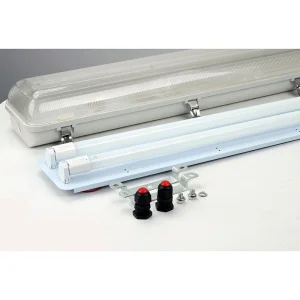
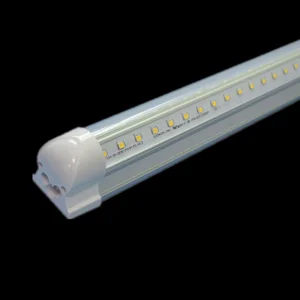
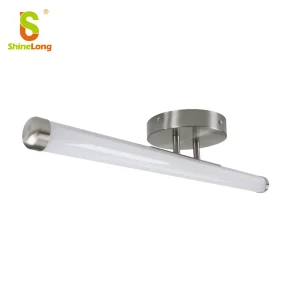
Whether your operation requires modular linkable linear arrays for multi-tiered rack layouts, anti-corrosive tri-proof batten lights for high-humidity vegetative bays, or ruggedized high-wattage top lighting for massive greenhouse infrastructures, our manufacturing lines supply components built to survive extreme industrial environments. We do not just build lights; we configure precision optical delivery systems engineered for bottom-line scalability.
Ledlot's commitment to quality is reinforced by a modern facility with advanced optoelectronic labs, including high-precision integrating spheres, goniophotometers, and specialized IP moisture chambers. This vertical integration allows us to serve enterprise buyers with direct costs, verified certifications, and guaranteed supply chain continuity.
100M+
Annual Sales (RMB)
3.0M
Annual Unit Capacity
38km
Distance to Ningbo Port
BSCI
ISO9001:2000 Certified
2. Technology Roadmap: The Future of Controlled Environment Agriculture (CEA)
Our R&D roadmap focuses on the intersection of solid-state lighting, dynamic spectrum control, and IoT automation. By anticipating commercial needs, we keep our partners prepared for changes in environmental regulations and energy markets.
Dynamic Spectrum Engineering
We are moving past static spectrum models. Our upcoming generation of LED grow fixtures features multi-channel spectral control, allowing growers to transition from vegetative blue-heavy light to flowering red/far-red dominant profiles through automated software protocols, optimizing morphological outcomes.
Advanced Wireless Smart Mesh
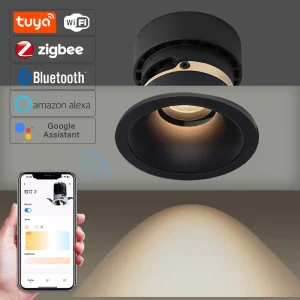
Integrating IoT frameworks (Tuya, Zigbee, DALI protocols) allows facility managers to group, dim, and program thousands of luminaires in real time. Built-in temperature sensors and diagnostic feedback loops proactively alert technicians to thermal anomalies before failures happen.
AI-Driven Photo-Sensory Systems
By linking smart grow lights with PAR sensors and real-time plant canopy cameras, we are developing responsive lighting loops. The system dynamically adjusts its wattage and output based on available daylight, minimizing energy consumption while hitting targeted daily light integrals (DLI).
3. China Factory 4.0: Supply Chain Resiliency & Lean Manufacturing
Our production facilities implement Industry 4.0 methodologies to provide enterprise-grade reliability, cost control, and customization flexibility. Our vertically integrated production model eliminates third-party markups and minimizes lead times.
In-House Mold Engineering & Plastic Processing
Unlike manufacturers that rely on generic, public molds, we operate our own independent mold research and development center along with specialized injection molding, blister molding, and compression molding workshops. This allows us to rapidly prototype and produce custom lamp housings, lens arrays, and structural gaskets, optimizing heat dissipation and IP-rated seals.
Having our own injection workshop gives us direct control over raw material composition (e.g., UV-stabilized polycarbonates and chemical-resistant PMMA), ensuring our luminaires stand up to the corrosive cleaners, humidity, and ammonia common in agricultural and industrial setups.
Rigorous Quality Control & Optical Labs
Quality is verified through scientific testing. We utilize a fully equipped darkroom alongside advanced instruments like integrating sphere spectrometers and IP waterproof level testers. Every batch undergoes thermal stress trials, high-voltage leakage tests, and detailed spectral distribution checks.
Our ISO9001:2000 quality management system and BSCI social compliance audits show our commitment to clean, ethical, and high-standard manufacturing, giving global distributors and sourcing managers complete confidence.
4. Macro Industry Solutions: From Commercial Greenhouses to Extreme Facilities
Ledlot's lighting solutions are engineered for diverse environments. We tailor our structural designs to match the unique chemical, physical, and environmental challenges of your site.
IP65 / IP66
Humid Commercial Greenhouses
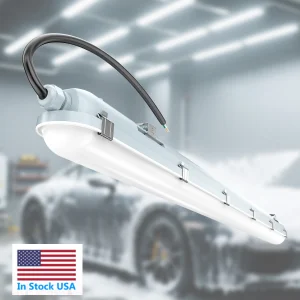
High moisture and water sprays require reliable seals. Our IP65 and IP66 tri-proof fixtures resist humidity and dirt buildup, maintaining stable light output.
Explosion Proof
Hazardous & Industrial Zones
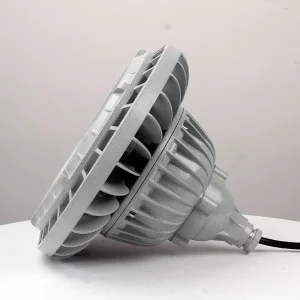
Our heavy-duty, explosion-proof linear solutions operate safely in volatile chemical warehouses, coal processing zones, and extraction labs.
Ammonia Proof
Poultry Farms & Corrosive Sites
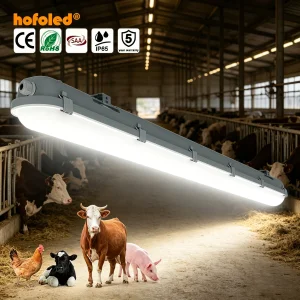
Farms generate significant ammonia gas. Our ammonia-resistant batten lights feature stainless steel clips and specialized components that prevent corrosion over years of use.
5. Quality Standards & Global Compliance
Compliance is a core requirement for commercial installations. Ledlot ensures our fixtures meet international safety, environmental, and electromagnetic standards to simplify local permitting and utility rebates.
All Ledlot horticultural and industrial lights carry official certifications. Our products are thoroughly tested for safety, low electromagnetic interference, and chemical compatibility.
TUV GS & CE: Certified safety compliance with EU low voltage (LVD) and electromagnetic compatibility (EMC) directives.
RoHS: Lead-free construction using components that protect workers and the environment.
SAA: Fully compliant with electrical safety requirements in Australia and New Zealand.
Rebate Qualification Assistance
Utility providers often offer significant incentives for high-efficacy lighting upgrades. Our CE-certified and photobiologically tested luminaires help commercial growers secure these energy rebates, accelerating return on investment (ROI).
Our logistics support handles everything from shipping to compliance documentation. Situated just 38 kilometers from Ningbo Port, we coordinate prompt container loading and export clearance, ensuring reliable deliveries across Europe, the Americas, Australia, and Asia.
6. Technical Q&A / Frequently Asked Questions
Technical questions and answers regarding our LED grow lights, certifications, customizations, and supply chain capacities.
What testing procedures secure your CE and RoHS status?
Every luminaire undergoes tests under LVD (Low Voltage Directive) and EMC (Electromagnetic Compatibility) protocols. We test for electrical insulation, leakage currents, heat dissipation under loads, and electromagnetic radiation limits. RoHS compliance is verified through mass spectrometry on plastics, solder joints, and electronic components to ensure they remain lead-free and non-hazardous.
How does in-house injection molding benefit OEM/ODM buyers?
Operating our own injection, blister, and compression workshops reduces structural development times. We can customize casing shapes, lengths, and mounting channels directly from drawings or samples without relying on external suppliers, keeping manufacturing costs competitive.
What makes your IP65/IP66 Tri-proof lights suitable for farming and food production?
Our tri-proof light range is designed to prevent dust ingress and resist high-pressure water washdowns. Using robust materials and chemical-resistant silicone seals, they perform reliably in humid, high-exposure settings like vertical farms, commercial kitchens, wash bays, and poultry operations.
How does port proximity help reduce logistics overhead?
Located 38 kilometers from Ningbo Port, our trucks transport containers directly to the container yard in under an hour. This proximity reduces overland freight costs, avoids shipping delays, and helps maintain a predictable supply chain.
 Ledlot Lighting