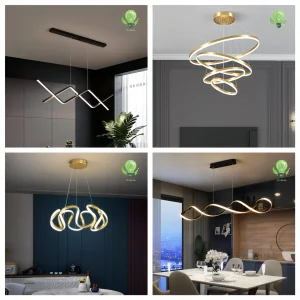
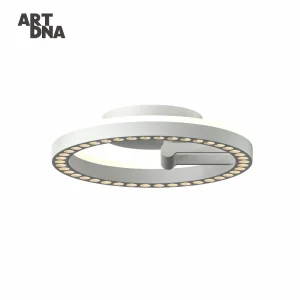
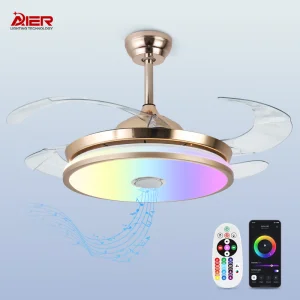
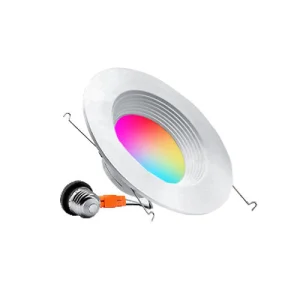
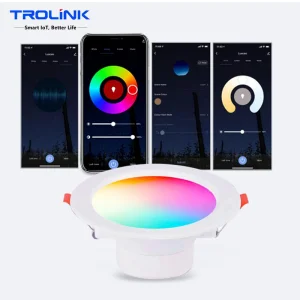
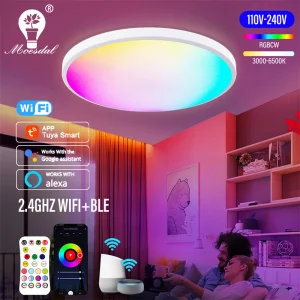
Smart APP Control Ceiling Light Manufacturer & Supplier in Japan

Empowering Architectural Innovation, High-End HEMS Integration, and Energy Efficiency Across Japan’s Modern Cities.

Send Inquiry Now

Smart Lighting Landscape in Japan: Business & Industrial Outlook

Analysing the intersection of HEMS technology, strict regulatory criteria, and Japan's carbon neutrality target by 2050.

Japan’s HEMS Integration and the ECHONET Lite Framework

The Japanese domestic market is currently undergoing a rapid transformation driven by the integration of Smart Home Energy Management Systems (HEMS). Under the Ministry of Economy, Trade and Industry (METI) directives, Japanese homes are shifting toward zero-energy housing (ZEH). Smart APP control ceiling lights are no longer merely aesthetic fixtures; they are integral nodes in the domestic power grid.

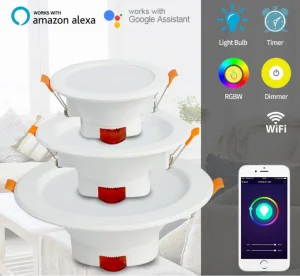
By adopting advanced communication frameworks, our line of ceiling lights integrates seamlessly with the Japanese ECHONET Lite standard and local IoT platforms. This compatibility allows local general contractors and electrical design firms to deploy systems that respond dynamically to peak load pricing and local demand-response events, securing a key competitive advantage in metropolitan regions like Tokyo, Yokohama, and Osaka.

Seismic Engineering and Japanese Space Constraints

Engineering products for Japan requires strict compliance with localized structural physical parameters. Due to frequent seismic activities, ceiling lights must feature lightweight, high-tensile structural integrity combined with standardized mounting options like the "Rosette" (引っ掛けシーリング) mechanism.

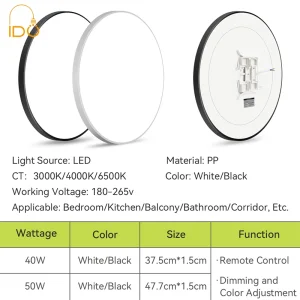
Our ultra-thin, low-mass designs reduce shear strain on ceiling mounts during tremors. Concurrently, space utilization trends in dense urban apartments require flush-mounted profiles. By utilizing specialized PMMA diffusers and aluminum-acrylic compositions, we achieve uniform light emission without creating dark spots, maximizing the perception of vertical space in rooms with lower ceiling clearances.

Information Gain Insight: Modern Japanese real estate development values the synergy between CCT (Correlated Color Temperature) tuning and the natural circadian cycle. By providing lighting profiles custom-tailored to Japanese housing habits, developers can document improved occupants' wellness, driving high rental yields and elevated asset valuation.

Technology Roadmap: Matter, Zigbee, and Human-Centric Lighting

A breakdown of the protocols and driver designs engineering the future of high-stability smart lighting.

Unified Matter Protocol
Unified local control that eliminates ecosystem silos. Our current hardware roadmap natively targets Matter-over-Thread, ensuring direct compatibility with Apple Home, Google Home, Alexa, and localized Japanese voice assistants without requiring external bridges.
Isolated Flicker-Free Drivers
Engineered to support 50Hz (Eastern Japan) and 60Hz (Western Japan) grids seamlessly. The isolated driver topology features custom capacitors rated for 50,000 operational hours, minimizing electromagnetic interference (EMI) to exceed VCCI requirements.
Dual-Channel CCT Dimming
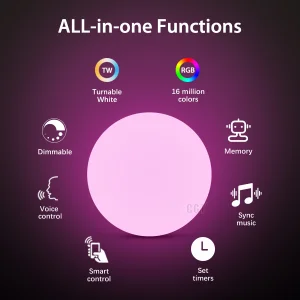
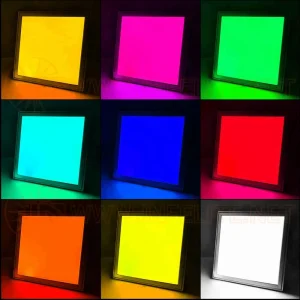
Dynamic range adjustment from 3000K warm tone up to 6500K daylight. With smooth PWM dimming transitions down to 1%, users can adapt light scenes smoothly to support cognitive work during the day and restorative rest in the evening.

Reliable B2B smart lighting integration demands deep coordination between control chips and physical drivers. Our products use dual-protocol chipsets (WiFi + BLE Mesh or Zigbee 3.0) that permit offline control configuration via localized gateways. This ensures that even in the event of an external network failure, local mesh routing protocols keep all lights in office buildings, nursing homes, and residential estates fully operational.

China Factory 4.0: Unmatched Supply Chain Resilience

Combining advanced industrial engineering with optimized logistics routes to ensure absolute consistency and low lead times.

100M+
Annual Sales (RMB)
3 Million
Annual Production (Sets)
38 km
Distance to Ningbo Port
Zero-Defect
Quality Target Rate

We operate a advanced manufacturing infrastructure designed to deliver maximum cost-efficiency while maintaining high product quality. Our company has established a dedicated injection molding workshop, blister molding workshop, and compression molding lines for custom lamp housings. This deep vertical integration means we handle raw polycarbonate (PC) and polymethyl methacrylate (PMMA) pellets directly, shaping them into high-performance diffusers under strict cleanroom conditions. Controlling the housing production internally allows us to accommodate unique lengths, custom shapes, and anti-yellowing specifications.

As an industry-leading OEM/ODM manufacturer, we leverage high automation levels across our SMT assembly lines and automated packaging divisions. This keeps our yearly production capacity scaling up to 3 million lighting sets, generating annual revenues in excess of 100 million. By utilizing local supply chains and maintaining optimized manufacturing practices, we are able to manage production costs tightly while passing these pricing advantages on to our distributors and commercial partners.

Logistics represents a critical component of supply chain stability for our Japanese buyers. Located just 38 kilometers away from Ningbo Port, we utilize one of China's most active deepwater container terminals. This geographical advantage translates directly into reduced inland transit costs, flexible shipping schedules, and highly reliable transit lead times to key Japanese points of entry, including Tokyo, Yokohama, Nagoya, and Kobe.

Quality Control Framework & Global Compliance

Verifiable quality testing, specialized optoelectronic equipment, and international system certifications.

Advanced Optoelectronic Laboratories

Operating an independent mold research center and darkroom facility allows us to inspect and refine product specifications in-house. We run regular testing procedures using integrating sphere spectrometers, IP waterproof test chambers, and electrical load analyzers. Every smart fixture is verified to establish its photometric performance (luminous flux, color rendering index, and spatial light distribution) before leaving the factory.

In addition to high-performance indoor ceiling lamps, we manufacture rugged IP66 and IP65 Tri-proof lighting systems. These high-grade waterproof, dustproof, and moisture-proof lights are engineered to perform in harsh conditions like kitchens, public saunas, indoor pools, train stations, subways, and damp underground parking structures.

Compliance Portfolio and Certifications

Quality management at our facility is governed by ISO9001:2000 quality management systems and verified through BSCI audits. Our smart lighting ranges conform strictly to the international regulatory environment. We hold active certifications for TUV GS, CE, SAA, RoHS, LVD, and EMC.

For Japanese procurement contracts, we collaborate closely with our clients to verify all components align with local electrical guidelines. From adapting drivers to carry the circular PSE mark to resolving thermal dissipation challenges in compact insulated ceilings, we ensure our products pass third-party testing with full documentation.

Macro Industry Solutions for Japanese Infrastructure

Providing specialized product options for environments that demand moisture protection, high durability, and advanced controls.

Commercial lighting needs vary drastically based on operational environment. In retail and dining settings throughout Japanese cities, our CCT-shifting panel lights let businesses adjust room ambiance dynamically. Healthcare facilities and hospitals utilize our high-CRI smart lighting models to support physician evaluation accuracy and soothe patient anxiety.

For demanding environments, our IP66 and IP65 Tri-proof lighting solutions perform reliably. Built to resist water projection, dust entry, and moisture condensation, these fixtures are widely used in commercial bakeries, clinical kitchens, and industrial production spaces.

Additionally, our municipal applications cover spaces like pedestrian underpasses, parking zones, bridges, parks, and train platforms. By using robust injection-molded casings and custom-extruded aluminum heat sinks, these lights resist vibration and environmental changes, ensuring steady service and minimal maintenance overhead for regional transit operators.

Frequently Asked Questions & Technical Insights

Detailed information regarding regulatory compliance, protocol integration, logistics, and customizable features.

Q1: How do you guarantee compliance with Japan’s PSE (Product Safety Electrical Appliance & Material) regulations?
Our smart ceiling lighting systems use electrical drivers designed to meet PSE Circle requirements. We partner with recognized testing bodies to complete essential electromagnetic compatibility (EMC), voltage stress, and insulation evaluations. The electrical designs are refined to manage heat effectively under insulation, satisfying the strict requirements of Japanese building construction methods.
Q2: Can your smart ceiling lights integrate directly with local HEMS controllers like ECHONET Lite?
Yes. Our smart products can connect with local gateways that translate standard Zigbee 3.0 or WiFi/BLE commands into the ECHONET Lite standard. This permits developers to link the lights with central home control systems, enabling local utilities and users to balance electricity demand dynamically.
Q3: How does your factory control housing costs and assure quality for custom projects?
We handle housing production internally using dedicated SMT lines, automated injection molding, blister forming, and compression systems. This integrated setup keeps manufacturing costs predictable, avoids supplier markups, and allows us to test components thoroughly in our integrating sphere and darkroom facilities.
Q4: What is the typical logistics timeline for deliveries to major ports in Japan?
With our factory located just 38 kilometers from Ningbo Port, we can pack and load container shipments quickly. Sea transit from Ningbo to major hubs like Tokyo, Yokohama, or Osaka typically requires 4 to 7 days. This allows us to keep supply pipelines efficient and lower safety stock requirements for our distribution partners.
Q5: Do you support custom color configurations (CCT) and housing materials?
Yes. We offer fully customizable lighting properties. Our R&D division can adjust light performance to target specific color metrics (up to CRI 95+) and CCT limits (from 2700K up to 6500K). We can also adjust the physical dimensions, diffuser styles, and plastic blends to meet specific architectural design goals.
Q6: What certifications are held by your manufacturing plant and products?
Our company is managed according to ISO9001:2000 systems and maintains verified BSCI status. Our lighting products are certified to conform with international quality marks, holding valid certificates for TUV GS, CE, SAA, RoHS, LVD, and EMC.

Accelerate Your Smart Lighting Portfolio in Japan

Partner with a vertically integrated OEM/ODM manufacturer. Get reliable quality compliance, cost-efficient shipping via Ningbo Port, and flexible options for localized product designs.

Send Inquiry Now