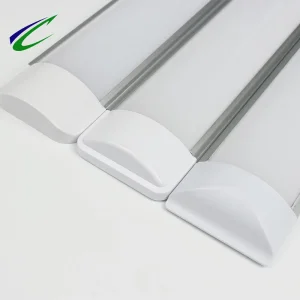
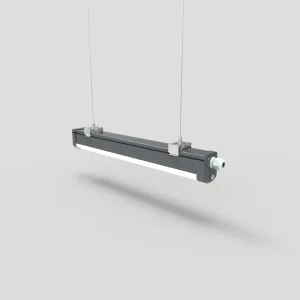
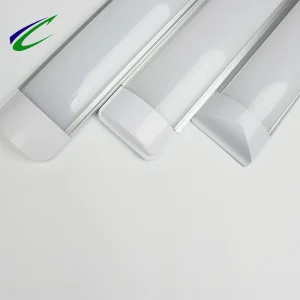
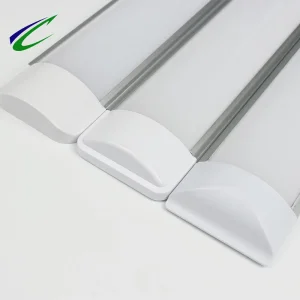
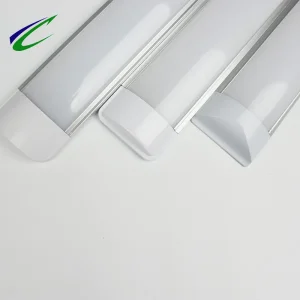
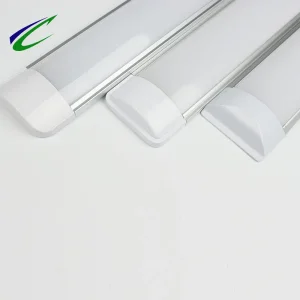
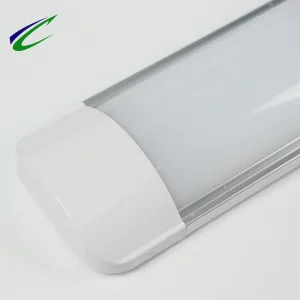
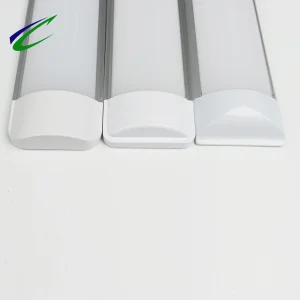
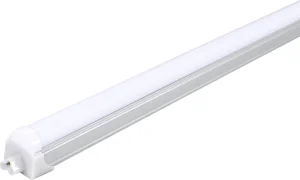
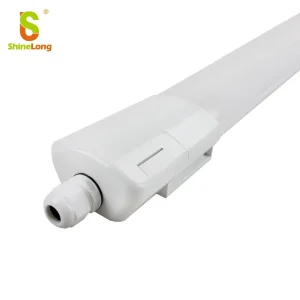
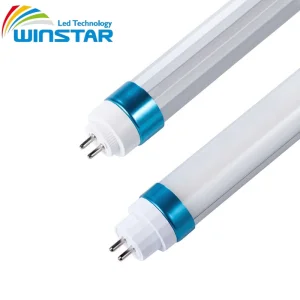
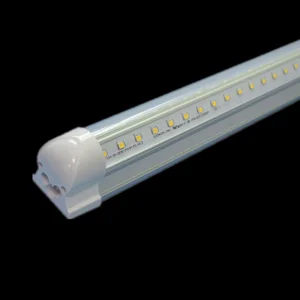
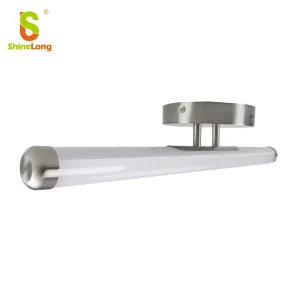
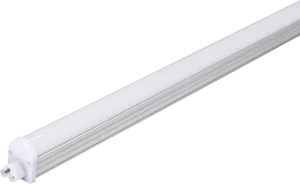
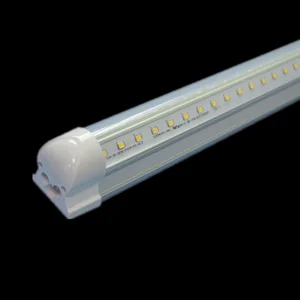
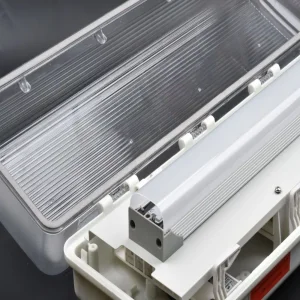
Direct from factory supply, high-efficacy linkable linear battens configured for continuous-run engineering installations.
The metropolitan area of Greater Jakarta, locally designated as Jabodetabek (comprising Jakarta, Bogor, Depok, Tangerang, and Bekasi), serves as the primary industrial engine of Indonesia. With rapid economic growth across major logistics corridors such as the MM2100 Industrial Town, Karawang International Industrial City (KIIC), and Cikarang, the demand for highly efficient, robust, and low-maintenance lighting has escalated. These industrial developments house extensive manufacturing plants, massive logistics distribution centers, cold chain supply facilities, and automotive assembly lines that run continuous 24/7 operations.
Operating industrial equipment in Jakarta involves overcoming challenging tropical climate factors. The region experiences prolonged wet seasons characterized by high relative humidity (often exceeding 85% to 95%), high ambient temperatures averaging 32°C to 38°C inside unconditioned warehouses, and periodic monsoonal flooding. In coastal areas near the Tanjung Priok Port, atmospheric salinity further threatens standard metal structures and electrical fixtures. Standard linear lights often fail due to moisture ingress, thermal stress, and corrosive oxidation of circuit boards, leading to high maintenance costs and operational disruptions. Consequently, project specifications for new warehousing and infrastructure systems require high-protection IP65 or IP66 vapor-tight, dustproof, and waterproof linkable LED Tri-proof fixtures.
"For engineering firms operating in Tanjung Priok, Bekasi, and Cikarang, lighting solutions must exceed basic electrical safety. They must prevent internal condensation, withstand high ambient operating temperatures, and provide consistent lumen output over years of continuous operation."
LED Tri-proof lights represent a significant evolution in linear ceiling lighting, replacing old fluorescent vapor-tight fixtures with unified, high-efficacy solid-state lighting. The term "Tri-proof" designates resistance to three environmental hazards: dust, water, and corrosion. Traditionally, these fixtures were self-contained single units, requiring individual wiring runs and separate junction boxes. However, modern linear infrastructure design focuses heavily on linkable configurations, also known as daisy-chainable or continuous-run linear fixtures.
Linkable LED Tri-proof systems allow multiple fixtures to connect end-to-end, utilizing integrated internal loop-through wiring (3-wire or 5-wire systems for single/three-phase power distribution and dimming signals). This design simplifies the electrical layout of large areas:
Annual Sales (RMB)
Annual Production Capacity
Proximity to Ningbo Port
Quality Certified Factory
Global procurement teams and EPC contractors require specific performance parameters to ensure project compliance and longevity. Tri-proof lights must be evaluated across several key categories: luminous efficacy, thermal performance, driver reliability, and material durability. Our manufacturing plant operates integrated injection molding, blister molding, and compression molding workshops, allowing complete quality control from the raw polycarbonate granules to the finished assembly.
| Specification Feature | Standard Grade Fixture | Premium Industrial Tri-proof Grade | Indonesian Project Benefit |
|---|---|---|---|
| Luminous Efficacy | 90 - 100 lm/W | 130 - 160 lm/W (SMD2835) | Up to 45% energy cost reduction on PLN grid tariffs |
| Ingress Protection | IP65 | IP66 / IP69K option | Resists high-pressure monsoonal water jets & dust storms |
| Impact Protection | IK05 - IK07 | IK08 - IK10 | Withstands forklift impacts and heavy tool drops |
| Voltage Range | AC 220-240V | AC 85-265V Wide Voltage Driver | Survives PLN grid voltage spikes & brownouts |
| Working Temperature | 0°C to 35°C | -25°C to +50°C (Thermal-isolated) | Maintains stability in unventilated tropical facilities |
For high-performance applications, the selection of materials is critical. While polystyrene (PS) is cost-effective for basic applications, heavy industrial environments require co-extruded Polycarbonate (PC) or Aluminum with a PC housing. A PC housing provides strong impact resistance (IK10) and is UV-stabilized to prevent yellowing in sunny tropical environments. An aluminum core serves as an efficient heat sink, maintaining LED junction temperatures below 75°C to preserve color stability and maximize lifespan.
Different industrial sectors within Greater Jakarta have unique operating requirements, calling for targeted lighting configurations:
Tunnels and underground railways require continuously operated linear lighting that can withstand constant vibration from trains, high ambient moisture, and dust buildup. Linkable linear lights must have IP66 sealing to allow high-pressure washdowns. Continuous daisy-chained lines also prevent driver distraction by ensuring uniform light distribution without flickering or uneven patterns.
With North Jakarta serving as a key maritime shipping hub, cold storage facilities require lighting that remains energy-efficient at temperatures as low as -25°C. At these sub-zero temperatures, standard fluorescent fixtures lose significant lumen output. In contrast, our premium SMD2835 LED Tri-proof tubes are engineered for cold environments, maintaining high luminous efficacy and preventing internal condensation during thermal cycling.
Manufacturing and assembly facilities in Tangerang and Karawang require fixtures resistant to chemical exposure, oil vapors, and mechanical dust. Our IP66-rated fixtures feature PMMA or corrosion-resistant PC covers and silicone gaskets to protect internal components from chemical degradation, reducing fire hazards and maintaining clean operating environments.
Entering the Indonesian market requires complying with local import regulations and meeting safety standards set by the Standar Nasional Indonesia (SNI). Our manufacturing operations follow strict quality control guidelines. We hold ISO9001:2000 quality management certification and BSCI corporate social responsibility certification. Our product range is tested and certified under TUV, GS, CE, RoHS, LVD, and EMC standards, ensuring smooth customs clearance and compliance for domestic projects.
Factory Testing Equipment: Our facilities feature an independent mold research and development center, a dedicated photometric darkroom, integrating sphere spectrometers, IP waterproof test chambers, and electrical safety testers. This ensures every production batch meets strict waterproofing and electrical safety requirements before shipping.
For Indonesian municipal projects, we provide custom driver options that accommodate voltage variations on the local PLN grid. By utilizing wide-voltage, isolated constant-current drivers (AC 85-265V) with integrated 4kV/6kV surge protection, our fixtures resist voltage drops and surges, reducing premature failure rates and ensuring reliable operation in remote industrial zones.
Modern commercial lighting design is moving toward smart controls, high-efficacy fixtures, and environmentally friendly materials. Our engineering R&D team is continually updating our product lines to align with these trends:
Equipping fixtures with high-frequency microwave motion sensors and daylight harvesting controls. This reduces power output when zones are unoccupied, aligning with Indonesia's national decarbonization goals.
Integrating high-temperature LiFePO4 batteries into the linear casings. If primary power fails, the fixtures provide 90 to 180 minutes of continuous emergency lighting, satisfying building safety regulations.
Using internal switch settings to adjust color temperatures (3000K/4000K/6500K) and power levels in a single fixture. This reduces stock requirements for distributors while meeting diverse local project needs.
Explore our complete manufacturing portfolio of dustproof, waterproof, and corrosion-resistant linear lighting systems.
In-depth responses to common technical questions regarding linkable LED Tri-proof system deployments in Indonesia's industrial corridors.