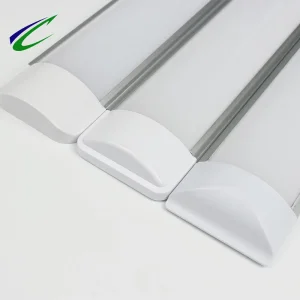
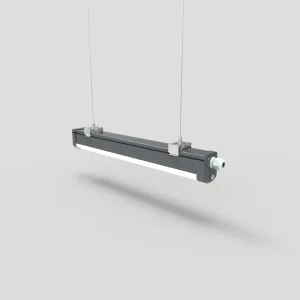
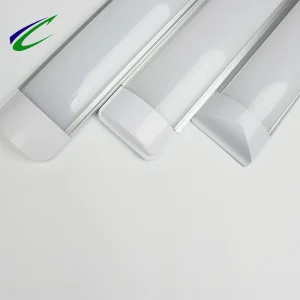
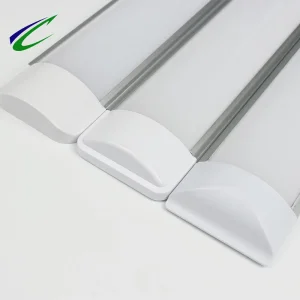
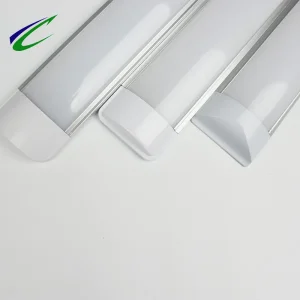
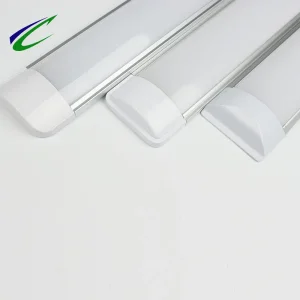
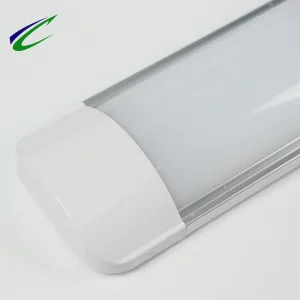
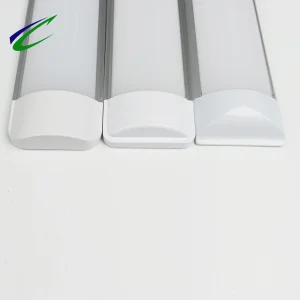
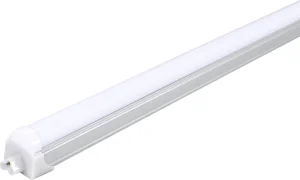
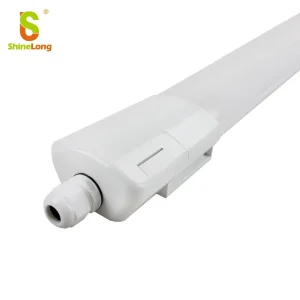
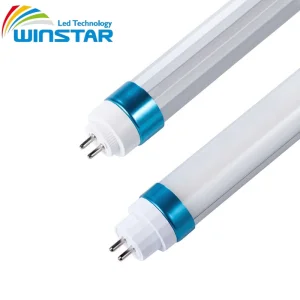
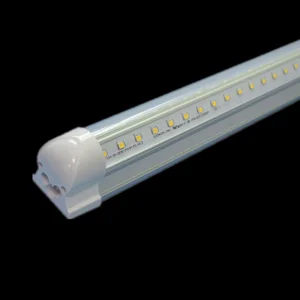
Linkable LED Tri-proof Tube Factory & Exporter in Nigeria
Industrial-Grade Waterproof, Dustproof, and Corrosion-Resistant Linear Lighting Solutions Engineered for West Africa's Grid Demands and Humid Environments
Industrial Lighting Demands in Nigeria: A Strategic Assessment
As Africa's most populous nation and one of its largest economies, Nigeria is undergoing a rapid industrial transition. Major economic hubs—spanning the sprawling industrial zones of Lagos State (including Ikeja and Apapa), the petrochemical infrastructure of Port Harcourt, the manufacturing nodes of Kano, and the high-density retail centers of Abuja—face systemic challenges related to energy efficiency, humidity, and atmospheric dust. In heavy-duty operations, traditional lighting technologies like fluorescent tubes fail to meet the modern financial and physical constraints of West African commercial infrastructure.
The primary barrier to operational reliability in Nigeria is power grid instability, characterized by destructive voltage surges and frequent dropouts that quickly degrade low-grade LED drivers. Furthermore, high ambient humidity in coastal areas and heavy dust storms during the harmattan season demand lighting systems built to dustproof, waterproof, and corrosion-resistant standards. Industrial facility managers, engineering procurement contractors (EPCs), and commercial property developers are rapidly standardizing on linkable LED tri-proof tubes to lower overheads, improve safety, and ease maintenance demands.
Industrial & Commercial Energy Dynamics in Nigeria
Nigeria's electricity market features a mix of grid supply and localized diesel generator backup. With diesel prices subject to volatility and electricity tariffs rising, energy efficiency is a key operational metric. Traditional T8 and T12 fluorescent tubes draw up to 60% more power than modern LED batten lights while offering less than a third of the service life. Moving to high-lumen, linkable LED tri-proof lighting yields a direct return on investment (ROI) by cutting lighting-specific power draw by over half.
Equally critical is the ability to survive volatile input voltages. The Nigerian electricity grid commonly experiences drops below 180V and surges above 265V. To prevent premature component failure, our export-grade linkable LED tri-proof tubes feature advanced isolated constant-current drivers designed for an ultra-wide voltage range of AC85-265V. This engineering safeguard prevents flickering and driver burnouts, ensuring operations continue smoothly during power fluctuations.
Technical Roadmap: The Architecture of Premium Tri-Proof Lighting
Our linkable tri-proof series is built for long-term survival in demanding environments. Standard lighting degrades quickly under the mechanical stress and temperature fluctuations typical of West Africa. Our industrial tri-proof design features a robust structural architecture:
IP65 & IP66 Ingress Protection: Uses high-elasticity silicon sealing rings and heavy-duty polycarbonate (PC) or aluminum-PC housings. This prevents the entry of moisture, fine dust particles, and vapor, ensuring long-term performance in wet coastal processing areas and dusty inland warehouses.
Impact Resistance (IK08 to IK10): Heavy-duty, co-extruded housings absorb mechanical impacts. This design prevents cracking or shattering in busy manufacturing bays, active loading docks, and mining tunnels.
High-Efficiency LED Chipsets: Powered by premium SMD2835 LEDs. The system achieves high luminous efficacy (up to 140 lm/W), generating superior brightness at a lower power draw.
Thermal Management: Features integrated internal aluminum heat sinks. Proper heat dissipation keeps junction temperatures low, ensuring the LEDs maintain their brightness and color accuracy throughout their 50,000-hour service life.
Seamless Linkable Design: Built-in double-ended waterproof quick connectors support fast, tool-free daisy-chaining. This design minimizes the wiring runs required for long corridors, subway platforms, and large supermarkets, significantly reducing installation labor and material costs.
3,000,000+
Annual Production Capacity
100M+ RMB
Annual Global Sales Value
38 KM
Distance to Ningbo Deepwater Port
50,000+ Hrs
L80B10 Rated Service Life
China Factory 4.0: Supply Chain Resilience & Efficiency
How our advanced production capabilities, strict quality controls, and logistics advantages benefit West African buyers.
Dedicated R&D and Molding Center
Our facility houses a dedicated mold research and design department alongside an advanced injection molding workshop. This vertical integration allows us to customize product shapes, lengths, and materials (including PC, PS, PMMA, and pure aluminum) to match specific project specifications and thermal environments.
Advanced Optoelectronic Testing
Every batch of our export products undergoes rigorous testing in our on-site darkroom and integrating sphere labs. From spectral analysis and color temperature verification to IP waterproof testing and high-voltage surge simulation, we ensure that every unit shipped to Nigeria is built to perform reliably.
BSCI & ISO9001 Certification
We operate under certified ISO9001:2000 quality management systems and maintain BSCI social compliance standards. Our lighting solutions carry global safety certifications, including TUV, GS, CE, RoHS, LVD, and EMC, making them easy to clear through international customs and local compliance agencies.
Logistical Advantage: Our factory is located just 38 kilometers from Ningbo Port, one of the world's busiest container hubs. This geographical proximity cuts down inland shipping times and costs, allowing us to rapidly dispatch containers to West African ports like Apapa, Tin Can Island (Lagos), and Onne (Port Harcourt). This efficient logistics chain helps us maintain competitive pricing and reliable delivery schedules for our partners in Nigeria.
Tailored Industrial & Infrastructure Solutions
Optimized lighting designs built to withstand the unique environmental and operational conditions of West Africa.
1. Commercial Warehouses, Port Logistics & Storage Hubs
In large distribution centers and port warehouses in Lagos and Port Harcourt, high ceilings and continuous operations demand reliable, long-life lighting. Our linkable T8 and T5 LED tube lights allow developers to connect dozens of fixtures on a single power drop. This reduces the complexity of electrical installations, cuts wire costs, and guarantees uniform illumination across aisles and loading bays.
Facilities like beverage factories, bakeries, and food processing lines require clean, washdown-resistant lighting. Our IP65/IP66 vapor-tight tri-proof lamps prevent water intrusion during washdowns. Made from non-toxic, impact-resistant polycarbonate housings, they are built to resist moisture and prevent physical breakage on active production lines.
3. Underground Parking Structures & Transport Corridors
Underground parking garages, pedestrian walkways, and subway tunnels face continuous moisture and dust buildup. Installing linkable waterproof lighting fixtures ensures stable light levels while simplifying maintenance. In the event of a fault, quick-connect plugs make replacing individual units simple, minimizing system downtime.
4. Agricultural Barns, Hatcheries & Outbuildings
Ammonia vapors, high humidity, and dust make agricultural facilities tough on standard lighting. Our corrosion-resistant tri-proof tubes are sealed to prevent internal contamination. This makes them ideal for livestock barns, hatcheries, and greenhouse environments where environmental exposure is common.
Request a Custom Project Quotation
Looking for a reliable manufacturing partner to supply high-quality, long-lasting linkable LED tri-proof lights for projects in Lagos, Abuja, Port Harcourt, or beyond?
Technology Roadmap & Future Outlook: Smart and Solar-Compatible LED
The global shift toward green building standards is reshaping industrial lighting in West Africa. Modern manufacturing facilities are increasingly pairing energy-efficient lighting with clean energy sources. We are engineering our next-generation linkable LED tri-proof lights to align with this transition:
Low-Voltage DC and Hybrid Solar Integration
Many industrial parks in Nigeria rely on hybrid solar microgrids. Our research pipeline includes low-voltage DC-input versions of our tri-proof systems. By operating directly on DC power from solar battery banks, these systems avoid the energy losses that occur during DC-to-AC inversion. This approach maximizes efficiency and lowers overall system costs.
Dynamic Sensors and Smart Controls
Integrating microwave occupancy sensors and daylight harvesting technology helps facilities reduce energy use when areas are unoccupied or when natural light is available. In large warehouses, smart sensors can automatically dim lighting zones, lowering power consumption during off-peak hours without compromising site security or worker safety.
Emergency Backup Subsystems
Given the frequency of grid outages, our upcoming product line features optional integrated lithium-ion emergency battery backups. In the event of a main power failure, these systems automatically switch to emergency mode, providing up to three hours of continuous illumination at reduced brightness to ensure safe facility evacuations.
Compliance & Quality Standards for Nigeria
Importing industrial goods into Nigeria requires compliance with the Standards Organisation of Nigeria Conformity Assessment Programme (SONCAP). Our product line is designed to facilitate this certification process:
Electromagnetic Compatibility (EMC): Designed to avoid generating electromagnetic interference, ensuring clean operation near sensitive industrial machinery, communication systems, and electronic office equipment.
Low Voltage Directive (LVD) & Electrical Safety: Built with robust insulation and reliable grounding paths to ensure safe handling during maintenance and protection against short circuits.
Eco-Friendly & Sustainable: Manufactured without hazardous materials like mercury or lead, our products align with global environmental initiatives and simplify safe disposal.
Frequently Asked Questions & Technical Reference
Common technical, engineering, and logistics questions answered by our application specialists.
How do these lights handle voltage surges common in Nigeria?
Our export-grade lighting features isolated constant-current drivers operating across a wide AC85-265V range. They are equipped with built-in surge protection (up to 4kV standard, customizable up to 10kV) to protect internal electronics from sudden grid voltage spikes.
What is the maximum number of fixtures that can be linked in series?
The maximum number depends on the fixture wattage and local circuit breakers. Generally, for a standard 40W tri-proof tube running on a 220V circuit, you can safely link up to 15 to 20 units in a single continuous run without excessive voltage drop or overheating the internal wiring.
Are custom length and wattage configurations available?
Yes. Our on-site mold and injection workshops allow us to offer custom configurations. We can manufacture fixtures in lengths ranging from 0.6m to 1.8m and customize wattages, color temperatures (with tri-color select options), and housing materials to suit your project.
What is the typical shipping timeline from Ningbo Port to Lagos?
Since our factory is located just 38 kilometers from Ningbo Port, we can quickly coordinate container loading and port delivery. The sea transit time from Ningbo to major Nigerian ports like Apapa or Tin Can Island typically ranges from 30 to 45 days, depending on the shipping line and route.
 Ledlot Lighting