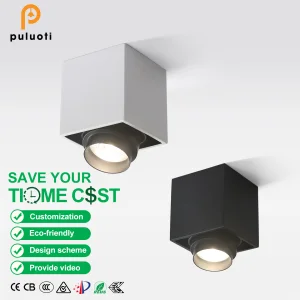
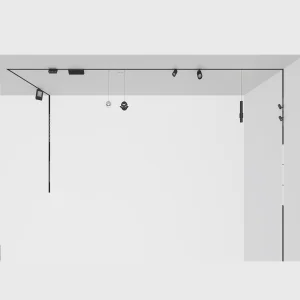
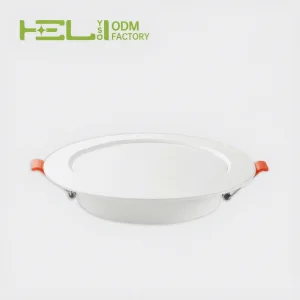
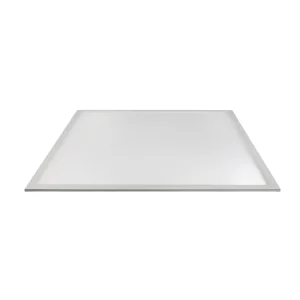
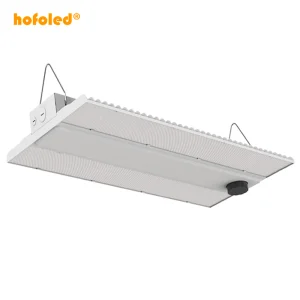
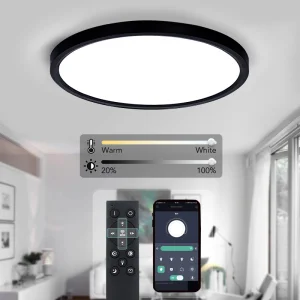
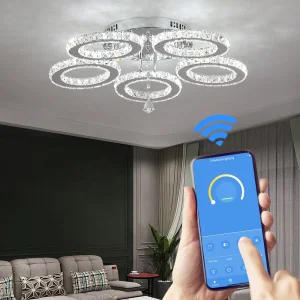
LED Surface Mount Ceiling Light Exporter & Exporters for Hungary

Premium Grade Solid-State Lighting Systems Compliant with CEE Commercial Standards and EU Ecodesign Specifications

1. The Commercial & Industrial Lighting Landscape in Hungary

The Hungarian market for commercial and industrial lighting is undergoing a profound structural transition. Driven by the European Union's stringent decarbonization directives (such as the recast Energy Performance of Buildings Directive - EPBD) and escalating electricity prices, local businesses in metropolitan hubs like Budapest, Debrecen, Győr, and Szeged are systematically retrofitting their architectural footprints. The demand for LED Surface Mount Ceiling Lights has increased significantly due to their minimal installation overhead, compatibility with non-plasterboard concrete structures, and architectural flexibility.

Hungary’s geographical position as a manufacturing hub in Central and Eastern Europe (CEE)—especially in automotive assembly, high-tech electronics, and pharmaceutical warehouses—requires high-reliability lighting. In these cleanroom and production facilities, standard recessed troffers are often impractical due to structural insulation limits. Surface mount fixtures provide the ideal compromise: clean visual lines, robust IP protection (IP54 to IP67), and zero compromise on ceiling air-barrier integrity.

Furthermore, local municipalities and utility systems in Hungary offer modern financial structures (such as ESCO financing models) targeting energy-efficiency interventions. Property developers and facility operations managers now evaluate products on a total cost of ownership (TCO) basis. Luminous efficacy (lm/W), maintenance factor stability over 50,000 hours, and unified glare rating (UGR < 19) are standard criteria in public and private procurement tenders.

Hungarian Market Insights

Compliance with MSZ EN 12464-1 (local Hungarian standard for indoor workplace lighting) requires specific light levels, glare index limits, and color rendering tolerances. Commercial offices, hospitals, and educational facilities in Hungary require a minimum of CRI 80, with a strong trend shifting toward high-fidelity CRI 90 solutions.

2. Global Development Trends in Surface Mount LED Technology

As a leading developer and exporter of industrial-grade ceiling illumination, we continuously align our manufacturing processes with macro developments in electronic component design, optic efficiency, and IoT integration. In modern facility design, the ceiling light is no longer a passive utility; it is a node in the digital infrastructure of a smart building.

IoT & Smart Wireless Control

Integrating protocols such as Tuya Smart, Casambi, and DALI-2 directly into surface-mounted drivers enables remote dimming, occupancy sensing, and daylight harvesting. This technology matches current EU smart-readiness indicators (SRI).

Human Centric Lighting (HCL)

Tunable white technology adjusting CCT dynamically from 3000K to 6000K supports natural human circadian rhythms. This feature is requested in medical projects, modern offices, and administrative buildings in Hungary.

Modular Low-waste Optics

By using precision lens geometries and anti-glare micro-prismatic (UGR<19) PMMA diffusers, we deliver maximum luminous flux directly to the working plane, reducing spill light and optical degradation over time.

Note for Hungarian Importers: Importing products that carry certified CE, RoHS, and TUV GS labels is mandatory to satisfy local technical inspectors. High-grade surface mount models with integrated premium aluminum heat sinking operate at significantly lower temperatures, protecting the internal capacitor arrays and maintaining operational safety in demanding industrial setups.

100M+
Annual Sales (RMB)
3 Million
Annual Set Capacity
BSCI
Certified Factory
ISO9001
Quality Assurance

3. Macro Industry Solutions & Engineering Specs

As a global OEM/ODM manufacturer, we offer comprehensive lighting solutions. Every building type requires specific thermal, electrical, and optical properties to ensure stable performance. Here is how our production capability meets varying application environments:

Facility Type Common Challenges Recommended Spec Model Key Technical Attributes
Administrative & Office Space Visual fatigue, screen glare, high energy cost Smart Tuya CCT Adjustable Slim Panels UGR < 19, CRI 90, 100-125 lm/W, Tuya APP control
Automotive & Industrial Assembly High humidity, fine particulates, physical impact IP66 & IP65 Tri-proof High Efficacy Luminaires Dustproof, waterproof, IK08 impact rating, DALI dimmable
Pharmaceutical / Cleanrooms Chemical sanitizers, static buildup, sealing concerns IP67 Surface Mounted Cleanroom Fixtures Anti-corrosive housing, flush finish, 38W-56W output options
Residential & Hospitality Design aesthetic, warm rendering, variable spacing Modern Aluminum Adjustable Spot & Wabi-Sabi Series Adjustable beam angles, unique textures, warm CCT

Our structural engineering utilizes automated injection molding, blister molding, and compression molding workflows. This variety allows us to manufacture custom chassis configurations (various shapes, lengths, and specialized housing materials) to fit specific architectural spaces without requiring high tooling costs. Whether you are dealing with a public tender in Budapest or building a commercial distribution warehouse in Debrecen, our customized options ensure smooth compliance with local project budgets.

4. Localized Support, Logistics & Compliance for the EU

Exporting LED components into the European Union requires strict compliance. As a certified manufacturer, we guarantee all shipments align with EU technical directives, preventing customs delays and ensuring local project acceptance.

Full Compliance & Laboratory Verification

Our internal laboratory features advanced diagnostic tools, including integrating sphere spectrometers, IP waterproof testers, and darkroom photogoniometers. Our certification suite includes:

  • BSCI Factory Certification for ethical labor practices.
  • ISO9001:2000 Quality Management Systems validation.
  • TUV GS, CE, RoHS, LVD, and EMC compliance certificates, updated annually.
  • IP65 & IP66 Testing Certificates validating protection against dust ingress and high-pressure water jets.

Strategic Port Logistics & Lead-Time Control

Our main manufacturing facility is located only 38 kilometers from Ningbo Port, one of the world's premier deep-water shipping centers. This proximity provides significant freight benefits for Hungarian importers:

  • Rapid transit from factory floor to container loading, minimizing domestic logistics delays.
  • Direct maritime transport links to main European ports like Koper, Hamburg, and Rotterdam, with onward rail transport to Budapest.
  • Optimized custom container loading to minimize transport vibration damage to sensitive driver chips.

5. Technology Roadmap & Future Outlook

The next generation of commercial lighting will transition from simple illumination to integrated environment sensing. Our R&D team is currently focusing on three main developments:

High Luminous Efficiency

Developing next-gen surface-mount ceiling lights reaching 150 lm/W to meet the EU's high energy efficiency standards. This helps operators lower power bills while maintaining light output.

Eco-friendly Materials

Adopting bio-based polymers and recycled aluminum alloys in our housing fabrication lines. This reduces the carbon footprint and aligns with local corporate ESG targets.

Sensory Integration

Embedding Bluetooth beacons, air quality monitors, and occupancy sensors directly inside standard surface mount housings to support smart office automation.

Ready to partner with a certified CEE-focused LED Exporter?

Inquire now for technical specifications, custom design options, and volume pricing terms.

Send Inquiry Now

6. Frequently Asked Questions (FAQ)

Answering key logistical, technical, and commercial questions for purchasing agents and engineers sourcing LED lighting for the Hungarian market.

What certifications are required for importing LED surface mount ceiling lights into Hungary?
As Hungary is an EU member state, all imported LED luminaires must carry the CE mark, indicating compliance with EMC (Electromagnetic Compatibility) and LVD (Low Voltage Directive) requirements. Additionally, compliance with RoHS (Restriction of Hazardous Substances) and the latest Ecodesign requirements (EU 2019/2020) is mandatory. Our products are fully tested and certified under TUV GS, CE, and RoHS standards to ensure smooth customs clearance and compliance.
How do you handle custom housing requirements (OEM/ODM) for architectural tenders?
We operate our own injection molding, blister molding, and compression molding workshops, alongside a dedicated R&D engineering team. This allows us to customize physical product dimensions, casing materials, diffuse profiles, and brackets to match specific project designs. Custom samples can be produced based on technical drawings or physical client reference models.
What is the transit time and logistical route from your factory to Budapest, Hungary?
Our factory is located 38 kilometers from Ningbo Port. Sea freight transit from Ningbo to European ports (such as Koper in Slovenia or Hamburg in Germany) typically takes 28 to 35 days. From those ports, block trains or standard container road logistics deliver the goods directly to central warehouses in Budapest within 3 to 5 business days.
How do your cleanroom lighting options ensure structural sealing?
Our specialized IP67 Cleanroom flat lights feature a dustproof and waterproof design with non-porous surface coatings that resist chemical sanitizers. Silicone gaskets and surface mounting mechanics seal the ceiling contact area to prevent air leaks, maintaining cleanroom integrity in medical, semiconductor, and food processing environments.
What parameters do you check during quality inspection?
We run every product batch through rigorous quality assurance testing in our testing laboratory. This includes integrating sphere spectrometry (measuring lumens, CRI, and CCT), IP waterproof testing, thermal stress simulation, and operational burn-in phases. This process ensures the electrical, mechanical, and optical components operate reliably before packaging.