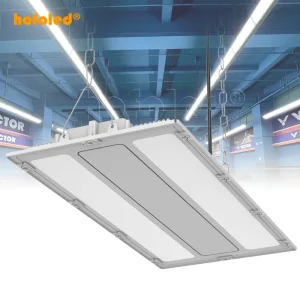
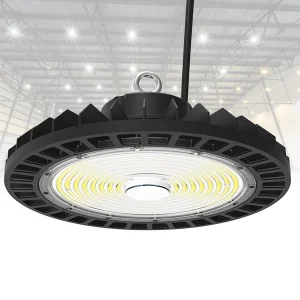
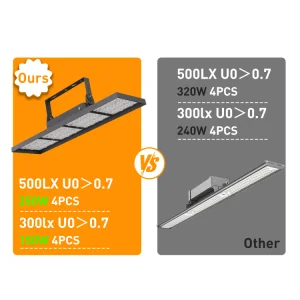
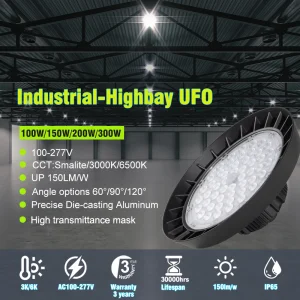
Ledlot Lighting
Seoul Industrial Landscape: The High-Tech Smart Factory Revolution
Seoul and the surrounding Gyeonggi Capital Region are undergoing a massive transition towards highly automated, high-precision industrial facilities. From the tech corridors of Guro Digital Complex to the automated assembly plants in Incheon, the push for Industry 4.0 demands robust infrastructure. Lighting is no longer just about visibility; it is about efficiency, human-centric design, and seamless integration with building management systems.
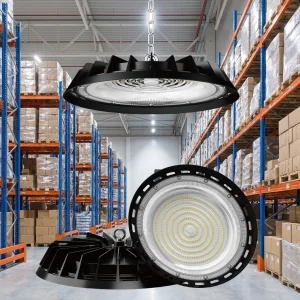
With South Korea’s rigorous greenhouse gas reduction commitments, industrial operators in Seoul are replacing legacy Metal Halide and HPS lamps at an unprecedented pace. Advanced LED lighting systems deliver a critical operational advantage by reducing peak grid demand, minimizing heat signatures (which significantly cuts down HVAC loading in high-density areas), and optimizing cleanroom environments. High-bay illumination must operate continuously under complex thermal conditions without compromising luminous flux or safety standards.
"According to the Korean Energy Agency (KEA), switching to industrial LEDs with luminous efficacies exceeding 150 lm/W yields up to a 65% drop in industrial lighting power consumption, accelerating ROI to under 18 months for multi-shift facilities."
Key Trends in the Industrial LED High Bay Sector
Globally and locally, several technical developments are reshaping industrial lighting requirements:
- Optimized Luminous Efficacy: LED systems have broken past the 180 lm/W threshold, delivering exceptional lumen packages while drawing significantly less wattage.
- Intelligent Control Integration: Commercial and industrial buyers in South Korea increasingly demand 0-10V, DALI, and Zigbee/Bluetooth wireless control options for dimming, scheduling, and occupancy sensing.
- Enhanced Color Temperature Flexibility (3CCT Switchable): Multi-use spaces can toggle between 3000K, 4000K, and 6000K depending on shifting workspace functions.
- High Ruggedness: In heavy dust, moisture, and chemical-heavy manufacturing sites, IP65 and IP66 ratings coupled with IK08 impact protection are non-negotiable.
Global Procurement Standards for Engineering and Procurement Contractors
Global engineering, procurement, and construction (EPC) firms require suppliers with robust E-E-A-T credentials. Large-scale procurement contracts demand verified certifications, such as TUV GS, CE, ROHS, LVD, EMC, and SAA, to ensure global compliance.
Furthermore, supply chain reliability forms the cornerstone of project execution. Contractors cannot afford delays. A factory located close to major logistics hubs—such as our state-of-the-art facility located just 38 kilometers from Ningbo Port—guarantees lightning-fast international dispatch times, lowering shipping overheads and mitigating potential supply chain disruptions.
China Industry 4.0: Supply Chain Resilience & Manufacturing Power
As a leading LED high bay and tri-proof lighting manufacturer, our production model leverages vertical integration to ensure superior quality control and cost-efficiency. Our facilities feature in-house injection molding, blister molding, and compression molding capabilities for lamp housings.
This complete physical control over the manufacturing lifecycle enables our R&D and engineering teams to easily execute customized designs based on client drawings or samples. Running our own darkrooms, integrating sphere spectrometers, IP waterproof level testers, and automated pick-and-place lines ensures that every single batch matches the strict quality specifications expected by premium buyers in Seoul and worldwide.