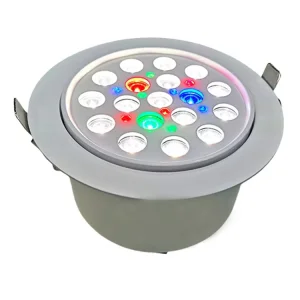
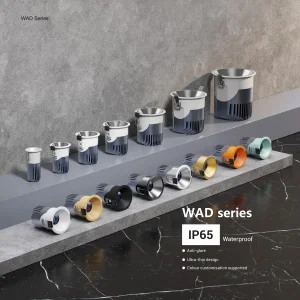
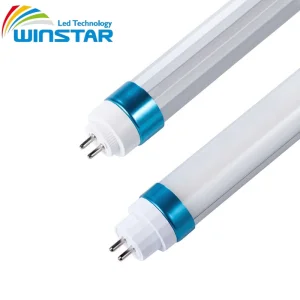
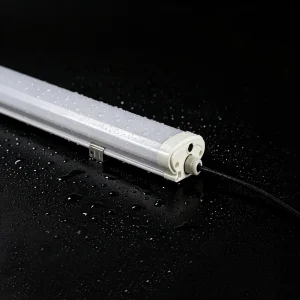
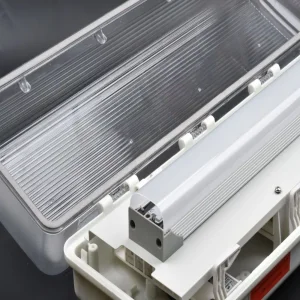
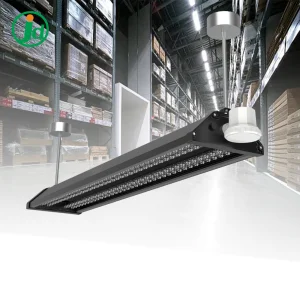
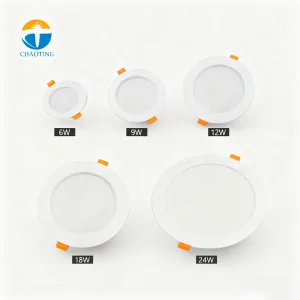
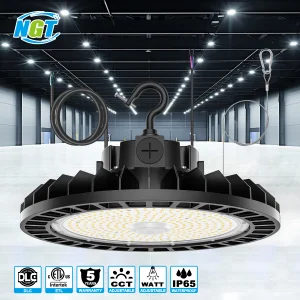
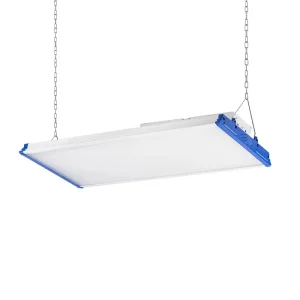
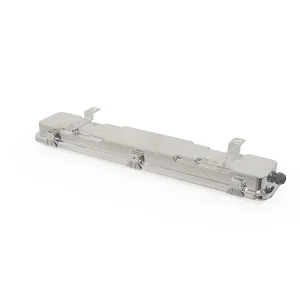
Discover our highly specialized array of resilient, waterproof, and heavy-duty industrial ceiling luminaires engineered to withstand high humidity, vapor ingress, and environmental stress.
The global demand for high-integrity waterproofing in optoelectronic structures has witnessed unprecedented growth. Once limited to simple recreational pool installations, modern LED underwater lights and severe-environment luminaires are now critical infrastructure components. From offshore marine docks, municipal architectural water features, and public fountains to specialized industrial zones like coal mines, deep-bore tunnels, subways, and chemical processing facilities, the necessity for robust IP65, IP66, and IP68 lighting structures is paramount.
Rapid urbanization combined with rigorous commercial health and safety codes has compelled project planners to seek manufacturers with sophisticated optoelectronic testing pipelines. Today, an industrial-grade underwater or waterproof luminaire must deliver high luminous efficacy (frequently exceeding 140lm/W), reliable thermal management under varying hydrostatic pressures, and superior resistance to chemical degradation and galvanic corrosion. As municipalities transition towards smart cities, the integration of intelligent sensors (including radar, motion, and ambient light sensors) into waterproof lighting networks has transformed simple illumination into dynamic, feedback-driven smart systems.
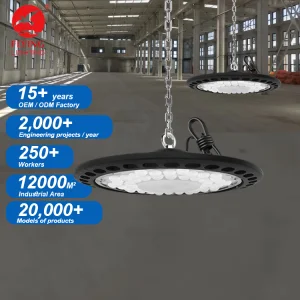
A statistical breakdown of our manufacturing capability, quality management system, and logistical network.
Developing luminaires that operate reliably in submerged or highly humid conditions requires meticulous attention to materials science and thermal dynamics. When an LED operates underwater or in a vapor-dense factory, thermal dissipation differs significantly from standard open-air configurations.
The Ingress Protection (IP) rating system defines the structural limit of a lamp's resistance to dust and liquids. For severe industrial environments, IP65 represents protection against dust ingress and low-pressure water jets from any direction. IP66 elevates this security to withstand high-pressure water jets, ideal for heavy washdown areas like food processing plants, car washes, and outdoor bridges. In true underwater scenarios, IP68 is required, demanding that the fixture remain completely dry under specified hydrostatic pressure for extended periods.
To resist structural warping and corrosion, manufacturers utilize specialized materials. Extruded aluminum alloys coated with electro-statically applied anti-corrosive powders provide the necessary heat sinking. For the optical diffuser, stabilized polycarbonates (PC) or tempered borosilicate glass are preferred. Polycarbonate exhibits high impact resistance (often rated up to IK08 or IK10), protecting the delicate light-emitting diodes from mechanical impacts, while UV stabilizers prevent yellowing under direct sunlight or intense subaquatic radiation.
Utilizing high-thermal-conductivity aluminum cores and interface materials to ensure rapid heat transfer away from the LED junction, preventing luminous decay and ensuring a lifespan exceeding 50,000 hours.
Every batch undergoes stringent quality validation including integrating sphere spectrometry, IP level water immersion tests, high-low temperature cycles, and darkroom goniophotometer tracking.
Equipped with a proprietary mold design and injection molding center, enabling bespoke modifications of housing dimensions, optical lens distributions, and cable gland orientations.
High-integrity waterproof luminaires serve a vast cross-section of global commercial and industrial niches. Depending on the physical location, the environmental stressors shift dramatically, requiring specific optoelectronic properties:
By tailoring our product characteristics to these specific zones, we guarantee that our structural housings, custom injection molded fittings, and inner driver configurations are perfectly balanced to handle the micro-climates they encounter.
As the industry marches towards automation, the boundaries of waterproof lighting are expanding. The next generation of industrial and underwater lighting focuses heavily on smart integration, modularity, and high-efficiency solid-state physics.
Modern commercial project specifications increasingly call for integrated microwave radar sensors. Unlike standard infrared sensors, which perform poorly in high-temperature or humid environments like steam rooms and industrial kitchens, radar sensors detect motion through non-conductive barriers. This allows them to be sealed inside IP65 or IP66 enclosures, completely protected from moisture while offering precise motion detection. Combining this with 0-10V/1-10V dimming protocols yields massive energy savings, dropping power draw to a baseline of 10% during inactive hours.
With global energy costs rising, achieving high efficacy (up to 140lm/W or 160lm/W) is no longer a luxury. High-efficacy chips run cooler, reducing thermal stress on internal drivers and extending the lifespan of the fixture. This is critical for underwater or high-bay installations where maintenance access is difficult and costly, requiring pool draining or specialized high-reach equipment.
Our organization stands as a high-tech enterprise specializing in the comprehensive integration of product development, mold design, injection molding, testing, production, and global sales. We adhere strictly to the scientific management philosophy of "Credit from Sincerity, Business from Quality, People First". Through continuous scientific and technological innovation, we inject new vitality into our operations, ensuring that every product exported meets top-tier standards.
Equipped with an independent mold research and development center, along with an advanced injection molding workshop, we control the entire lifecycle of our luminaire housings, allowing for highly flexible custom styling and rapid prototyping.
Our testing facilities house advanced integrating sphere spectrometers, professional darkrooms, and IP-level waterproof testers, ensuring every luminaire meets its rated lumens, color rendering index, and water-resistance metrics.
We are fully certified under ISO9001:2000 and BSCI. Our products carry international certifications including TUV GS, CE, ROHS, LVD, EMC, and SAA, facilitating smooth market entry across Europe, the Americas, Australia, and Asia.
Operating a high-throughput facility with an annual production capacity reaching 3 million sets and annual sales exceeding 100 million RMB, we serve mid-to-high-end markets globally. Furthermore, our strategic location just 38 kilometers from the Ningbo Port ensures highly efficient shipping logistics, allowing rapid transport of high-volume container shipments to any destination worldwide.
For large-scale infrastructure projects, off-the-shelf products often fall short of meeting precise architectural requirements. Our manufacturing setup is structured to support comprehensive OEM and ODM partnerships. Whether a customer provides a detailed mechanical drawing or a physical sample, our R&D team can adapt the housing using injection, blister, or compression molding processes. This flexibility allows us to customize shapes, dimensions, and materials (such as PMMA, PC, or high-grade aluminum) to match specific environmental challenges.
By handling the entire production flow—from raw plastic granules to completed, tested fixtures—we maintain tight control over manufacturing costs. This vertical integration allows us to provide high-end products at competitive prices, offering our distribution partners a strong edge in competitive bidding processes.
Technical answers to key inquiries regarding underwater and high-humidity industrial LED lighting systems.
IP65 ensures protection against dust and low-pressure water splashes. IP66 is designed to withstand high-pressure water jets, making it suitable for marine docks or heavy washdown industrial areas. IP68 denotes complete submersion capability under pressure, which is required for underwater lighting in pools, fountains, and wet mining operations.
Stabilized polycarbonate features exceptional impact resistance (IK08 to IK10), reducing the risk of shattering in industrial workshops or public areas. When treated with UV-resistant additives, it prevents yellowing and maintains high optical clarity over years of operation.
Passive Infrared (PIR) sensors detect heat signatures and require a direct line of sight, which is easily blocked by moisture, dust, or steam. Microwave radar sensors transmit high-frequency waves that can penetrate plastic housings. This allows the sensor to remain fully sealed inside the waterproof enclosure, ensuring reliable detection and long-term protection.
For European markets, CE, ROHS, TUV GS, LVD, and EMC are essential to confirm compliance with safety and environmental standards. For other global regions, SAA (Australia) and general ISO9001:2000 quality systems provide verified assurance of manufacturing reliability.
Yes, our facility includes an injection molding and tool research center. We can customize the length, housing materials, and internal electronics according to client drawings or physical samples.
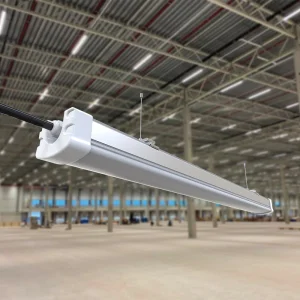
Explore our high-lumen, vapor-tight, and explosion-resistant linear fixtures built for warehouses, manufacturing facilities, and heavy industrial applications.