Top China LED Flood Light Manufacturers & Technical Engineering Whitepaper

Empowering Global Infrastructure, Heavy Industry, and Commercial Projects with Premium Optical Precision and Decarbonization Technologies.

Global Procurement Landscape & B2B Purchasing Metrics

Deciphering the shifting priorities of engineering consultants, municipal procurement heads, and EPC contractors in the global lighting sector.

1. Total Cost of Ownership (TCO) Dominance

Modern B2B lighting buyers no longer calculate value strictly via initial capital expenditure. Procurement analysts prioritize Lumen-per-Watt (lm/W) efficacy and long-term lumen maintenance curves (L70/L80/L90 lifetimes). An initial reduction in purchase cost is quickly wiped out if a system requires structural maintenance, highlighting the need for top-tier thermal management and reliable driver topologies.

2. ESG Compliance & Carbon Reduction

Decarbonization mandates across Europe, North America, and APAC dictate strict energy audits. The replacement of outdated Metal Halide and High-Pressure Sodium (HPS) installations with advanced LED systems yields immediate energy reductions of 60% to 80%. Compliance with directives such as RoHS, ErP, and international environmental frameworks forms the baseline for qualified supply chain bidding.

3. Severe Environmental Resilience

From deep marine terminals and coastal bridges to underground coal mines, floodlights must resist intense humidity, extreme temperature swings, and chemical corrosion. Industrial engineers mandate minimum ratings of IP65/IP66 ingress protection, IK08/IK10 impact resistance, and verified salt-spray corrosion certification, ensuring structural integrity over years of operations.

Executive Growth Insight: Aligning product specification with structural standards allows engineering procurement contractors (EPCs) to mitigate operational downtime risks. In highly corrosive environments like coastal ports or subways, choosing the right aluminum housing formulation reduces stress-corrosion cracking failures to near 0%.

Precision R&D, Automated Molding & Structural Integrity

Underpinned by the standard of "Credit from Sincerity, Business from Quality, People First" - we operate an advanced, vertically integrated engineering ecosystem.

3M+
Annual Production Sets
100M+
Steady Annual Sales (RMB)
38km
Proximity to Ningbo Port
100%
In-House Injection & Optic Molding

Proprietary Darkroom & Photometric Labs

Leveraging high-end optical simulation software and in-house Integrating Sphere Spectrometers, we design customized light distribution curves. Every production run undergoes spatial photometric testing, confirming the exact lumen output, CRI, and color temperature profiles before shipment.

Full Manufacturing Vertical Integration

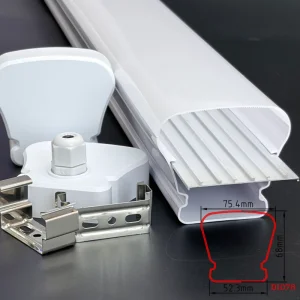
Unlike assembly-only factories, we maintain a dedicated Injection Molding, Blister Molding, and Compression Molding workshop for luminaire housings. This capability allows us to adjust structural designs, lengths, and casing materials to meet specialized architectural configurations.

Certified Verification Systems

Quality assurance is backed by certified equipment, including IP waterproof level testers, thermal stress chambers, and high-voltage surge testers. Our enterprise is certified under BSCI and ISO9001:2000, with products fully compliant with TUV GS, CE, ROHS, LVD, EMC, and SAA standards.

Macro Industry Solutions: Engineering Applications

Engineered to perform in demanding, high-intensity commercial and industrial environments.

Logistics, Warehouses & Yards

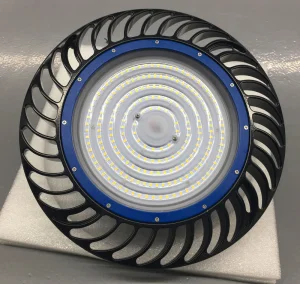
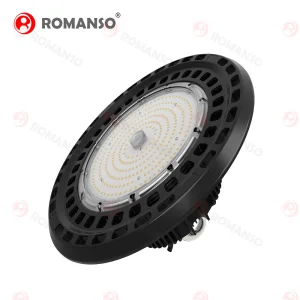
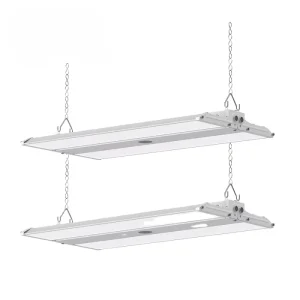
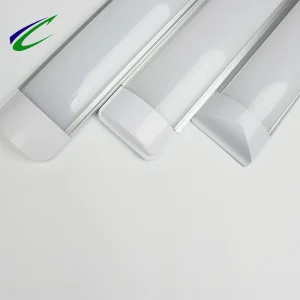
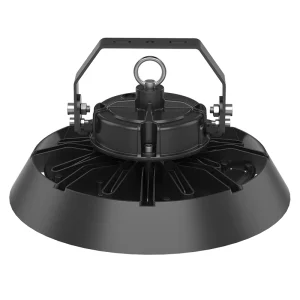
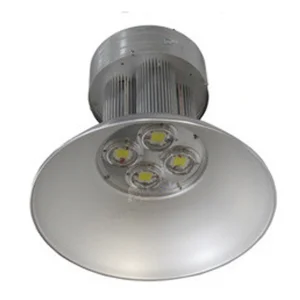
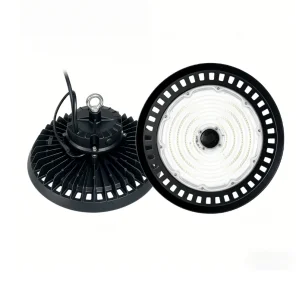
High-efficiency LED high bay lights and linear batten systems provide uniform light distribution, reducing glare and blind spots in high-rack corridors. Options for CCT adjusting and smart sensor integration allow operations to automatically dim unoccupied zones, optimizing energy usage.

Subways, Tunnels & Bridges

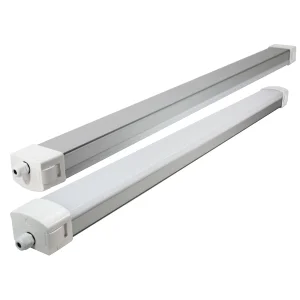
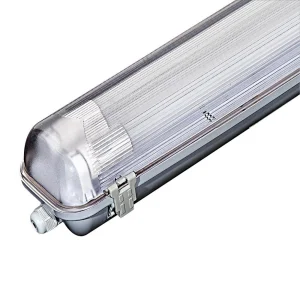
Heavy infrastructural arteries require durable, moisture-proof, and dustproof solutions. Our IP66 and IP65 Tri-proof luminaires stand up to constant vibrations, high humidity, and airborne brake dust, providing stable illumination for transit pathways.

Corrosive & Marine Environments

At maritime docks, riverbanks, and industrial facilities, salt spray and chemical vapor accelerate corrosion in low-grade luminaires. Our housings use advanced anti-corrosion finishes alongside specialized gasket systems to prevent oxidation and moisture ingress.

Wide-Ranging Applications: Designed for high-stress zones including saunas, commercial kitchens, military barracks, hospitals, bakeries, outdoor parks, campsites, coal mines, public squares, and transit tunnels.

Technical Roadmap: Industrial Lighting Development

How our ongoing development pipelines integrate next-generation optical structures and smart control compatibility.

01

Advanced System Efficiency

We are refining our LED array layouts and driving technology to push systems past 180 lm/W, minimizing thermal loss and maximizing energy output.

02

DALI & Smart Controls Integration

Integrating dynamic DALI, 0-10V, and ZigBee wireless control interfaces directly into our product lines to support automated daylight harvesting and smart facility management.

03

Circular Materials Economy

Redesigning our structural components to use recycled aluminum alloys and highly recyclable thermoplastics, helping partners meet circular supply chain targets.

04

Precision Asymmetric Optics

Developing new asymmetric lens geometries to focus light precisely where needed, reducing light spill, glare, and urban light pollution.

Supply Chain Efficiency & Logistics

Leveraging our geographic and operational advantages to ensure reliable delivery to global commercial and industrial clients.

Efficient Ningbo Port Connection

Operating out of our main hub just 38 kilometers from Ningbo Port, we maintain a highly efficient container loading pipeline. This close proximity reduces domestic transit times and lowers transport costs for shipping to partners worldwide.

OEM & ODM Customization

Supported by our dedicated tooling and R&D teams, we provide tailored adjustments to design drawings, housing shapes, and technical parameters to meet specific project demands.

Global Compliance & Support

Our solutions conform to international regulatory and quality frameworks, including CE, ROHS, SAA, TUV GS, LVD, and EMC, ensuring smooth customs entry and project approvals.

Engineering Q&A: Procurement Insights

Addressing technical questions on optical setups, heat dissipation, and global supply configurations.

Q1: What structural factors define the lifetime performance of an IP65/IP66 floodlight?

Ingress Protection (IP) ratings depend heavily on gasket design and housing stability. Under temperature shifts, expansion and contraction can compromise weak seals. We use high-grade silicone gaskets and precision injection-molded housings to ensure reliable water and dust resistance over extended operating lifespans.

Q2: How do thermal designs affect the lumen maintenance and light output of your high bay series?

Excessive heat within the LED package accelerates lumen depreciation. Our fixtures are designed with dedicated thermal channels and high-conductivity aluminum alloys. This setup moves heat away from the LED chips, maintaining stable junction temperatures and preserving long-term lumen output.

Q3: Can your fixtures be integrated into modern DALI smart building networks?

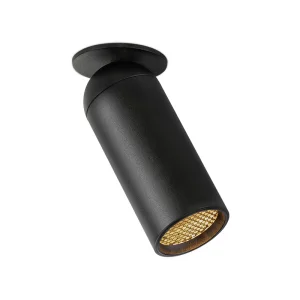
Yes, many of our high bay and downlight systems are compatible with DALI dimming protocols. This compatibility allows our fixtures to integrate directly with building management systems, enabling automated dimming schedules and sensor control.

Q4: What advantages does your proximity to Ningbo Port provide for global logistics?

Being located just 38 kilometers from Ningbo Port allows us to transport containers directly to the terminal within hours. This near-port location lowers local trucking costs, reduces shipping delays, and helps us maintain a reliable delivery pipeline for international orders.

Q5: How does your facility support custom molding requests for industrial clients?

Unlike standard assemblers, we run our own R&D design and molding workshops (including injection, blister, and compression molding). This allows us to adjust casing designs, lengths, and materials to match specific project specifications and dimensional requirements.