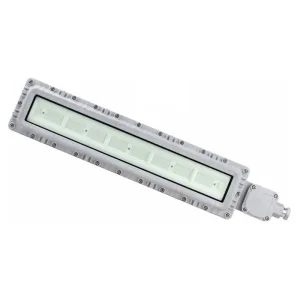
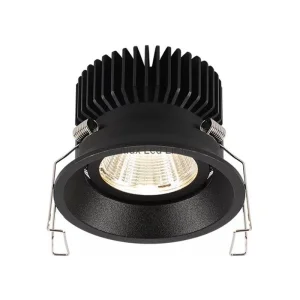
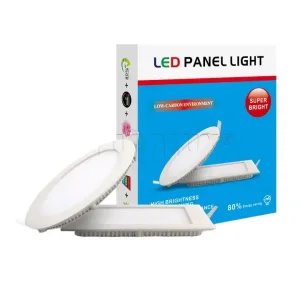
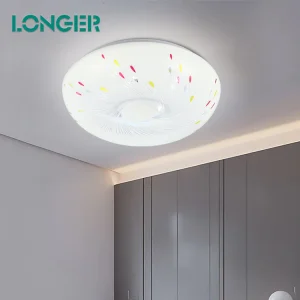
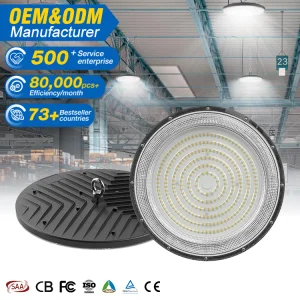
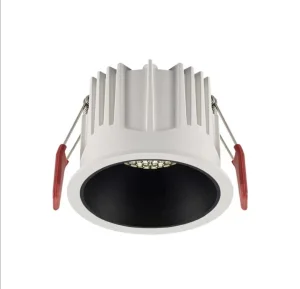
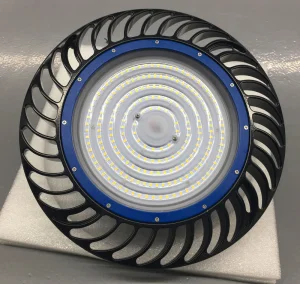
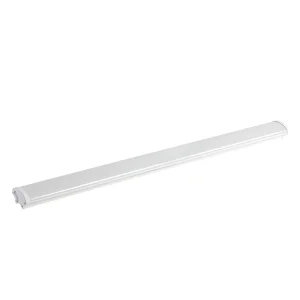
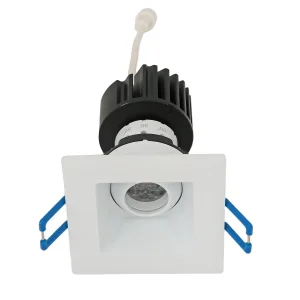
Explore our core engineering catalog featuring advanced industrial, commercial, and high-spec under-cabinet LED configurations designed for global distribution.
Annual Production Capacity (Sets)
Annual Sales Value (RMB)
Proximity to Ningbo Port for Seamless Shipping
BSCI & ISO9001 Compliant Quality System
In modern commercial architecture and high-precision residential interior design, LED under cabinet lighting has transitioned from an auxiliary decorative feature to an essential task-oriented and environmental control subsystem. Sourcing professionals face complex challenges: balancing thermal performance, architectural integration, safety compliances, and long-term lumen maintenance. Under cabinet installations demand low-profile dimensions but robust engineering due to their close proximity to work surfaces, high-moisture zones (such as kitchen counters and laboratory benches), and variable thermal environments.
Information Gain Insight: To truly optimize under cabinet illumination, architectural designers must move past simple lumen outputs. Sourcing teams need to prioritize Spectral Power Distribution (SPD) matching, low Color Shift tolerances (typically ≤ 3-step MacAdam Ellipses), and deep dimming capabilities compatible with building automation protocols (DALI-2, 0-10V, Casambi wireless).
When evaluating the top LED under cabinet lighting suppliers and exporters, professional procurement departments must assess potential vendors through a strict multi-dimensional framework:
Verify certifications including ISO9001:2000, BSCI, CE, RoHS, GS, TUV, SAA, LVD, and EMC. This guarantees that your goods pass import regulations effortlessly.
Look for factories equipped with an in-house Integrating Sphere Spectrometer, darkroom goniophotometers, thermal loop chambers, and IP waterproof testing gear.
Suppliers with integrated injection, blister, and compression molding lines offer better price stability, faster prototyping, and tighter quality control.
The architectural lighting landscape is moving rapidly toward miniaturization, high color fidelity, and dynamic environments. LED under cabinet lights are no longer static light bars; they are complex, low-voltage linear fixtures that rely heavily on advanced solid-state lighting technology.
Traditional surface-mount device (SMD) arrays are being complemented, and in some areas replaced, by Chip-on-Board (COB) technology. SMD strips rely on individual LED diodes placed at specific pitches, which can create visible "hotspots" or dotting on reflective kitchen countertops like quartz or polished granite.
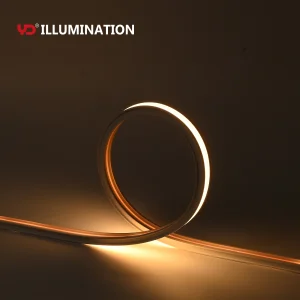
COB designs mount the semiconductor chips directly to the PCB substrate, covered by a continuous line of phosphor coating. This results in a completely seamless, dot-free line of light, even at ultra-close distances to reflective backsplashes. This is critical for high-end residential projects and high-precision medical workstations.
Color Rendering Index (CRI) has shifted from a premium option to a baseline standard. Top exporters now supply CRI Ra > 90 as standard, with premium options hitting CRI Ra > 95 and R9 values exceeding 80. In culinary and commercial display environments, poor R9 rendering (red tones) makes raw food look unappealing and distorts wood textures. Future-proof procurement requires evaluating fixtures against the more comprehensive TM-30-18 standard, which utilizes Rf (fidelity) and Rg (gamut) indices for a truer representation of color rendering quality.
Advanced under cabinet modules now incorporate driver topologies compatible with wireless protocols like Matter, Zigbee, and Bluetooth Mesh (Casambi), alongside wired building management setups using DALI-2 and 0-10V dimming. Dynamic Tunable White systems allow users to adjust color temperature seamlessly from 2700K (warm glow) to 6500K (crisp task light), aligning with circadian rhythm protocols to enhance productivity in laboratory, office, and residential environments.
Commercial and industrial clients demand robust lighting systems tailored to specific physical constraints. Our company provides diverse macro-solutions, applying our expertise in dust-proof, moisture-proof, and waterproof engineering to under-cabinet and surrounding spatial zones.
Environments like clinical labs, chemical stations, and school cleanrooms require precise, flicker-free illumination with tight electromagnetic compatibility (EMC). High IP ratings (IP65 or IP66) protect fixtures from harsh chemical sterilizers and high-humidity cleanings, ensuring long-term operational integrity.
Under cabinet fixtures in hospitality, bakery, and canteen kitchens operate in high ambient heat, grease, and moisture. Utilizing dust-proof, moisture-proof housing processes (such as specialized polycarbonate blister and injection-molded casings) prevents degradation of the internal LEDs and prevents driver failures.
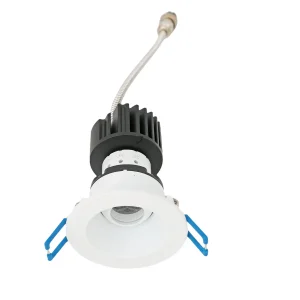
Displaying fine art or high-end jewelry requires precision-angled spot lighting and linear micro-profiles with minimal UV radiation and extremely low heat output. Zoomable micro downlights, featuring adjustable beam angles (e.g., 5W 2-inch adjustables) and high CRI (90+), allow curators to illuminate artifacts precisely without causing pigment breakdown.
To assist procurement managers in matching technical specifications with functional zones, refer to the matrix below outlining optimal applications for under-cabinet and integrated spatial illumination:
| Application Environment | IP Rating Requirement | CRI / Spectral Quality | CCT Range Recommended | Recommended Fixture Type |
|---|---|---|---|---|
| Commercial Kitchens & Bakeries | IP65 / IP66 | Ra > 80 | 4000K – 5000K | Moisture-proof linear tubes, enclosed low-profile luminaires |
| Museum Displays & Art Cabinets | IP20 / IP44 | Ra > 95, R9 > 80 | 2700K – 3000K | Mini zoomable downlights, ultra-slim COB micro-profiles |
| Cleanrooms & Laboratories | IP65 / IP66 Dustproof | Ra > 90 | 5000K – 6000K | Flicker-free Tri-proof linear runs, hermetically sealed panels |
| Residential Bath & Spa Cabinets | IP54 / IP65 Waterproof | Ra > 90, R9 > 50 | 3000K – 4000K (Tunable) | Low-voltage silicone flexible COB strip, sealed slim downlights |
Our state-of-the-art facility represents the next generation of lighting manufacturing, leveraging modern equipment and production practices to maintain a resilient global supply chain. By keeping manufacturing processes in-house, we protect client margins from market volatility while maintaining strict quality control.
Equipped with an independent mold research, development, and testing hub, our engineers design and build tooling in-house to convert concept drawings or physical samples into market-ready products.
Our validation process utilizes an in-house darkroom, integrating sphere spectrometers, IP waterproof rating chambers, and precise colorimetric testing to prevent batch variance before shipment.
Supporting injection molding, blister molding, and compression molding workflows. This variety enables us to produce housings of custom lengths, shapes, and materials (PMMA, PC, Aluminum).
By adhering to our core management philosophy—"Credit from Sincerity, Business from Quality, People First"—we constantly implement technical upgrades to maintain a competitive advantage. This keeps our automated production line highly efficient, pushing our annual manufacturing volume to 3 million lighting sets, with total sales reaching 100 million.
Importing LED lighting fixtures at scale requires compliance with strict safety and performance standards. Uncertified lighting products face rejection at customs, project delays, or insurance liabilities for distributors and engineering firms.
Compliance Check: Our systems and products are verified under BSCI, ISO9001:2000, CE, RoHS, GS, TUV, SAA, LVD, and EMC. We continually update our certifications annually to keep our clients ahead of evolving global import criteria.
Beyond product safety, shipping logistics affect delivery schedules. Based in the Ningbo industrial zone, our factory is situated just 38 kilometers from Ningbo Port. This close proximity simplifies domestic transit, shortens port lead times, and reduces carbon footprint overheads on export shipments destined for Europe, the Americas, Australia, the Middle East, and Africa.
Procurement directors understand that the unit price of an LED fixture represents only a portion of the Total Cost of Ownership. Real value is determined by combining the product's purchase price with transport costs, defect rates, installation design, and operational lifespan.
By sourcing directly from a vertically integrated manufacturer, enterprise buyers reduce markups from third-party agents. Our on-site injection molding, blister tooling, and housing production reduce bill-of-materials costs while ensuring component compatibility. Our multi-step quality assurance program—extending from initial PCB wave-soldering to final 24-hour high-temperature aging chambers—keeps our field defect rate low. This reduces warranty returns and maintenance costs for your business.
Get answers to critical technical questions regarding under cabinet and specialized LED specifications, factory integrations, and logistics.
For standard products, order completion typically ranges from 15 to 25 days. For OEM projects requiring dedicated mold creation, our independent mold R&D center designs, prints, and tests tooling prototypes in 10 to 15 days, with bulk production commencing shortly after sample approval.
We enforce strict LED binning protocols. By sourcing components within a 3-step MacAdam Ellipse (SDCM ≤ 3) and verifying binning profiles through our integrating sphere spectrometers, we guarantee uniform color temperature and output across long linear runs.
Proximity to a major global shipping hub reduces inland drayage fees and simplifies container logistics. It allows us to load containers directly at our factory and transfer them to active sea vessels within hours. This reduces logistics overheads and protects cargo from extended handling.
We use high-impact Polycarbonate (PC) and Poly(methyl methacrylate) (PMMA) for our housings, along with structural 6063-T5 extruded aluminum. Depending on structural requirements, we process these materials using in-house injection, blister, or compression molding.
Our in-house R&D team works directly from client blueprints or physical samples. We provide custom CAD/3D modeling, light distribution simulation, and photometric darkroom testing to ensure customized units meet target outputs prior to manufacturing.
Our IP65 and IP66 rated models meet strict testing requirements for moisture, water ingress, and dust protection. These models hold CE, RoHS, TUV GS, and SAA certifications, verifying safe operation in wet environments like commercial kitchens, bathrooms, and food processing plants.
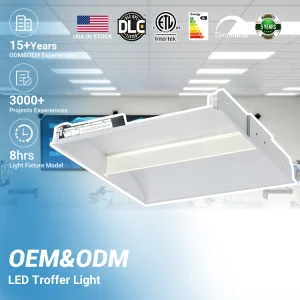
Explore our secondary catalog, featuring high-spec directional lighting, flexible strips, and troffers optimized for global commercial projects.