The Comprehensive Industrial Intelligence and Sourcing Whitepaper on High-Efficacy Safety Guide & Smart Architectural Lighting Solutions
Premium Engineering Lighting Collection
Explore our top-performing optoelectronic components, engineered for resilience and smart integration across commercial, residential, and high-safety industrial facilities.
1. Introduction: The Evolution of Specialized Guideway and Night Illumination
In the modern B2B electrical infrastructure ecosystem, the concept of the LED Night Light and structural utility fixture has transcended standard consumer application. Once limited to basic ambient illumination inside residential corridors, specialized safety guides, low-luminous-flux fixtures, and resilient architectural downlights have evolved into business-critical assets. For safety compliance officers, facility managers, and international supply chain leaders, selecting a premium LED Night Light Manufacturer & Factory is no longer just about buying commodity components—it is a strategic decision that affects operational longevity, regulatory adherence, and energy management.
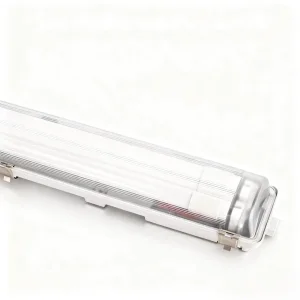
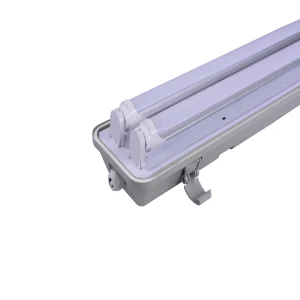
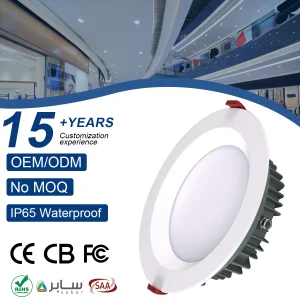
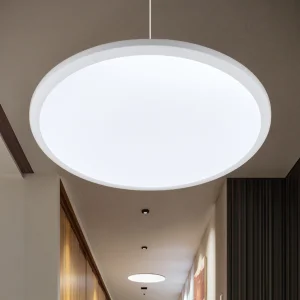
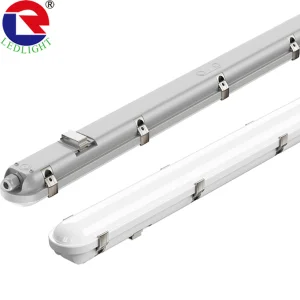
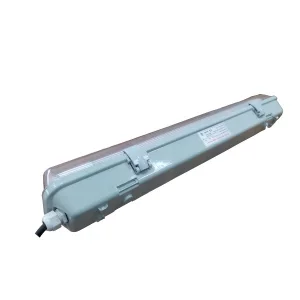
At Ledlot Lighting (historically operating as Zhengning Lighting), we stand at the intersection of structural engineering and advanced optoelectronics. Our enterprise has dedicated its resources to engineering, manufacturing, and shipping high-durability ceiling lighting, intelligent ambient downlights, and ingress-protected (IP65, IP66) tri-proof lights that act as structural guide lighting in demanding spaces. Our philosophy centers on technical precision: by combining independent tooling research, high-accuracy photometry, and automated manufacturing pipelines, we deliver lighting solutions engineered to operate flawlessly in hostile ambient environments.
"Information Gain Highlight: Why generic fixtures fail in high-humidity or safety-critical structures. Standard LED night lights and ceiling modules degrade due to ambient moisture intrusion, poor thermal pathways, and driver failures under voltage fluctuation. Authentic manufacturers design from the silicon and plastic level up—incorporating precision injection molding, integrating sphere calibrations, and robust thermal management."
Manufacturing Powerhouse At a Glance
We control every facet of production, assuring absolute quality, reliable lead times, and certified performance compliance across global markets.
100 Million
Annual Sales Volume (RMB/USD equivalent)
3 Million Sets
Annual Production Yield Capacity
38 Kilometers
Distance to Ningbo Deepwater Port
2. Global Commercial & Industrial Market Landscape of LED & Utility Lighting
The global smart lighting market is experiencing structural transformations driven by sustainability mandates (such as the European Green Deal and the US Energy Star guidelines) and the rapid deployment of Internet-of-Things (IoT) building automation systems. Ambient guidance systems, recessed safety downlights, and tri-proof corridor lighting are no longer simple off-grid installations. They are increasingly integrated into centralized Building Management Systems (BMS) that leverage protocols such as DALI (Digital Addressable Lighting Interface), Zigbee, and Wi-Fi to achieve dynamic dimming and status telemetry.
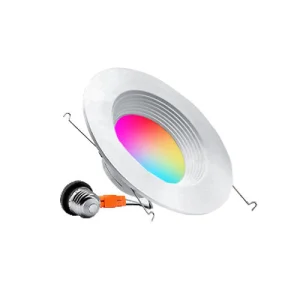
In Europe and North America, urban modernization initiatives are requiring municipal and industrial facilities to maintain constant, low-level orientation lighting (night guidance lights) in public structures, healthcare institutions, and logistics centers to guarantee emergency exit visibility while minimizing baseline power draw. The adoption of smart, voice-controlled, and color-tunable smart lights—such as our UL/ETL/EnergyStar certified Tuya app-controlled ceiling lamps—reflects this trend towards custom B2B application, where the same fixture provides high-power task lighting by day and transitions to a low-consumption safety guiding path at night.
Concurrently, harsh physical environments demand a different class of robust engineering. Heavy industries, food processing facilities, and infrastructure channels (tunnels, subways, coal mines) require dust-proof, moisture-proof, and corrosion-resistant fixtures that can survive high-pressure cleaning cycles and continuous exposure to corrosive vapors. This is where specialized factories like Ledlot Lighting offer unique advantages by engineering dual-purpose fixtures: high-performance utility lighting that integrates emergency backup night systems and carries IP65/IP66 classifications.
Our infrastructure is designed to provide B2B clients with comprehensive structural optimization, cost control, and performance consistency.
In-House R&D & Customization
We operate an independent mold research and development center alongside a dedicated photoelectric testing laboratory. This allows us to rapidly engineer and prototype solutions from initial customer-supplied CAD drawings, technical files, or physical samples, guaranteeing optimal physical tolerances and custom structural configurations.
Vertically Integrated Processing
By running our own injection molding, blister molding, and compression molding workshops, we control the manufacturing process of the lamp housings from raw polymeric materials (such as high-grade Polycarbonate and PMMA) to finished units. This directly reduces raw material overhead, maintains structural integrity, and enables competitive B2B pricing models.
Advanced Metrology & Darkroom Testing
Quality assurance is validated through rigorous testing infrastructure. Every new product undergoes analysis via our high-end integrating sphere spectrometer to verify luminous flux, color rendering indexes (CRI), and chromaticity coordinates. Additionally, we run continuous testing in our own darkroom and utilize specialized IP water-ingress testers to guarantee certified protection ratings.
4. Technical Roadmap: Materials Science and Smart Control Integration
The modern technical roadmap for industrial and corridor-level LED fixtures focuses on three key vectors: structural durability, high energy efficiency, and smart driver communication. At Ledlot Lighting, we constantly upgrade our production processes to stay at the cutting edge of these developments.
Advanced Polymeric Housing and Molding Diversity
A core challenge in deploying high-durability lights (whether ceiling panels or tri-proof linear tubes) is material degradation caused by environmental exposure. Our factory addresses this challenge by utilizing specialized processes:
High-Impact Polycarbonate (PC) Injection: Used primarily for housings requiring exceptional impact resistance (IK08 to IK10), flame retardancy, and thermal stability in high-temperature subways and mechanical workshops.
Polymethyl Methacrylate (PMMA) Blister Molding: Deployed in environments characterized by chemical exposure, such as farm facilities or industrial saunas. PMMA exhibits excellent UV stability, preventing yellowing over extended operating lifecycles, and resists degradation from organic acids and sanitizing sprays.
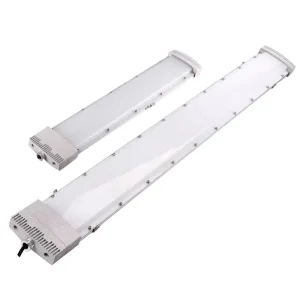
Dual-Extrusion and Compression Molding: Employed to manufacture seamless, co-extruded bodies for linear tri-proof configurations, ensuring absolute hermetic seals that exclude dust, moisture, and fine particulates.
Efficiency gains are increasingly achieved through driver control optimization. We manufacture products featuring intelligent dimming and localized sensor logic:
Universal Voltage & Anti-Surge Drivers: Engineering options spanning 100-277V AC and low-voltage 12V DC input ranges, featuring onboard protection circuits to mitigate phase fluctuations, line surges, and sudden current spikes.
Triac, 0-10V, & DALI Dimming: Integration of advanced driver architectures that allow our linear ceiling fixtures and downlights to smoothly scale output from 100% brightness down to a low-consumption 1% standby guiding mode. This effectively transforms standard high-output utility fixtures into high-efficiency night lights during off-peak hours.
IoT Smart Connectivity: Integrating certified wireless modules (Tuya Smart, Zigbee, BLE Mesh) to support centralized control. This enables automated scheduling, remote telemetry monitoring, and voice-command capabilities directly through third-party building automation architectures.
5. Localized Application Matrices and Systemic Industrial Solutions
To help procurement managers match fixture specifications with installation environments, we have developed a standardized application matrix based on real-world industrial deployments.
Critical Needs: High vibration resistance, IK09/IK10 mechanical impact protection, explosion-proof barriers, and long-term reliability for continuous orientation guidance.
"Integrated Architectural Solution Concept: Combining ambient downlights with tri-proof corridor lights allows operators to design unified energy-saving lighting plans. By using modern recessed downlights in front-of-house hospitality zones alongside durable tri-proof safety guides in back-of-house utility areas, complexes can cut energy footprints by up to 60% while maintaining compliance with local egress safety regulations."
Sourcing quality LED night lights and commercial ceiling fixtures globally requires looking beyond initial unit pricing. Professional buyers must prioritize verification frameworks that ensure the factory can scale production and meet quality standards:
Verify Quality System and Compliance Audits: Ensure the factory maintains verified certifications. Ledlot Lighting maintains a verified BSCI compliance profile and is certified under ISO9001:2000 quality management systems. Our core products carry TUV, GS, CE, ROHS, LVD, EMC, and SAA markings to guarantee access to global markets.
Assess In-House Manufacturing Control: Factories operating independent tooling facilities and injection molding lines can easily modify structural components, control quality tolerances, and manage production costs compared to simple assembly shops.
Evaluate Testing Verification: Always request integrating sphere reports, optical distribution graphs (IES files), and ingress protection test results to verify actual fixture performance.
Analyze Logistical Positioning: Close proximity to deepwater container ports directly reduces transit lead times and inland drayage costs. Our factory, located just 38 kilometers from Ningbo Port, provides efficient access to global shipping channels.
7. Comprehensive B2B Sourcing FAQ
Detailed technical and logistical answers to help streamline your procurement planning.
Q1: What are the primary certifications available for your commercial and safety ceiling lamps?
Our entire production ecosystem runs under BSCI audit protocols and ISO9001:2000 quality management systems. Depending on the product line, our fixtures carry TUV, GS, CE, ROHS, LVD, EMC, and SAA certifications, and we actively expand these profiles annually to support compliance across Europe, the Americas, and Oceania.
Q2: How does your factory handle OEM/ODM custom tooling and component requests?
We operate an independent R&D and mold development center. Clients can supply engineering drawings, CAD files, or physical samples. Our team handles the electrical layout and custom tooling configuration in-house, supported by our injection, blister, and compression molding workshops.
Q3: What are the logistics benefits of your factory's location for international shipments?
Our manufacturing facility is located 38 kilometers from Ningbo Port. This proximity minimizes container drayage costs, simplifies customs logistics, and shortens overall transit timelines to global markets.
Q4: What is your annual production capacity, and can you scale to meet high-volume orders?
We produce up to 3 million sets of fixtures annually, generating over 100 million in sales. This scale enables us to support bulk procurement contracts for major infrastructure projects, municipal retrofits, and global retail distribution network partners.
Q5: How does your factory verify ingress protection and light quality parameters?
Our quality assurance team utilizes specialized in-house testing equipment, including integrating sphere spectrometers for light output validation, automated IP waterproof testing systems, and a dedicated darkroom to verify optical distributions and luminous patterns.
Q6: Which materials do you use for your lighting enclosures, and how do you prevent yellowing?
We select materials based on the application environment. For impact resistance, we utilize UV-stabilized Polycarbonate (PC) injection. For chemical and food processing resistance, we employ high-grade PMMA blister molding, which is inherently UV-stable and prevents yellowing over extended operating lifecycles.
Q7: Can your tri-proof lights be used in specialized industrial and outdoor environments?
Yes. Our IP65/IP66 tri-proof lights are engineered for demanding environments, including commercial saunas, hospital corridors, bakeries, military barracks, transit tunnels, subways, and outdoor locations such as bridges, river banks, and docks.
Q8: Do you support smart lighting integration for home and building automation networks?
Yes. We manufacture downlights and ceiling fixtures with integrated wireless protocols, including Tuya app-controlled Wi-Fi modules, Zigbee configurations, and DALI dimming options. This enables seamless connection to centralized building management systems and smart home setups.
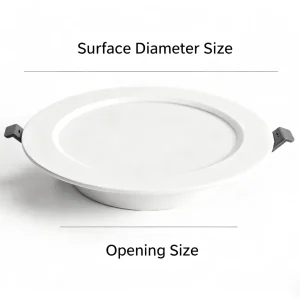
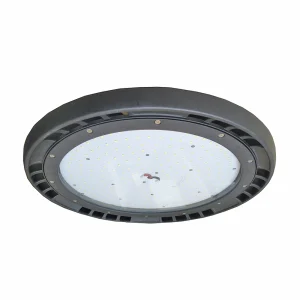
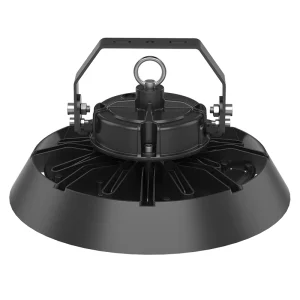
High-Performance Downlight & Industrial Solutions
Explore our collection of interior downlights, industrial panels, and highbay fixtures, designed to deliver high efficacy and visual comfort.
 Ledlot Lighting