1. The Global Landscape of "LED Moonlight" & High-Performance Illuminators
The global demand for energy-efficient, high-performance architectural and industrial lighting has entered a new phase. What the market semantically refers to as "LED Moonlight" represents the convergence of high-CRI (Color Rendering Index) output, diffused glare-free illumination, and exceptional mechanical longevity. These fixtures emulate the soft, uniform glow of natural moonlight, neutralizing harsh shadows and reducing visual strain in spaces ranging from industrial assembly floors to luxury hospitality suites.
According to current market intelligence, the commercial lighting sector is transitioning rapidly away from single-point, high-glare LED sources. Enterprise buyers and electrical consultants are selecting specialized products with smart network integration, variable power switching, and complex ingress protection (IP). In harsh industrial environments—where moisture, chemical vapor, dust, and explosive gases pose constant risks—the demand for robust, certified lighting systems (such as IP65, IP66, and IP69K tri-proof housings) is scaling exponentially.
3 Million
Annual Set Capacity
100 Million
Annual Turnover (RMB)
38 KM
Distance to Ningbo Port
IP66/IP69K
Max Ingress Rating
2. Deciphering the Efficiency Advantage of Chinese OEM/ODM Factories
China remains the undisputed epicentre of the global optoelectronics supply chain. Specifically, the Ningbo industrial zone offers unparalleled logistical and structural advantages. As a primary manufacturer situated only 38 kilometres from the Port of Ningbo, we enable global distributors to bypass middle-tier transport layers, significantly reducing lead times and sea freight expenditure.
But logistics is only half of the efficiency equation. True manufacturing superiority is driven by vertical integration. Unlike assembly-only workshops, our factory houses its own custom injection molding, blister molding, and compression molding workshops for lamp housings. This localized control of raw plastic and structural aluminum processing results in three strategic advantages:
Rigid Quality Assurance: Structural tolerances, housing wall thickness, and UV stabilization parameters are tested and modified on-the-fly during the casting phases.
Accelerated Prototyping: The internal mold engineering department develops custom toolings within days, moving from design blueprints to photometrically tested samples.
Minimized Production Overhead: Eliminating third-party molders translates directly to competitive pricing models, passing the economic gain to direct B2B importers.
In accordance with Google's E-E-A-T guidelines, transparency and scientific verifiability are the pillars of our operational methodology. We do not simply assemble parts; we engineer photometric solutions. To ensure absolute compliance with European, American, and Asia-Pacific standards, our testing infrastructure features dedicated laboratories designed to stress-test luminaires under destructive environmental conditions.
Our facility houses an in-house **integrating sphere spectrometer** darkroom, allowing our optoelectronic engineers to map light output, spectral power distribution, chromaticity coordinates, and color rendering metrics. Every production run undergoes continuous thermal equilibrium and luminous efficacy analysis.
Additionally, we utilize high-precision **IP waterproof level testers** and dust chambers to guarantee our IP65, IP66, and IP69K ratings. The scientific management concept of "Credit from Sincerity, Business from Quality, People First" dictates our quality control systems. As a registered high-tech enterprise, we continuously upgrade our hardware stack annually to stay ahead of changing international standard mandates.
Global Compliance & System Certifications
Our factory processes and environmental safety metrics are regularly audited by international accreditation bodies. Current certifications include:
Utilizing our integrating sphere spectrometers, darkrooms, and advanced IP testers to ensure all structural and electrical components match global safety guidelines.
Advanced Molding Techniques
Equipped with specialized injection, blister, and compression molding setups, allowing production of complex shapes in diverse lengths and durable PMMA/PC materials.
Bespoke OEM Customization
Our R&D division converts client samples and CAD blueprints into production-ready components, complete with localized driver chips and optics adjustments.
High Annual Production capacity
Outputting up to 3 million sets of industrial lights per year with annual sales reaching 100 million, satisfying heavy container-volume demands easily.
Global Logistics Network
Rapid consolidation and shipping to Europe, the Americas, Australia, Southeast Asia, the Middle East, and Africa using local seaport networks.
Smart Tech Integration
Providing intelligent architectural and residential light frameworks compatible with Zigbee, smart app dimmed systems, and dim-to-warm RGBW layouts.
4. Demanding Applications of High-IP Tri-Proof & Moonlight Fixtures
High-quality lighting is not simply defined by brightness; it is defined by its resilience in the face of structural challenges. Our IP66 and IP65 Tri-proof lighting units are engineered to operate in regions plagued by moisture, corrosive elements, high-pressure washing, and safety-critical explosive vectors.
Moisture-Heavy & Thermal-Stressed Sectors
Industrial settings like commercial kitchens, food processing canteens, saunas, bathhouses, and bakeries introduce sudden temperature fluctuations and high levels of vapor. Lower-grade LED fixtures suffer from internal condensation, causing driver failure and optical yellowing. By using co-extruded PMMA/polycarbonate housings and chemical-grade silicon seals, our fixtures isolate the internal PCB boards, ensuring consistent output in steam-saturated environments.
Heavy Infrastructure, Transportation & Underground Mining
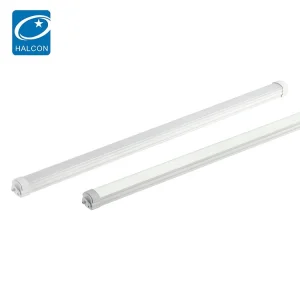
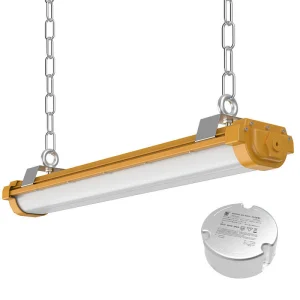
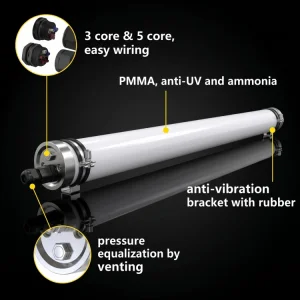
Underground pathways, subways, rail tunnels, riverbanks, docks, and bridges require light sources capable of running continuously for 24 hours a day under constant vibration. Our PMMA tubular tri-proof lights and explosion-proof emergency lights feature heavy internal aluminum backplanes to disperse heat effectively. In safety-critical sectors like coal mines, oil refineries, and LNG processing facilities, our explosion-proof models isolate arc-generation sources, protecting the workplace against gas ignition incidents.
5. Next-Generation Trends: Smart Dimming & Tunable White Systems
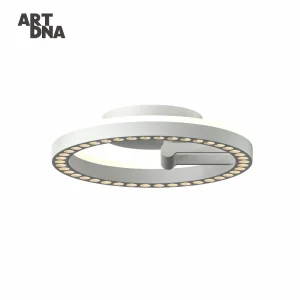
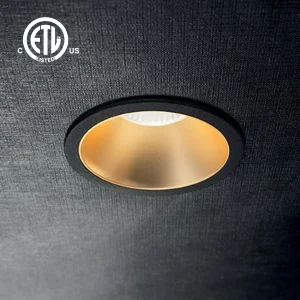
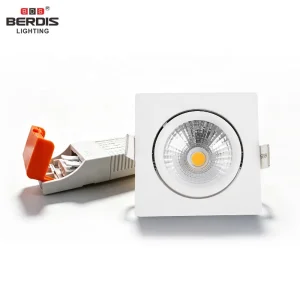
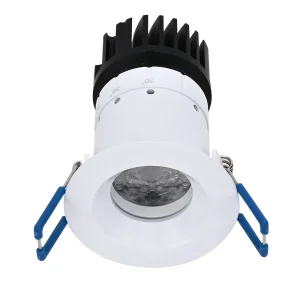
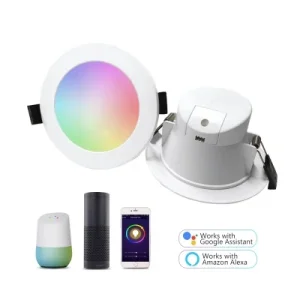
As the internet-of-things (IoT) expands within commercial structures, static lighting setups are being replaced by dynamic, sensor-responsive arrays. In residential and high-end hotel environments, architectural recessed downlights are expected to adapt to human circadian rhythms. This has led to the development of Dim-to-Warm (2700K to 6500K) and RGBW color-shifting systems controlled via Zigbee, WiFi, or smart assistants.
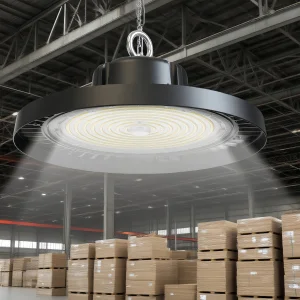
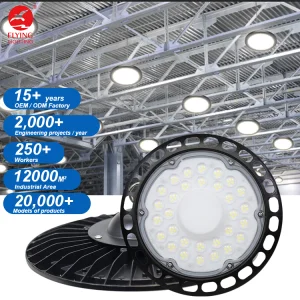
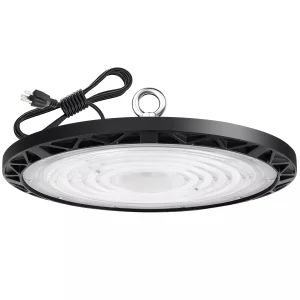
Simultaneously, industrial operators are adopting multi-power, switchable 3CCT drivers. Rather than stocking separate inventory models for different warehouse layouts, distributors can stock a single variable UFO high bay light, adjusting the wattage (e.g., 100W/150W/200W) and color temperature at the physical switch. This decreases storage footprint requirements and allows installation teams to calibrate light outputs according to localized workplace tasks.
Q1: What structural plastics do you use for your tri-proof and waterproof housings?
We utilize high-grade Polycarbonate (PC) and Polymethyl Methacrylate (PMMA) for our housings. PC is selected for its high impact resistance (IK08-IK10) and fire-retardant properties, making it ideal for warehouses and industrial workshops. PMMA is utilized for its exceptional resistance to corrosive chemicals, ammonia vapors, and UV degradation, which is critical for agricultural setups, poultry farms, and chemical warehouses.
Q2: How does your factory handle custom product modifications (OEM/ODM)?
We have an independent mold research and development center. B2B buyers can submit physical product samples or detailed CAD/Step drawings. Our R&D division reviews the thermal limits, electrical parameters, and optical distribution to produce prototype units. Our injection, blister, and compression tooling shops allow us to configure customized lengths, wiring access points, and mounting configurations.
Q3: What testing protocols are carried out on each batch of LED lights?
Every batch is subjected to rigorous quality control procedures. We use integrating sphere spectrometers to check color consistency (MacAdam ellipse steps), color rendering indices, and absolute lumen outputs. Each unit is tested in our IP waterproof testing chamber to confirm seal integrity. Finally, all products run through a continuous 24-hour high-voltage burning/aging cycle to catch premature driver failures.
Q4: How do you optimize production costs to remain highly competitive?
By integrating our production processes vertically. Because we operate our own injection molding workshop, we design and produce our own component housings in-house. This cuts out middle-tier parts suppliers, protects us from external supplier delays, and enables us to keep production costs highly optimized while maintaining structural quality.
Q5: What certifications can you provide for European and Oceanian markets?
Our factory operates under the ISO9001:2000 management protocol and is BSCI audited. Our core product ranges have passed all certifications required for European distribution, including TUV, GS, CE, ROHS, LVD, and EMC. For oceanian regional compliance, we maintain verified SAA approvals for our primary commercial ceiling and downlight systems.
Q6: What is the typical lead time and what are your logistical advantages?
Standard manufacturing times depend on volume but usually range between 20 to 35 days. Logistically, we are only 38 kilometers away from the Port of Ningbo, one of the largest shipping terminals in the world. This geographical location gives us fast access to container drop-offs, reduces inland logistics fees, and ensures efficient international shipping to ports worldwide.
Q7: Do you offer smart control protocols like Zigbee or DALI?
Yes. We build smart-compatible architectures into our residential and architectural lighting lines. We support Zigbee APP control, WiFi remote connections, and dimmable frameworks. For high-end smart office designs, we integrate multi-functional RGBW systems and dim-to-warm downlights designed to adapt color output dynamically based on external inputs.
Q8: Can your high bays and tri-proof lights be used in food processing plants?
Absolutely. Our IP65/IP66 waterproof tri-proof lights and UFO high bays are widely used in hospitals, industrial bakeries, and food preparation facilities. Since these facilities require frequent sanitizing using high-pressure hot water sprays, our hermetically sealed light enclosures prevent ingress of vapor and cleaning solutions, keeping the internal circuits clean.
Additional Professional Grade Lighting Systems
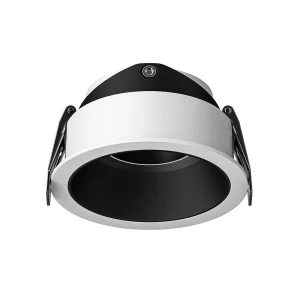
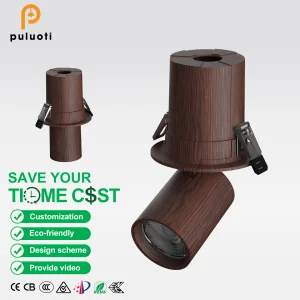
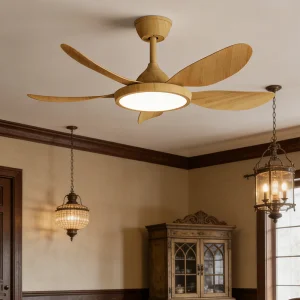
Examine our advanced series of smart downlights, silent ceiling fan arrays, and explosion-resistant heavy-duty tubular luminaires.
 Ledlot Lighting