China Top Portable LED Lantern Manufacturer & Supplier

High-Performance Waterproof IP65/IP66 Tri-Proof, Industrial High Bay & Architectural Luminaire Engineering

Global Industrial & Commercial Lighting Architecture

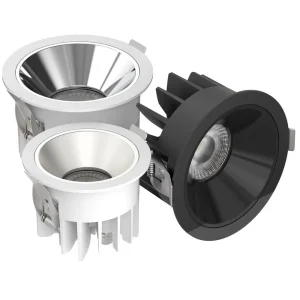
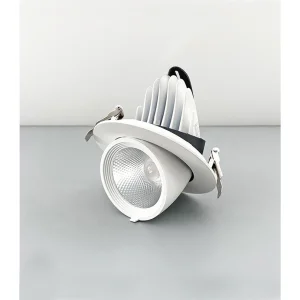
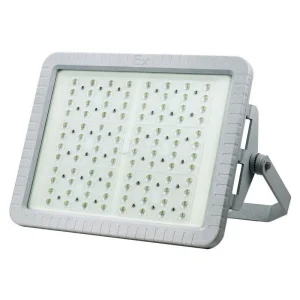
The global shift toward high-performance solid-state lighting has transformed from simple energy conservation to complex, application-specific optical engineering. In harsh industrial environments, wet spaces, and high-heat commercial hubs, traditional lighting fixtures fail prematurely. This failure is driven by ingress of moisture, airborne dust, corrosive elements, and thermal stress. As a prominent, top-tier manufacturer based in China, we address this critical gap by specializing in IP66 and IP65 Tri-proof lighting, explosion-proof fixtures, and highly engineered architectural downlights.

Our operational philosophy, rooted in "Credit from Sincerity, Business from Quality, and People First," drives us to deliver lighting solutions that meet strict global performance criteria. We bridge the gap between heavy industrial resilience and clean architectural integration. By deploying advanced production techniques, we service a broad spectrum of commercial, public, and hazardous industrial locations worldwide.

"True performance is not measured merely in initial lumens, but in lumen maintenance, thermal stabilization, and structural integrity across decades of continuous operation under adverse conditions."

Fulfilling the Demand for Resilient, Durable Illumination

From deep-sea shipping docks and high-humidity saunas to food processing facilities and explosion-prone chemical bays, light fixtures face constant chemical and physical challenges. Our products feature high-impact polycarbonate (PC) and poly(methyl methacrylate) (PMMA) housings, coupled with corrosion-resistant 6063 marine-grade aluminum heat sinks. This ensures optimal thermal management while protecting interior optoelectronic components.

Our solutions incorporate advanced drivers that feature high power factor correction (PFC > 0.95) and low total harmonic distortion (THD < 10%). This design yields stable illumination, completely eliminating visible flicker and invisible high-frequency stroboscopic pulses. As a result, our lighting systems reduce user fatigue, boost safety on factory floors, and satisfy demanding international safety regulations.

100M+
Annual Sales (RMB)
3M
Annual Production Sets
38km
Distance to Ningbo Deepwater Port
100%
In-House Injection & Optoelectronic Quality Inspection

State-of-the-Art Manufacturing & QA Infrastructure

A closer look at the advanced technologies, testing equipment, and certifications backing our E-E-A-T credentials.

Advanced Mold R&D Center

Equipped with tooling machinery, our specialized molding center supports high-precision plastic injection molding, vacuum blister forming, and heavy compression molding. We maintain precise control over tolerances to guarantee absolute airtightness for all IP65 and IP66 enclosures.

Integrated Optoelectronic Lab

Our facility houses an in-house darkroom equipped with a high-accuracy integrating sphere spectrometer. This allows us to verify color rendering indexes (CRI), chromaticity coordinates, spatial luminous distribution, and luminous efficacy in real time.

Rigorous Waterproof Testing

Through automated high-pressure hydraulic jet chambers, our designs undergo real-world ingress simulation. These processes test our seals against dust penetration and high-volume water ingress, satisfying all global IP standard requirements.

BSCI & ISO9001:2000 Certified

Our facilities maintain strict operational compliance with ISO9001:2000 quality management systems and Business Social Compliance Initiative (BSCI) guidelines, ensuring ethical labor practices and highly standardized production runs.

International Compliance

Our lighting systems are certified to meet major international standards, including TUV, GS, CE, RoHS, SAA, LVD, and EMC. This ensures seamless integration into regulatory frameworks across Europe, North America, Oceania, and Asia.

Full OEM/ODM Versatility

Backed by our in-house R&D team, we develop custom fixtures from 2D sketches, 3D CAD files, or physical reference samples. Our vertically integrated injection molding shops enable rapid prototyping and competitive pricing.

The Science of Protective Enclosures (Tri-Proof Dynamics)

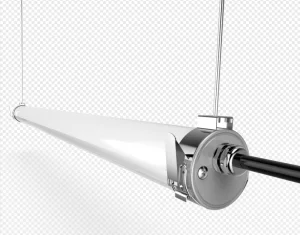
The term "Tri-proof" represents resistance to three primary challenges: water, dust, and corrosion. Achieving this high level of protection requires careful selection of advanced materials and engineering of seals:

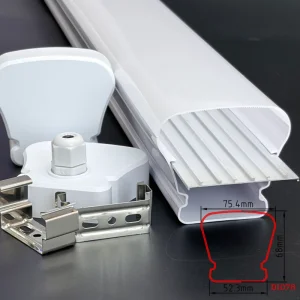
  • Enclosure Shells: We utilize impact-resistant Polycarbonate (PC) for spaces prone to mechanical impact, and specialized Poly(methyl methacrylate) (PMMA) or chemically treated tempered glass for environments containing airborne organic oils, detergents, or chemical solvents.
  • Thermal Dissipation: Because high temperatures accelerate LED lumen depreciation, our high-bay and linear lights incorporate integrated internal aluminum PCBs with high thermal conductivity (>2.0 W/m-K). This transfers heat away from the chip junction to prolong system lifespan.
  • Gasket Material: Standard rubber gaskets can dry out and crack over time. We use continuous silicone gel injection gaskets to maintain long-term elasticity, ensuring tight seals even during thermal expansion and contraction cycles.

Optical Precision and Anti-Glare Systems

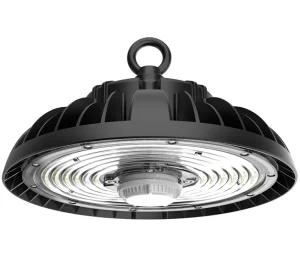
Proper light distribution is key to both productivity and safety. For instance, high ceilings in warehouses require narrow optical distribution (e.g., 24-degree cutoff optics) to deliver light to work surfaces without creating glare. Conversely, low-ceiling spaces benefit from wide-dispersion diffusers that spread light evenly to eliminate harsh shadows.

Our Downlights and Linear Tri-proof systems utilize specialized internal prismatic lenses and opal diffusers. These components reduce glare (UGR < 19) while maintaining high light transmission. This design provides visual comfort in workspaces like commercial offices, hotel lobbies, and detailed assembly areas.

Global Application Matrices & Site Solutions

Engineered for high reliability across a diverse range of extreme settings, industrial facilities, and public spaces.

Commercial Spaces

  • Bathrooms & Damp Saunas
  • Industrial Kitchens & Bakeries
  • Hospital Corridors & Canteens
  • Hotel Lobbies & Offices

Public & Institutional

  • Military Barracks & Facilities
  • Schools & Auditoriums
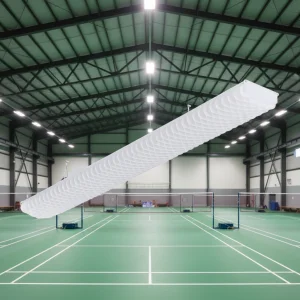
  • Indoor Badminton & Sports Courts
  • Fitness Centers & Swimming Pools

Heavy Industry & Logistics

  • Large Material Warehouses
  • Automated Assembly Lines
  • Underground Parking Structures
  • Subway Stations & Platforms

Outdoor & Marine Areas

  • Docks & River Bank Facilities
  • Bridges & Tunnel Walkways
  • Parks, Public Squares & Campsites
  • Coal Mines & Hazardous Zones

Technology Roadmap & Future Development (2025–2030)

Our long-term R&D pathway focusing on IoT integration, green sustainability, and adaptive optics.

2025 - 2026

Next-Generation Wireless Control Systems

Integration of low-latency Bluetooth Mesh and ZigBee nodes directly onto internal drivers. This allows operators to easily configure adaptive schedules and implement daylight harvesting routines.

2027 - 2028

Eco-Friendly Materials & Modular Component Designs

Developing fully recyclable housing materials using bio-resins. We are also introducing modular components that allow fast driver and LED board replacements, reducing long-term electronic waste.

2029 - 2030

Intelligent LiFePO4 Energy Management

Integrating smart micro-chargers and solar inputs into portable industrial lighting systems. This design ensures extended runtime and reliable backup power during unexpected electrical grid disruptions.

Tailored Solutions & Quick-Turn Shipping Logistics

No two projects are identical. A facility with high-temperature bakeries demands a completely different thermal management solution than a freezing storage warehouse or a chemical refinery. We address these varying needs through a structured customization workflow:

  1. Consultation & Requirement Analysis: Analyzing operating temperatures, exposure to chemicals, and light level goals (lux).
  2. Prototyping & CAD Design: Utilizing our mold center to quickly produce customized structural samples.
  3. Environmental Performance Validation: Subjecting prototypes to darkroom testing and high-pressure water spray verification.
  4. Volume Production & QA: Running systematic burn-in testing on automated assembly lines.

Optimized Shipping from Ningbo Port

Our manufacturing facility is located just 38 kilometers from Ningbo Port, one of the world's leading deepwater shipping hubs. This close proximity translates directly into logistics advantages for our global partners:

  • Minimized inland shipping costs and reduced drayage times.
  • Streamlined custom clearance processes and direct ocean freight routes to Europe, the Americas, and the Asia-Pacific.
  • Consistent shipping lead times and efficient container planning for large-volume purchases.

Expert Lighting FAQ (Search Quality Focus)

Answers to technical questions regarding ingress protection, custom engineering, and thermal safety.

What is the difference between IP65 and IP66 ratings?
An IP65 rating indicates the fixture is protected against low-pressure water jets from any angle. An IP66 rating means the enclosure can withstand high-pressure water sprays and heavy seas, making it suitable for marine environments, river banks, and intensive washdown zones.
Why is in-house injection molding important for price optimization?
By handling tooling design and plastic injection molding in-house, we eliminate third-party markup costs. This integration allows us to quickly adjust structural shapes, modify lengths, and choose custom polymers, while maintaining competitive pricing.
How does an integrating sphere spectrometer ensure lighting performance?
The spectrometer captures the total light emitted by a fixture inside a reflective chamber. This provides accurate measurement of key characteristics like lumens, luminous efficacy (lm/W), color rendering index (CRI), and chromaticity coordinates, ensuring every batch meets performance targets.
What materials are used to prevent chemical cracking in oil-heavy spaces?
For spaces exposed to cooking oils or mineral lubricants, we use PMMA (Acrylic) or tempered glass lenses. These materials resist chemical degradation and cracking, outperforming standard polycarbonate which can degrade under prolonged chemical contact.