China Top LED Solar Garden Light Manufacturers & Exporter

High-Performance Photometric Engineering & Smart Off-Grid Industrial Integration

1. Executive Whitepaper: The Global Shift in Solar Garden & Landscape Illumination

In the current global economic landscape, public and private sectors are rapidly aligning their infrastructure with strict ESG (Environmental, Social, and Governance) targets. Outdoor architectural lighting, particularly the deployment of high-efficiency LED Solar Garden Lights, has evolved from a cosmetic asset to a critical component of smart-city infrastructure and off-grid carbon reduction plans. As commercial properties, public parks, municipal plazas, and industrial hubs transition away from grid-tied electrical lines, the technical demands on solar-powered systems have increased exponentially.

Historically, solar garden lighting was plagued by poor battery longevity, low conversion efficiencies under diffuse light, and catastrophic housing failures in harsh environments. Today's commercial-grade solar garden systems must integrate high-efficiency monocrystalline PV arrays, state-of-the-art LiFePO4 batteries, and smart MPPT charging algorithms. This whitepaper analyzes how leading Chinese engineering and manufacturing facilities—specifically exemplifying the rigorous operational standards of Ledlot Lighting—leverage advanced fabrication processes to deliver high-lumen, resilient, and aesthetically superior outdoor luminaires to markets worldwide.

3M+
Annual Capacity (Sets)
100M+
Annual Sales (RMB)
38 km
Proximity to Ningbo Port
IP66
Max Ingress Rating

2. Engineering & R&D Authority: The Ledlot E-E-A-T Paradigm

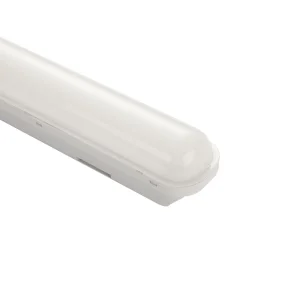
Ledlot Lighting stands as a benchmark of engineering expertise and quality reliability within the high-tech Chinese lighting sector. As an enterprise specializing in the development, production, and sales of IP66, IP65 Tri-proof lights, alongside premium indoor and outdoor ceiling lamps, we approach every design through the lens of longevity and performance. Our manufacturing ethos is anchored by the scientific management concept of "Credit from Sincerity, Business from Quality, People First", continuously injecting vital technological reform into our production lines.

True quality assurance cannot be outsourced. That is why our facility operates an independent mold research and development center alongside comprehensive photoelectric testing labs. Our engineering workspace features specialized diagnostic instruments, including:

Precision Integrating Sphere

Measures exact luminous flux, chromaticity coordinates, color temperature (CCT), and color rendering indexes (CRI 90+), ensuring spectral consistency across bulk production batches.

Goniophotometer Darkroom

Generates IES files for professional lighting designers, mapping spatial luminous intensity distribution curves, unified glare ratings (UGR), and beam spread parameters.

IP Rating Waterproof Chamber

Performs rigorous high-pressure water spray and submersion testing, certifying all enclosures to IP65, IP66, and specialty IP68 standards under dynamic operating conditions.

Supported by our passionate and dynamic R&D team, automated assembly setups, and mature fabrication technologies, our quality management system is fully verified by BSCI and ISO9001:2000 certifications. Consequently, our complete range of luminaires holds respected international marks including TUV GS, CE, ROHS, SAA, LVD, and EMC—systematically expanding every year to secure frictionless entry into highly regulated global markets.

3. Technology Roadmap: The Anatomy of Next-Generation Solar Garden Lights

To design a solar-powered garden light that survives winters, cloudy spells, and ocean spray, engineering teams must evaluate three main subsystems: solar capture, energy storage, and light generation.

A. Photovoltaic (PV) Module Technology

Modern garden lights rely on Monocrystalline Silicon panels. Monocrystalline cells achieve laboratory conversion efficiencies of 22% to 24%, outperforming cheaper polycrystalline alternatives (15%-17%). By embedding advanced textured glass covers and anti-reflective coatings, contemporary panels maximize light capture under overcast skies and low sun angles typical of northern winters.

B. Advanced Battery Chemistry: LiFePO4

The core limitation of older solar systems was the lead-acid or Ni-Cd battery. Commercial fixtures have standardized on Lithium Iron Phosphate (LiFePO4) cells. LiFePO4 chemistry offers significant advantages:

  • Cycle Life: Over 2,000 to 3,000 complete charge/discharge cycles at 80% Depth of Discharge (DoD), translating to an active operational life exceeding 8 years.
  • Thermal Stability: Safe operation between -20°C and +65°C without triggering thermal runaway.
  • Environmental Safety: Free of heavy metals like lead or cadmium, aligning with global green building standards.

C. Smart Control Systems (MPPT & Smart Dimming)

Rather than raw battery power, modern solar lights use integrated Maximum Power Point Tracking (MPPT) microcontrollers. MPPT increases charging efficiency by 15-30% compared to basic PWM charging. Furthermore, incorporating IoT protocols, such as Tuya WiFi or Zigbee Smart Control, allows commercial managers to dim lights, adjust schedules, and monitor battery health remotely via mobile apps.

Technical Parameter Standard Residential Solar Light Industrial Grade Commercial Solar Light
PV Panel Type Polycrystalline (15% Efficiency) Monocrystalline Silicon (22%+ Efficiency)
Battery Chemistry Ni-MH / Li-ion (500 Cycles) LiFePO4 (2500+ Cycles, High Temp Tolerant)
Charge Controller PWM (Basic On/Off) Smart MPPT with Programmable Dimming Modes
Enclosure Materials Thin ABS / Recycled Plastic Anodized Aluminum / High-Impact Polycarbonate
Luminous Efficacy <90 lm/W Up to 190 lm/W (Specialty LED Chips)
Ingress Protection IP44 IP65, IP66, up to IP68 for extreme applications

4. Extreme Environments: Localization & Field Applications

An important test of any manufacturer's E-E-A-T is how their luminaires perform in harsh real-world settings. Ledlot’s IP65 and IP66 Tri-proof lights, alongside our outdoor architectural collections, are engineered for demanding installations worldwide:

Heavy Industrial & Corrosive Sites

Engineered for chemical plants, oil refineries, coal mines, and heavy-duty warehouses. These environments require specialized acid, alkali, and salt-resistant IP68 materials to prevent chemical degradation of housing gaskets and optical diffusers.

High Humidity & Thermal Spas

Crucial for commercial saunas, public swimming pools, commercial bakeries, and food processing canteens. These settings undergo rapid heat cycling alongside relative humidity up to 100%, demanding airtight seals to avoid moisture condensation on internal electronics.

Marine & Infrastructure Projects

Applied to bridges, riverbanks, ocean docks, subways, and underground parking lots. High salt-fog coastal locations require corrosion-proof structural polymers and specialized surface coatings to prevent salt damage to critical connections.

Whether illuminating military barracks, municipal parks, camping grounds, or hospital corridors, our custom lighting fixtures provide targeted beam distributions and structural durability tailored to local climates.

5. Supply Chain Resilience & Logistics: The Ningbo Advantage

Selecting a manufacturing partner in China is not only about finding the lowest cost per unit; it is about securing a resilient supply chain, raw material integration, and reliable logistics. Ledlot Lighting manages costs and quality through several structural advantages:

A. Vertical Integration of Production

We house our own injection molding, blister molding, and compression molding workshops for lamp housing production. This self-contained approach lets us fabricate structural parts of varying shapes, lengths, and materials. By avoiding third-party parts markups, we can maintain strict quality controls, adjust production volumes dynamically, and offer more competitive pricing to our partners.

B. Quick OEM/ODM Prototyping

Our dedicated in-house R&D team can design and build specialized custom fixtures from customer-provided drafts or physical samples. Our capability to produce tooling in-house reduces prototyping cycles from months to weeks, giving our buyers a key speed-to-market advantage.

C. Logistical Proximity to Ningbo Port

Our facility is located just 38 kilometers from Ningbo Port, one of the world's busiest container hubs. This geographical proximity offers clear logistical benefits:

  • Reduced Transportation Costs: Short transit times from factory floor to ship deck eliminate high inland drayage fees.
  • Fewer Supply Chain Delays: Rapid container shipping, immediate custom clearings, and daily ocean departures ensure predictable international deliveries.
  • Lower Carbon Footprint: Minimal local trucking emissions align with environmental procurement guidelines.

6. Global Compliance & Verification Framework

International commercial buyers must navigate complex import regulations and building codes. Ledlot ensures compliance through a systematic certification matrix, assuring our products are ready for immediate site integration:

European Union Compliance (CE, GS, LVD, EMC)

All electrical products are tested to comply with LVD (Low Voltage Directive) and EMC (Electromagnetic Compatibility Directive) parameters. TUV GS certification provides third-party verification of safety and design quality.

Oceania & Americas (SAA, RoHS)

Our fixtures carry SAA certification, meeting the specific electrical safety standards required by Australia and New Zealand. RoHS compliance guarantees that all internal and external components are free of hazardous substances.

7. Deep Technical Q&A (FAQ)

What is the expected operating life of the LiFePO4 batteries in your outdoor solar products?
Our high-grade Lithium Iron Phosphate (LiFePO4) battery cells are designed to last for 2,500 to 3,000 charge cycles at 80% Depth of Discharge (DoD). This translates to roughly 7 to 8 years of nightly operational service. Additionally, our battery systems incorporate dedicated smart BMS (Battery Management System) boards that prevent overcharging, over-discharging, and thermal spikes.
How do you guarantee watertight sealing for IP66-rated fixtures in high-temperature areas like steam rooms or saunas?
Our IP66 and IP65 Tri-proof light housings are produced using custom compression and injection molds using high-stability raw polymers (like premium polycarbonate). Gaskets are constructed from high-tensile silicone, which maintains its elastomeric properties at temperatures exceeding 100°C. Finished batches undergo water-jet testing in our IP waterproof testing chamber to verify structural integrity.
Can you customize optical distribution and beam angles for large architectural landscape projects?
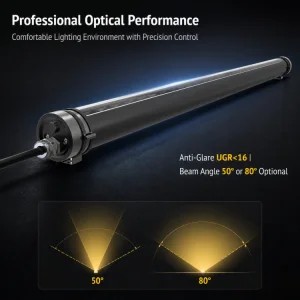
Yes, our independent mold R&D center can design and produce customized optics. Depending on your needs, we can deliver narrow beam spot profiles (e.g., 50°), wide wash optics (e.g., 80°), or asymmetric street/pathway distributions. We also verify all custom optic designs in our darkroom, providing full IES files for your lighting layouts.
What is the typical production and shipping timeline for volume orders destined for Europe or the Americas?
Standard production times range from 25 to 35 days, depending on the customization required. Because our factory is located just 38 kilometers from Ningbo Port, we can pack and deliver containers to the port terminals within hours of final QA clearance, reducing shipping times compared to inland factories.