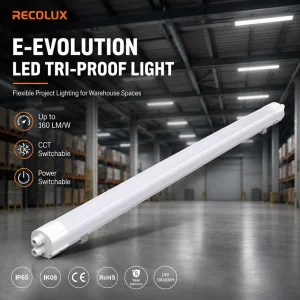
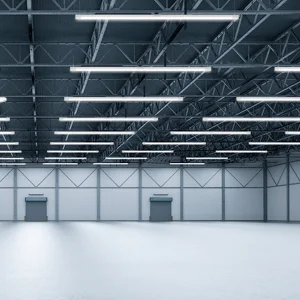
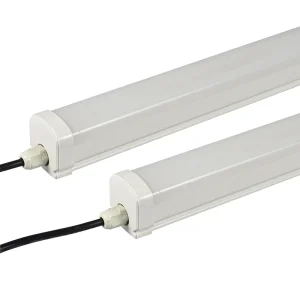
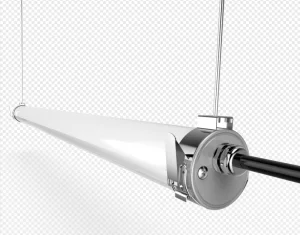
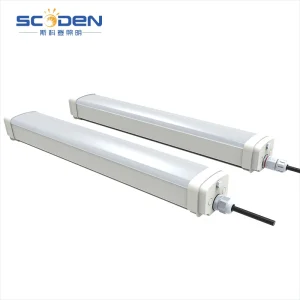
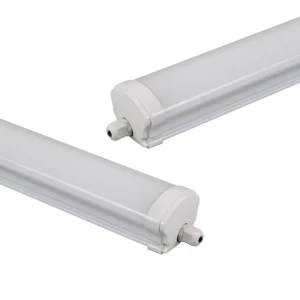
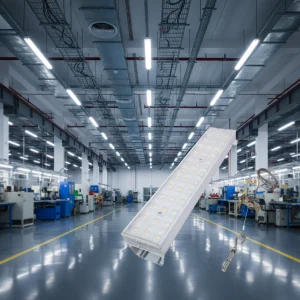
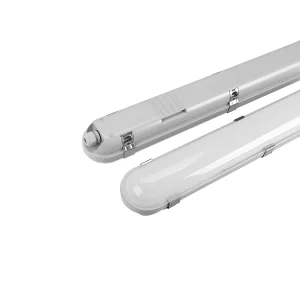
LED Linear Tri-proof Light Factory & Exporter in the Greece Market
Professional Industrial IP66/IP65 Dustproof, Waterproof, and Anti-corrosion Lighting Solutions. Engineered to Support Greece's Maritime Logistics, Cold Chains, and Manufacturing Corridors.
Strategic Engineering Innovations
Direct from factory to the Greek market. These high-performance configurations are calibrated to withstand coastal moisture, high summer temperatures, and mechanical impact.
White Paper: Industrial Lighting Decarbonization & Engineering Standards in Greece
An analytical evaluation of LED Linear Tri-proof technology in the context of Mediterranean port infrastructure, agricultural cold chains, and European Union energy directives.
1. Executive Summary & Macroeconomic Dynamics
The Hellenic Republic has increasingly positioned itself as a critical maritime gate and logistics gateway connecting Asia and Central-Eastern Europe. Backed by strategic investments in the Port of Piraeus (OLP) and the expansion of the Thriassio Pedio logistics masterplan in Attica, industrial space absorption has reached historic highs. However, this infrastructure boom coincides with strict European regulatory mandates on energy transition, primarily under the EU Green Deal and the Energy Performance of Buildings Directive (EPBD), transposed in Greece through the KENAK (Regulation on the Energy Performance of Buildings) framework.
For facility managers, project specifiers, and EPC contractors in Athens, Thessaloniki, and Patras, energy procurement costs represent a volatile overhead. Traditional lighting installations—primarily metal halide high-bays and legacy T8/T5 fluorescent tri-proof enclosures—fail prematurely under the thermal stresses of Mediterranean summers and the high humidity of coastal marine operations. Upgrading to high-luminous-efficacy (up to 170 lm/W) LED linear tri-proof systems represents a direct path to cutting lighting-related energy consumption by up to 72%. It also significantly minimizes maintenance cycles in hard-to-reach industrial ceilings.
Information Gain Metric: Standard EU warehouses allocating 12% of total operational electricity overheads to legacy lighting can achieve a full capital expenditure (CapEx) amortization within 14 months of retrofitting with 160 lm/W CCT-switchable tri-proof linear fixtures.
2. Climatic and Structural Demands Unique to the Greek Territory
A generic LED tri-proof fixture designed for continental European climates will often experience accelerated degradation in Greece due to three distinct environmental stress factors:
Coastal Saline Corrosion: In port logistics hubs like Piraeus, Elefsina, and Volos, atmospheric sodium chloride concentrations are highly elevated. Saline moisture functions as a catalyst for electrochemical oxidation, attacking exposed metal components and penetrating substandard silicone gaskets. High-spec linear fixtures must feature full co-extrusion construction with UV-stabilized, flame-retardant Polycarbonate (PC) or robust Aluminum (AL) backbones paired with WF2 anti-corrosion rated enclosures.
Ambient Thermal Fluctuations: During July and August, mainland regions such as Larissa, Central Macedonia, and Attica frequently record ambient air temperatures exceeding 42°C. Inside uncooled, metal-clad industrial structures, ceiling plenum temperatures can easily spike to 60°C. Lower-grade LED drivers experience accelerated electrolytic capacitor dry-out under these conditions. Our systems feature high-reliability internal thermal pads and heavy-gauge aluminum heat-sinks, ensuring junction temperatures remain within safe operational envelopes.
Sub-Zero Agri-Food Cold Storage: Greece is a leading exporter of fresh produce, olives, and dairy products. Cold-storage terminals in northern Greece require luminaires that function down to -25°C. In these zones, high-density gaskets must retain flexibility to prevent vacuum-induced moisture suction during thermal cycling, while driver components must offer cold-start capability without delay or flicker.
3.0M
Annual Capacity (Sets)
170lm/W
Max Optical Efficacy
38km
Distance to Ningbo Port
IK08+
Impact Safety Rating
3. Technical Architecture and Material Optimization Strategies
Understanding the micro-elements of luminaire composition is key to making informed sourcing choices. Our engineering roadmap leverages three core material typologies, each tailored to distinct operational challenges:
AL+PC Hybrid System
Features an extruded aluminum chassis enclosed within a co-extruded polycarbonate profile. Designed to optimize thermal dissipation in environments with high summer temperatures and high wattage demands.
Chemical-Grade PC co-extrusion
A completely metal-free outer structure that resists chemical attack and ammonia exposure. This makes it a perfect fit for agricultural processing, livestock housing, and chemical facilities across Greece.
Modular Linear Trunking
Designed for rapid, tool-free installation in logistics terminals. Features pre-wired phase configurations and quick-connect assemblies, cutting onsite labor overheads in half.
Our material selection ensures long-term performance. We use high-quality Polycarbonate compounds infused with UV-stabilized chemical additives. This modification prevents the material from yellowing and fracturing under exposure to sunlight and artificial UV rays—a common failure mode in Mediterranean coastal regions.
4. Logistics & Supply Chain: The Ningbo to Piraeus Silk Road
For large engineering, procurement, and construction (EPC) projects, delivery timelines directly affect profitability. Working with a vertically integrated manufacturer based near Ningbo Port offers clear logistics advantages:
Our manufacturing facility is located only 38 kilometers from Ningbo Port, allowing us to rapidly transfer containerized freight from our production floor to ocean carriers. The shipping corridor from Ningbo to the Port of Piraeus is exceptionally well-established, offering an average transit time of 18 to 22 days. This direct link allows Greek importers to bypass regional wholesale markups and reduce supply-chain delays, securing direct factory support throughout the project lifecycle.
Technical Specification Library
Explore our full range of certified industrial luminaires, custom-calibrated for installations across Greece. Click on any model to access comprehensive engineering reports and photometrics.
How our in-house production workshops, photometrics laboratories, and rigorous quality management support your project requirements.
Operating as a specialized manufacturer, we maintain control over our production chain rather than functioning as a trading intermediary. This structural control allows us to optimize product quality and support custom specifications.
Customization (R&D Design): Our engineering team can adapt housing dimensions, material compounds, light output characteristics, and pre-wired configurations. We can build and produce systems based on customer drawings, CAD specifications, or physical reference samples.
Cost & Quality Control: By operating our own injection molding, blister molding, and compression molding workshops, we control the cost of housing production while maintaining high consistency in physical fit and finish.
Advanced Laboratory Inspection: Our facility is equipped with integrating sphere spectrometers, darkroom goniophotometers (generating accurate .IES files for DIALux rendering), IP ingress rating testers, and high-temperature aging chambers. These tools verify structural integrity and optical performance prior to cargo dispatch.
Global Standards Certification: Our operations are certified under ISO9001:2000 and BSCI quality systems. Our lighting systems carry TUV GS, CE, RoHS, LVD, and EMC approvals, verifying compliance with European and international safety frameworks.
Compliance Note: Direct access to TUV GS and CE test reports simplifies the technical approval process for electrical contractors working on public and municipal tenders in Greece.
Technical Q&A / FAQ Section
Answering common engineering and sourcing questions raised by lighting specifiers, contractors, and importers operating in the Greek market.
What makes a Tri-proof luminaire suitable for maritime environments like the Port of Piraeus?
Marine environments are characterized by high humidity and airborne salt, which accelerates chemical oxidation. Standard metal fixtures corrode, and lower-grade plastics yellow or crack. For these zones, we recommend co-extruded Polycarbonate (PC) systems with a WF2 anti-corrosion rating. Polycarbonate resists chemical attack, and hermetic seals protect the internal LED chips and driver components from salt air.
How do these fixtures align with Greece's KENAK energy performance regulations?
KENAK establishes minimum energy efficiency standards for commercial and industrial properties in Greece. Using LED Tri-proof lights with high luminous efficacy (up to 170 lm/W) helps keep overall lighting power density (W/m²) below the maximum thresholds allowed under KENAK, which is also beneficial for properties seeking green building certifications.
Can these luminaires operate reliably in sub-zero agricultural cold storage warehouses?
Yes, our cold-chain optimized fixtures are rated down to -25°C. Unlike traditional fluorescent lights, which experience delayed start times and reduced lumen output in cold conditions, LEDs function efficiently in low temperatures. In addition, our drivers feature low-temperature start circuits, and the gaskets are designed to prevent condensation buildup during thermal cycling.
Why is in-house housing injection molding important for structural quality?
By manufacturing the enclosures in-house, we control the thickness and consistency of the housing walls, as well as the formulation of the plastics (including UV inhibitors and flame retardants). This helps ensure precise tolerances for the IP-rated gaskets and reduces structural variances often found in outsourced components.
How do DALI dimming options integrate with existing building automation systems in Greece?
Our DALI-2 dimmable drivers are designed to integrate with standard Building Management Systems (BMS) via standard gateway interfaces. This integration allows system operators to adjust brightness, schedule lighting periods, compile energy logs, and track luminaire status for maintenance planning.
What shipping routes and timelines should Greek importers expect from Ningbo Port?
Cargo ships sail from Ningbo Port and transit through the Suez Canal directly to Piraeus. The ocean transit phase takes between 18 and 22 days. When combined with our standard manufacturing lead time of 15 to 25 days, projects in Greece can plan for delivery in approximately 40 to 50 days from order confirmation.
Begin Your Structural Lighting Upgrade Today
Connect with our engineering support team to request custom DIALux simulation models, technical documentation, and pricing proposals structured for the Greek market.
 Ledlot Lighting