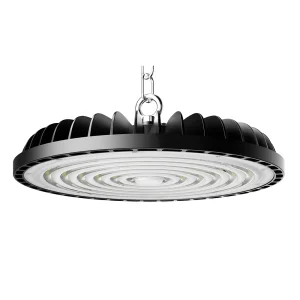
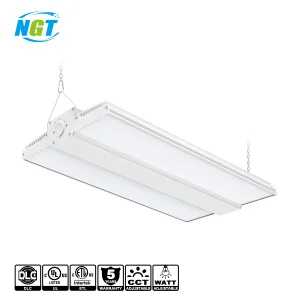
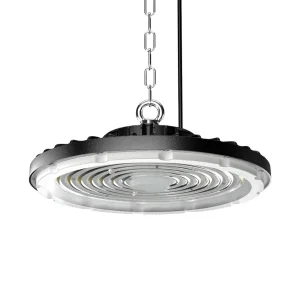
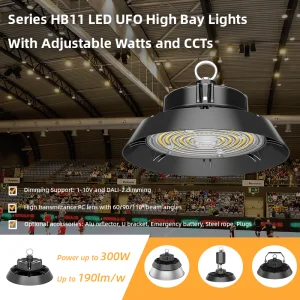
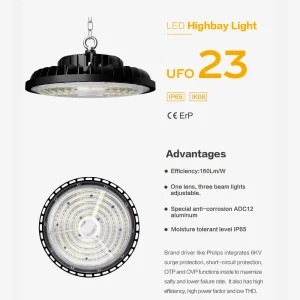
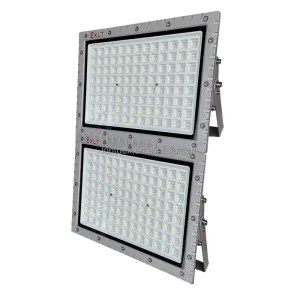
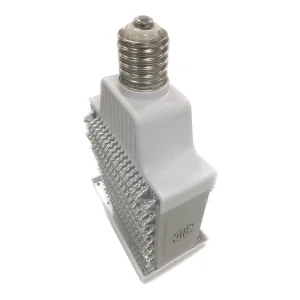
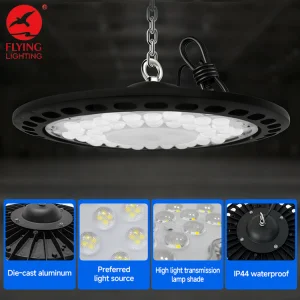
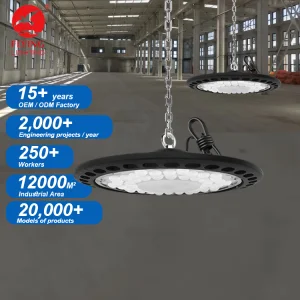
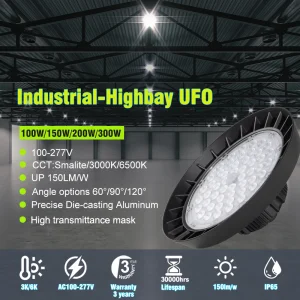
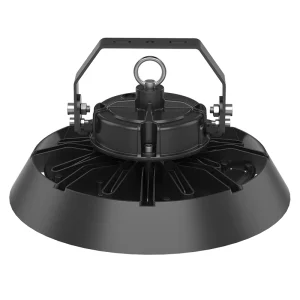
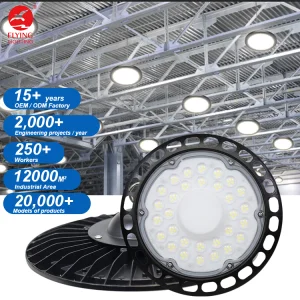
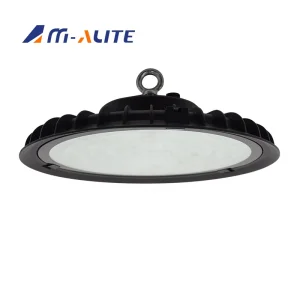
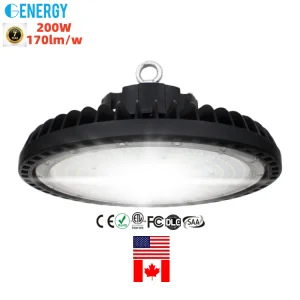
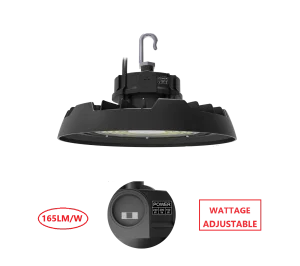
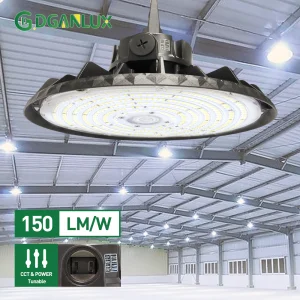
Engineered for high-altitude installation, automated workshops, and large-scale manufacturing facilities across major hubs like Gauteng, Western Cape, and KwaZulu-Natal.
In-depth analysis of the energy, supply-chain, and physical realities shaping the specification of commercial illumination systems in the region.
South Africa's industrial landscape is highly localized, dictated by severe operational conditions including rising state utility tariffs (Eskom) and continuous load shedding. Commercial lighting systems account for approximately 30% to 50% of a typical warehouse or distribution facility's total energy footprint. Upgrading to high-lumen commercial LED systems is no longer an ecological gesture—it is a financial necessity.
When load shedding occurs, generators and uninterruptible power supplies (UPS) must support the backup operational grid. Traditional high bay lights, such as metal halides or sodium vapor lamps, draw excessive start-up current (surge) and require long cool-down periods before restriking. High-efficacy LED high bay lights offer immediate restrike capability and draw up to 70% less current, enabling emergency diesel generators to support other critical machinery.
Municipal power distribution grids in industrial parks like Midrand, Durban Port, and Secunda experience intense electrical transients during utility line switching. Typical LED driver boards suffer premature failure under sudden voltage peaks if they lack sufficient surge tolerance. Standard commercial lights usually come with only 2kV protection, which is highly inadequate for the South African grid.
Our industrial UFO LED and linear systems are equipped with robust, 0-10V dimmable drivers featuring integrated 6kV to 10kV surge protection devices (SPDs). We construct our circuits using high-grade metal oxide varistors (MOVs) and gas discharge tubes to effectively suppress high-voltage spikes, ensuring continuous operation even after multiple utility switch-back cycles.
Furthermore, our aluminum die-cast housings act as heavy-duty heat sinks, lowering junction temperatures below 85°C to protect components in high ambient temperature zones like Polokwane or Upington.
Comparing commercial high-bay systems under active operational cycles in South African logistics corridors.
| Feature Parameter | Legacy Metal Halide (400W) | Standard LED High Bay (200W) | Our High-Lumen Series (150W) | South Africa Local Operating Impact |
|---|---|---|---|---|
| System Power Consumption | 455 Watts (incl. ballast loss) | 200 Watts | 150 Watts | Reduces active load on standby generator systems by 67% |
| Luminous Efficacy | 60 lm/W (system average) | 110 lm/W | 190 lm/W | Delivers higher floor illumination (lux) while drawing less current |
| Surge Tolerance | Negligible | 2.5 kV | 6 kV - 10 kV Integrated | Withstands frequent line surges during load shedding transitions |
| Useful Lifespan (L70) | 12,000 Hours | 50,000 Hours | 100,000 Hours | Eliminates high maintenance costs at heights of 10m to 15m |
| Instant Start Capability | 10-15 Minute delay | Immediate (<1s) | Immediate (<1s) | Maintains work safety standards without lag during grid transfers |
Providing high-protection ratings (IP65, IP68, ATEX) for corrosive coastal air, chemically aggressive mining processes, and cold-storage operations.
Our state-of-the-art facility integrates all stages of the manufacturing pipeline to guarantee premium build quality at competitive price points. By operating our own injection molding, blister molding, and compression molding workshops, we control tolerances and design variations directly. We eliminate middle-tier sourcing markups, allowing us to offer tailored options to South African distributors.
Quality testing is conducted inside our dedicated laboratory facilities, which feature integrating sphere spectrometers, darkroom goniophotometers, high-low temperature aging chambers, and IP grade water jet test enclosures. These assets enable us to secure and verify crucial certifications including BSCI, ISO9001:2000, TUV GS, CE, ROHS, LVD, and EMC. We ensure that every production batch matches strict international standards before dispatch.
Our production warehouse sits just 38 kilometers away from Ningbo Port, one of the primary shipping routes to Durban Harbor, Port Elizabeth, and Cape Town. This close proximity saves critical transit time, reduces container trucking costs, and speeds up wholesale delivery times.
Equipped with a dedicated R&D engineering department, we modify light distribution curves, build materials, brackets, and structural casings to match custom technical prints or physically provided samples.
Equipped with high-tonnage compression and injection molds to manufacture high-pressure, corrosion-resistant housings that block moisture, fine dust, and aggressive coastal air.
Annual manufacturing capacity reaches over 3 million structural sets, generating 100 million RMB in annual sales volume. We handle diverse wholesale order requests with reliable dispatch schedules.
How our heavy-duty lighting structures are tailored to specific sectors, ensuring maximum visibility and safety.
In dry logistics centers across Johannesburg East and Cape Town, narrow aisles require precise vertical illumination. Our linear high bay series uses focused optics to light pallet rows uniformly, minimizing dark zones. In cold storage, the IP65 and IP66 ratings ensure the fixtures operate reliably down to -30°C without condensation failure.
Vehicle manufacturing hubs in Pretoria and Port Elizabeth require high-CRI, flicker-free illumination to support precise quality inspections. Our high-bay LED fixtures use premium SMD2835 light sources, offering stable CRI > 80, which helps minimize eye fatigue and supports manufacturing precision.
Chemical plants in Mpumalanga and mining sites in the North West province expose fixtures to dust, corrosive elements, and rough conditions. Our IP68-rated and ATEX-certified high bay lights are built with specialty coated alloys and tempered glass to withstand chemically aggressive environments.
Explore our complete product catalog, featuring diverse installation configurations and customizable wattages designed to match local commercial lighting needs.
Expert answers addressing utility specifications, grid protection, installation standards, and sourcing logistics.
Under active load shedding and high industrial electricity rates from Eskom, minimizing wattage draw while keeping safety-compliant lux levels is critical. Efficacies like 170 lm/W and 190 lm/W yield the same or higher light output using fewer watts compared to standard LEDs. This lowers baseline consumption, reducing electricity bills and decreasing the load on auxiliary generators or battery backup systems during power outages.
Voltage fluctuations are common in South Africa when power lines switch back on after load shedding. Our industrial lights are built with premium drivers containing integrated 6kV to 10kV surge protection devices (SPDs). This system safely suppresses high-voltage transients, helping to prevent driver failure and maintain long-term reliability.
Yes. In warmer areas like Limpopo, Mpumalanga, and the Northern Cape, warehouse ceiling temperatures can rise significantly. Our high bay housings are constructed from high-purity, die-cast aluminum with specialized heat-dissipating channels. This thermal design keeps chip junction temperatures low, preventing lumen degradation and extending the product's operating life.
We provide full customization, including tailored beam angles (60°, 90°, or 120°), custom color temperatures (3000K to 6500K), emergency battery kits, and integrated motion sensors. Our factory is located only 38 kilometers from Ningbo Port, allowing us to offer convenient shipping connections and competitive transit times to major South African ports like Durban, Cape Town, and Port Elizabeth.
Work directly with a certified Chinese high bay lighting manufacturer. Get in touch with our engineering team for customized simulation designs, photometric reports, and wholesale pricing packages.