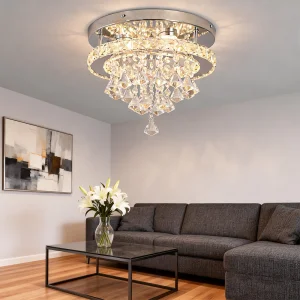
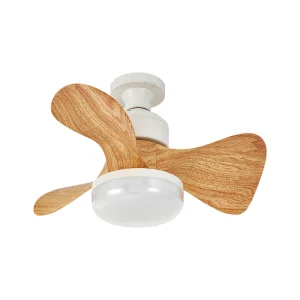
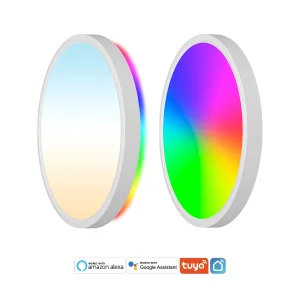
Dimmable LED Ceiling Lamp Supplier & Suppliers Serving the Philippines Market

B2B White Paper & Specification Guide: High-Performance, Grid-Resilient, and Energy-Efficient Dimming Solutions for Modern BPO Offices, Premium Condominiums, and Commercial Developments.

Send Inquiry Now

Philippine Lighting Market Analysis

Analyzing key structural factors, energy constraints, and regulatory frameworks governing industrial and commercial lighting in the archipelago.

1. The Commercial & Industrial Context in Metro Manila, Cebu, and Davao

The Philippines is undergoing a massive infrastructure boom, driven by commercial high-rises, BPO offices, and premium residential condominiums in major centers like Bonifacio Global City (BGC), Makati, Ortigas, and Cebu IT Park. However, this development occurs against a challenging operational background: the Philippines consistently records some of the highest electricity tariffs in Southeast Asia (averaging PHP 9.00 to PHP 12.00+ per kWh depending on grid adjustments).

Consequently, lighting represents a substantial portion of any commercial facility's operational expenditure. Transitioning from fixed-output lighting to integrated, smart, dimmable LED systems is no longer a luxury—it is an economic imperative. Furthermore, under the Philippine Green Building Code, modern commercial structures must implement intelligent lighting controls to achieve energy reduction mandates of up to 20% compared to standard baselines.

Key Insight for Procurement Officers: By integrating 0-10V, Triac, or DALI dimmable LED ceiling lamps with occupancy and daylight sensors, BPO centers operating 24/7 can lower their dedicated lighting energy footprints by up to 55%, directly improving their bottom line.

2. Climatic & Infrastructure Challenges: High Humidity, Ambient Temp & Grid Instability

Supplying lighting systems to the Philippine market requires a thorough understanding of the local environment. Any commercial or industrial fixture must withstand three critical environmental stress factors:

  • Extreme Thermal Load: With year-round ambient temperatures frequently reaching 32°C to 38°C in tropical urban environments, standard LED drivers are prone to early thermal runaway. Efficient, custom-engineered aluminum heat sinks are vital to preserve component life.
  • High Relative Humidity & Coastal Corrosion: High-humidity environments, especially in coastal reclamation areas like Manila Bay or Cebu City, demand robust sealing. Outdoor and semi-outdoor fixtures require at least IP65 or IP66 protection classes. Molded polycarbonate housings and anti-corrosive hardware prevent premature yellowing, salt-air degradation, and moisture intrusion.
  • Grid Voltage Fluctuations: The local power grid experiences frequent voltage sags, surges, and transient spikes. B2B projects require LED drivers capable of handling wide-voltage inputs (AC 165V - 265V or wide AC 90V - 277V) equipped with integrated 2kV to 4kV surge protection to eliminate driver burnouts.

Direct Factory Performance & Export Metrics

Strategic capabilities behind our manufacturing processes, global supply logistics, and quality assurance framework.

3 Million
Annual Production Capacity (Sets)
100M+
Annual Sales Turnover (RMB)
38 KM
Distance to Ningbo Deepwater Port
< 1%
Component Defect Rate (AQL Standard)

Industrial Manufacturing Capabilities & OEM Options

Leveraging specialized R&D infrastructure, localized engineering options, and vertical integration to optimize procurement costs.

Advanced Custom R&D

Equipped with an independent mold research, development, and tooling center. We support full custom housing designs, tailored PCB layouts, and custom extrusion lengths using injection molding, blister molding, and compression molding of lamp housings to match exact design mockups.

In-House Testing Facilities

Our operations feature a state-of-the-art testing darkroom, equipped with high-precision integrating sphere spectrometers, digital power analysis meters, IPX5/IPX6 waterproof testers, and thermal profiling chambers to guarantee product reliability under peak loads.

Global Certifications

Our company is ISO9001:2000 and BSCI audited. Our dimmable and moisture-proof lighting systems carry certificates for TUV GS, CE, ROHS, LVD, EMC, and SAA, assuring compliance for local electrical inspections in the Philippines (ICC/PS standard readiness).

Vertical Price Integration

Operating our own high-capacity injection molding workshop keeps component costs under tight control. By eliminating intermediate suppliers, we deliver premium products with favorable factory-direct wholesale pricing and high scalability.

High Volume B2B Output

Our annual production output capacity reaches 3 million complete luminaire sets. This capacity ensures that high-volume orders for multi-tower projects can be fulfilled within short manufacturing timelines, without compromising QA standards.

Direct Port Dispatch

Located just 38 kilometers from the Ningbo Port, our facility provides rapid loading and simplified logistics workflows. We offer fast shipping lines directly to Manila North Harbor, South Harbor, Cebu, or Davao, lowering freight costs and transit times.

Commercial Specifications & Standards

Verify technical characteristics across our range of dimmable LED ceiling and downlight systems.

Specification Parameter Commercial Grade Standard Advanced Project Configuration
Input Voltage Range AC 165 - 265V (Grid fluctuation resistant) AC 90 - 277V (Wide voltage range)
Dimming Protocols Triac / Phase Dimming (10% - 100%) 0-10V, DALI, Wi-Fi Smart Control (0% - 100%)
Color Rendering Index (CRI) CRI > 80 Ra (Standard commercial) CRI > 90 Ra / 5CCT Selectable (High-fidelity)
Power Factor (PF) PF > 0.90 PF > 0.95 (High efficiency, low harmonic distortion)
Flicker Index Flicker-Free Driver (< 3% ripple) Flicker-Free DALI Driver / 0-10V ripple-free
Ingress Protection (IP) IP20 / IP44 (Standard office spaces) IP65 / IP66 Tri-proof (Bathrooms, cleanrooms, exterior)
Luminous Efficacy 90 - 100 lm/W 110 - 130 lm/W (Energy saving premium range)

B2B Procurement & Engineering FAQs

Practical technical answers to common questions raised by electrical consultants, structural engineers, and commercial buyers.

Why is the wide-voltage driver design critical for commercial B2B installations in the Philippines?
The power grid in the Philippines, especially outside centralized metropolitan zones, experiences voltage sags, brownouts, and spikes. Our standard dimmable drivers are designed for a wide voltage band (AC 165-265V and options up to AC 90-277V) with integrated surge protection (up to 4kV). This prevents premature driver failure, minimizes replacement cycles, and keeps commercial spaces illuminated through minor grid fluctuations.
Which dimming protocol is recommended for modern office towers in BGC and Makati?
For large-scale commercial structures and office buildings, we recommend 0-10V or DALI (Digital Addressable Lighting Interface) dimming. These systems allow individual control of light levels, integrate with Building Management Systems (BMS), and support automation schedules. For residential renovations and boutique hotels, Triac (Phase-cut) dimming is highly cost-effective as it runs over standard retrofitted wire loops.
How do your products prevent moisture damage and salt air corrosion in coastal projects?
Our IP65 and IP66 rated Tri-proof ceiling lamps feature high-impact polycarbonate housings, silicon gasket seals, and stainless steel hardware. We conduct salt-spray test procedures to ensure that coastal humidity and salt air do not corrode internal circuits or dimming modules, making these fixtures ideal for seaside resorts, warehouses, and marine shipping ports.
What OEM/ODM customization services can your manufacturing facility provide?
We provide full customization, including custom chassis sizes, specific color temperatures (5CCT selectability), customized lumen packages, custom-branded packaging, and custom PCB engineering to fit specialized ceiling grids. Our in-house mold facility allows us to design and test custom-shaped diffusers and aluminum extrusions within tight project timelines.
How does your factory handle shipping and port logistics for Philippine ports?
Being located just 38 kilometers from Ningbo Port—one of China's premier international shipping gateways—we can quickly load containers and process custom clearances. Typical ocean freight transit to the Port of Manila takes 5 to 7 days, allowing you to meet tight construction deadlines with predictable shipping cycles.

Streamline Your B2B Lighting Logistics

Get in touch with our engineering team to request photometrical dialux calculations, IES files, custom driver setups, and competitive B2B wholesale pricing.

Contact Our Export Department