Top Trusted High-Efficiency LED High Bay Light Supplier & Suppliers

Decarbonizing industrial spaces through advanced optical design, robust thermal engineering, and state-of-the-art vertical integration capabilities.

100M+
Annual Sales (RMB)
3 Million
Annual Production Sets
38 KM
Distance to Ningbo Port
100%
In-House Injection & QC

The Global Shift Toward High-Efficiency Industrial Luminaires

Analyzing key structural macroeconomic factors, policy mandates, and ROI parameters that drive modern facility lighting upgrades.

Decarbonization Mandates

Global net-zero regulations (such as Europe's ErP directives and America's DLC standards) enforce stringent luminous efficacy minimums to lower electrical load demands on industrial grids.

Total Cost of Ownership

High-efficiency LED high bays (reaching up to 150 lm/W to 200 lm/W) deliver up to a 70% decrease in operational expenditure, drastically shortening the capital recovery period for large facilities.

Smart Industry Integration

Modern industrial facilities demand light systems capable of interfacing with building automation architectures through Zigbee, DALI, or 0-10V dimming interfaces to harvest ambient light dynamic changes.

SEO Insights & Information Gain: When sourcing LED high bay configurations, buyers must look beyond the initial cost. Luminaire efficacy (lumen-per-watt efficiency), thermal decay coefficients, and Unified Glare Ratings (UGR) represent the real indicators of long-term commercial performance.

Technical Architecture of Our High Bay Luminaires

A closer look at the advanced thermodynamics, materials science, and optics that sustain our status as a trusted global manufacturer.

Engineered for Maximum System Efficacy

Our industrial lights operate on advanced solid-state architectures. By integrating premium LED chipsets with customized, high-reliability drivers, we achieve system-wide luminous efficacies of 150 lm/W. This level of output translates to intensely clear visibility over high-bay industrial zones while using a fraction of the raw wattage standard legacy fixtures require.

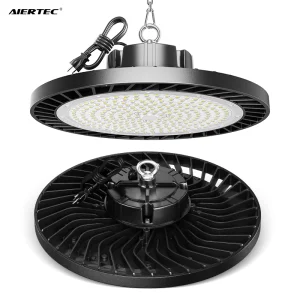
Thermal management is built directly into our mechanical designs. Featuring integrated cold-forged or high-purity die-cast aluminum heat sinks, our UFO structures optimize passive airflow. This keeps junction temperatures low, preventing early lumen decay and sustaining L70 lifetimes beyond 50,000 continuous hours of operational load.

Parameters Standard Market Specs Our Advanced Solutions
System Efficacy 110 - 130 lm/W 140 - 160 lm/W (Highly Efficient)
Junction Temp ($T_j$) > 85°C < 70°C (Optimized Heat Sink)
Glaring Coefficient UGR > 28 (High Strain) UGR < 22 / UGR < 25 (Anti-Glare)
Enclosure Protection IP65 Rated IP65 / IP66 Dual Sealing
IK Rating (Impact) IK05 to IK07 Passes IK08 Drop & Vibration Tests

Vertical Integration: In-House Molding & R&D Excellence

Controlling costs, driving custom tooling, and maintaining absolute consistency from the raw polymer pellet to the finished luminaire shell.

Advanced Molding Methods

With dedicated in-house injection, blister, and compression molding machinery, we support diverse casing shapes, lengths, and specialized housing materials without depending on external suppliers.

Independent R&D & Prototyping

Our dedicated engineering team designs and prototypes molds to print. We convert customer sketches and specific mounting concepts into functional industrial samples quickly.

Direct Cost Efficiency

By producing our own housings and optical diffusion lenses in-house, we eliminate intermediate processing markups. This ensures competitive pricing for top-tier quality standards.

A Culture Built on Science & Trust: We operate under the core philosophy of "Credit from Sincerity, Business from Quality, People First." Guided by ISO9001:2000 quality systems and BSCI ethical labor audits, our manufacturing facility ensures transparent, fully compliant operations across the board.

Rigorous Laboratory Diagnostics for Trusted Field Operations

Every lighting system is subjected to extensive testing to verify its structural integrity, electrical safety, and photometric output under harsh conditions.

Goniophotometer Darkroom

Our in-house darkroom generates highly accurate IES files. This precise testing data lets lighting designers design spaces with absolute confidence in lux-level models.

Integrating Sphere Spectrometers

We analyze luminous flux, correlated color temperature (CCT), and color rendering indexes (CRI) in real-time. This guarantees strict color consistency across production batches.

IP Waterproof Diagnostics

Water spray and dust ingress chambers test our IP65 and IP66 seals, verifying moisture-proof and dustproof integrity for long-term wet area operations.

Drop & Structural Testing

We run physical drop tests, including 0.63m impact challenges, to confirm mechanical resilience. This ensures our fixtures handle transport and rugged industrial environments.

Engineered for Global Industries & Extreme Environments

From sub-zero logistics depots to high-humidity food plants, our high-protection luminaires perform reliably where standard lights fail.

Logistics & Warehousing

Our precise optical patterns focus clean, usable light directly into high-rack corridors. This improves worker picking speeds, minimizes glare, and cuts waste.

Heavy Manufacturing

Built with vibration-resistant brackets and thick housings, our high bays resist systemic harmonic vibrations. They handle thermal spikes inside smelting, stamping, and manufacturing plants.

Aggressive Wet Environments

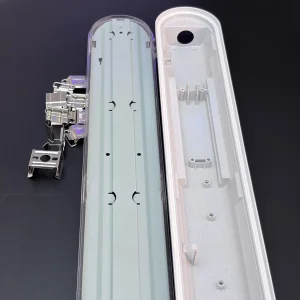
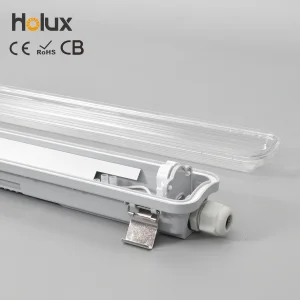
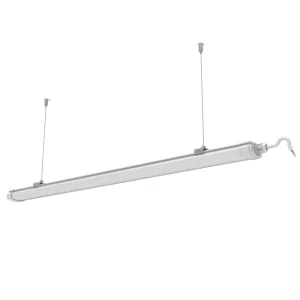
Our IP66 and IP65 Tri-proof luminaires perform reliably in commercial spaces with high humidity and dust, such as subways, tunnels, bridge structures, coal mines, and docks.

Technology Roadmap & Smart Innovations

How we are preparing for the next wave of industrial connectivity, human-centric lighting, and optical efficiency gains.

Unified IoT Integration & Smart Networks

As factories implement digital-twin architectures, our fixtures are designed to incorporate DALI-2 drivers and smart sensor receptacles. This allows for simple plug-and-play installation of motion and ambient daylight sensors, creating localized networks that lower energy use when spaces are unoccupied.

Looking ahead, we are testing integrated transceivers within our high bay fixtures. These components will help relay layout diagnostics to facilities managers in real-time, helping to predict driver failures and keep maintenance schedules efficient.

Human-Centric & Tunable Spectral Dynamics

Industrial performance is closely tied to comfortable, effective visual conditions. Our R&D roadmap focuses on human-centric lighting systems that change color temperatures throughout shift changes. This mirrors natural daylight cycles, supporting worker focus and keeping assembly zones comfortable.

We are also working on ultra-low glare optical covers. By refining internal micro-prism diffusers, we target a Unified Glare Rating (UGR) below 19, maximizing safety and visual clarity on production floors.

Strategic Technical Purchasing Guide (FAQ)

Get answers to critical technical questions about thermal dissipation, anti-glare compliance, international certifications, and logistics setup.

Q1: How do you maintain systemic heat dissipation in high-temperature industrial environments?
We use structural die-cast aluminum housings that act as a single, large thermal pathway. By using premium thermal interface materials to bridge the LED driver boards to the metal frames, we keep junction temperatures below 70°C, ensuring stable light output and preventing early diode decay in hot environments.
Q2: What visual comfort advantages do your UGR<22 and UGR<25 options offer?
Standard industrial high bays often cause intense, direct glare that can strain operators. Our UGR-rated series uses specialized optical diffusion surfaces and recessed chip arrays. This layout distributes light evenly, avoiding high-contrast hot spots and supporting comfortable, focused conditions for assembly work.
Q3: What quality standards and safety certifications do your lighting fixtures meet?
Our manufacturing processes are audited under BSCI and ISO9001:2000 systems. Our industrial fixtures carry international certifications, including TUV, GS, CE, RoHS, LVD, EMC, and SAA, making them ready for immediate integration into highly regulated industrial projects worldwide.
Q4: Can you customize physical housing molds to suit special layout formats?
Yes. With in-house injection, blister, and compression molding capabilities, our R&D group designs and manufactures custom tooling. This allows us to modify luminaire lengths, profile shapes, and bracket systems to match specific contractor requirements.
Q5: How does your proximity to Ningbo Port optimize global distribution times?
Our assembly plant is located just 38 kilometers from Ningbo Port, one of the world's major shipping gateways. This close location reduces regional inland transit times, lowers logistics costs, and speeds up loading for container shipments to international markets.
Q6: What makes Tri-proof lights appropriate for outdoor and sub-surface locations?
Our IP65 and IP66 Tri-proof lights feature heavy-duty, impact-resistant silicone gaskets and seamless outer covers. They seal out dust, water vapor, and chemical contaminants, making them ideal for tunnels, parking facilities, wet docks, and other damp outdoor areas.