Top 10 High Bay LED Flood Light Manufacturers & Supply Chain Guide

An authoritative industry analysis on strategic procurement, E-E-A-T quality compliance, global supply chains, and localized design integration for critical industrial applications.

1. Supply Chain Verticality

Understanding Chinese OEM clusters, raw material sourcing, and internal mold/tooling capability that slashes procurement overheads by up to 25% while preserving component integrity.

2. Compliance & Certifications

Demystifying standard matrices (CE, TUV GS, RoHS, SAA, LVD, EMC) essential for complex regulatory clearance and national utility rebates across Europe and the Americas.

3. Localized Applications

Engineering customized optical distributions, UGR ratings, and ingress protections (IP65, IP66, IK08) tailored to regional warehouse dynamics and hazardous zones.

Structuring Search Intent: Decoupling High Bay & Flood Light Classifications

In industrial lighting, vocabulary confusion is common. Global buyers searching for High Bay LED Flood Lights often merge two distinct functional concepts: high-altitude downward lighting (High Bay) and broad-beam directional illumination (Flood Light). Selecting top manufacturers in this domain requires deep technical qualification. True high-performance luminaires must blend thermal dissipation, optical precision, and structural endurance to thrive in extreme industrial settings.

From the perspective of Google Search Intent mining, the phrase "High Bay LED Flood Light" is used by enterprise buyers seeking versatile lighting platforms. These products must be powerful enough to mount at heights above 8 meters while resisting harsh environment challenges like moisture, dust, vibration, and impact.

The Strategic Edge: Key Differentiation Criteria of Top Manufacturers

Top-tier manufacturers differentiate themselves through raw material specifications and engineering verification processes. When qualifying partners for major infrastructural bids, consider these four critical pillars:

Advanced Thermal Dynamics

Thermal management dictates the lifespan of high-output LEDs. Modern designs rely on heavy die-cast aluminum enclosures or Al6063 extruded structures. Lower-tier manufacturers often save costs by using thinner, lower-grade aluminum alloys or plastic-aluminum composites. This compromises heat dissipation, raising junction temperatures and accelerating lumen depreciation. Top manufacturers use finite element analysis (FEA) to design heat sinks that maintain junction temperatures below 75°C under maximum load.

Driver Technology and Electrical Protection

The driver is the components most likely to fail first in an industrial luminaire. Leading manufacturers partner with premium driver providers like Mean Well, Inventronics, or Sosen. Alternatively, they build proprietary drivers using premium components. Industrial systems must handle voltage surges, harmonic distortions, and high operating temperatures. Robust systems include 10kV/20kV surge protection, active power factor correction (PFC > 0.95), and low Total Harmonic Distortion (THD < 15%).

Optical Control and Glare Control

High lumen output can cause glare that reduces workplace safety and worker productivity. Tier-1 manufacturers use advanced optics, such as honeycomb anti-glare louvers, prismatic diffusers, and asymmetric lenses. This optimizes luminous intensity and lowers Unified Glare Rating (UGR) levels below 19 or 22. These optics are key for applications like sports centers, precision manufacturing, and retail warehouses.

Evaluation Parameter Tier-1 Factory Standards Tier-3 Standard Limits Strategic Impact on Procurement
Luminous Efficacy 150 - 200 lm/W (LM-80 tested chips) 110 - 130 lm/W Up to 40% reduction in lifetime energy costs.
Thermal Interface Material (TIM) Thermal conductivity > 3.0 W/m-K < 1.0 W/m-K or tape Extends luminaire lifetime to >100,000 hrs (L70).
Housing Protection IP66 Waterproof & IK08/IK10 Impact Rating IP65 basic splashproof / no IK rating Ensures survival in high-moisture, dust-heavy sites.
Smart Control Integration DALI-2, 0-10V dimming, Zigbee, microwave sensor options Non-dimmable / fixed output Enables smart automation integration and additional energy savings.

Supply Chain Synergy: Why Chinese Lighting Hubs Lead the Market

The global industrial lighting market relies heavily on manufacturing hubs in China, especially in regions like Ningbo (Zhejiang) and Shenzhen (Guangdong). These clusters offer end-to-end supply chain integration, from raw materials to final export.

100M+
Annual Sales Turnover
3.0M
Sets Annual Capacity
38KM
Distance to Ningbo Port
BSCI
ISO9001:2000 Certified

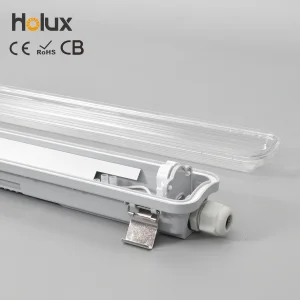
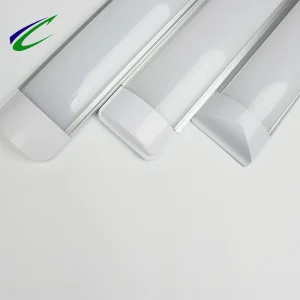
Our manufacturing platform is a lighting enterprise specializing in the development, production, and sales of IP66, IP65 Tri-proof lights and indoor/outdoor ceiling lamps. We always adhere to the scientific management concept of "Credit from Sincerity, Business from Quality, People First" and constantly inject new vitality into the enterprise based on scientific and technological reform.

We operate a passionate and dynamic team backed by advanced research and development, automated production and testing equipment, and mature production technology proven at home and abroad. By owning and operating our independent mold research and development center and photoelectric testing facilities, we maintain total control over mechanical and photometric quality.

Our dedicated facilities include an in-house darkroom, and advanced measuring instruments such as integrating sphere spectrometers and IP waterproof level testers. As a high-tech enterprise integrating product development, production, and sales, we introduce a large number of advanced instruments and equipment every year. Today, our factory operates with complete BSCI certification and ISO9001:2000 quality system certification. Our products comply with TUV GS, CE, ROHS, LVD, and EMC standards, building trust and reliable access to global markets.

Customization & Engineering

Our dedicated in-house R&D team can develop and produce products customized to drawings or samples provided by clients. Whether you require specific beam angles, custom color rendering index (CRI) settings, or localized emergency backup configurations, we design and produce tailored industrial lighting systems.

Cost Management via Integration

By running our own injection molding, blister molding, and compression molding workshops, we control costs while ensuring structural shell quality. Managing raw materials like raw PMMA, polycarbonate, and aluminum directly allows us to bypass intermediate vendor markups, passing savings to global buyers.

Product Diversity

We offer injection, blister, and compression molding capabilities for lamp housings. This allows us to manufacture varied shapes, lengths, and materials. We also offer customization for diverse operating conditions, from sub-zero cold storage units to chemical environments.

Localized Application Scenarios: Industrial Performance in Practice

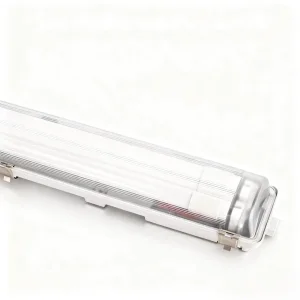
Industrial lighting must perform reliably across different environments. Modern tri-proof lights (IP65, IP66) and high-output high bays serve diverse setups:

Wet & Dust-Prone Areas

Ideal for bathrooms, saunas, kitchens, canteens, bakeries, and swimming pools where humidity and steam require reliable ingress protection.

Heavy Industrial Zones

Designed for coal mines, material warehouses, assembly lines, production workshops, and tunnels with high vibration and dust levels.

Transit & Public Infrastructure

Engineered for subways, underground parking structures, bridges, river banks, and docks that need reliable round-the-clock lighting.

Global Quality Standards and Future Market Trends

As energy costs rise and sustainability mandates tighten, industrial operations are upgrading to energy-efficient systems. Understanding global compliance standards is critical for international buyers.

Smart Connected Control Ecosystems

Modern facilities are moving beyond simple high bays to intelligent networks. Incorporating motion sensors, light-harvesting photocells, and mesh communication interfaces like DALI-2 and Zigbee allows facilities to save up to 70% in energy costs. Systems dynamically dim or turn off when target spaces are unoccupied.

Strict Global Certifications

Regulatory requirements vary by region. European clients demand CE, TUV GS, RoHS, and LVD certifications. North American sites require ETL, UL, or FCC compliance, and Australia requires SAA. Top-tier manufacturers keep these certifications active, which helps projects pass safety audits and qualify for energy efficiency rebates.

Advanced Material Engineering

Manufacturers are moving toward eco-friendly, recyclable plastics and corrosion-resistant alloys. Impact resistance ratings (IK08/IK10) ensure housings withstand physical collisions. Chemical-resistant materials are also vital for sanitation protocols in food processing plants and chemical warehouses.

Technical FAQ & Purchasing Knowledge Base

Answering common technical questions on configuration, compliance, and supply chain logistics for industrial LED projects.

What is the difference between IP65 and IP66 ratings?

An IP65 rating means the luminaire is protected against water jets from any angle. An IP66 rating indicates protection against high-pressure water jets, which is critical for washdown environments like food processing, marine docks, and outdoor industrial areas.

Why is a factory's distance to major shipping ports like Ningbo important?

Proximity to port hubs reduces inland transit times, lowers local container shipping fees, and simplifies logistics management. Being close to Ningbo Port helps us ship orders to overseas markets quickly and cost-effectively.

What is the role of an integrating sphere spectrometer in quality control?

An integrating sphere spectrometer measures key optical parameters, including total luminous flux, color temperature (CCT), color rendering index (CRI), and spectral power distribution. Testing every batch ensures consistent light quality and prevents color variance across production runs.

Can you manufacture luminaires according to client-provided CAD drawings?

Yes. Our R&D and mechanical design team can develop custom tooling and production molds based on client drawings, 3D files, or physical reference samples.