Ledlot Lighting
Calculating the required lamp quantity for warehouse lighting layout is not as straightforward as it seems. A well-lit warehouse enhances safety, productivity, and efficiency. However, many underestimate the complexities involved. Various factors influence this calculation, including the warehouse size, shelf height, and the type of tasks performed.
Many businesses struggle with achieving optimal lighting. They often either overestimate or underestimate their needs. This not only affects visibility but can also lead to increased energy costs. The key is to consider both the lumen output of lamps and the layout of the space. It is essential to analyze the specific requirements of your warehouse.
In this guide, we will explore crucial tips on how to calculate required lamp quantity for warehouse lighting layout. We aim to provide practical insights based on professional expertise and real-world experiences. By understanding these factors, you can make better-informed decisions for your warehouse lighting needs.
Warehouse lighting is crucial for operational efficiency.
Poor lighting can lead to accidents and decreased productivity. A study by the
Illuminating Engineering Society indicates that
proper illumination can enhance worker performance by up to 30%.
This highlights the need for accurate calculations of required lamp quantity for warehouse spaces.
Factors like ceiling height, rack layout, and workspace type influence lighting needs.
For example, high ceiling warehouses may require high-bay lights,
while smaller spaces might benefit from LED panels.
Miscalculating lamp quantities can result in shadowy areas or excessive brightness, both of which are undesirable.
A report from the U.S. Department of Energy suggests a
well-lit environment can reduce workplace injuries significantly.
Understanding lighting requirements is not just a technicality; it's a vital aspect of
warehouse management. Research shows that
improving light levels can lead to a 20% reduction in errors made by workers.
However, many warehouses overlook this. They might install lights based solely on initial costs without considering long-term effects.
It’s essential to assess the specific needs of your space and not rely on generic standards alone.
Determining the warehouse size and layout is crucial for effective lighting calculations. Accurate measurements of length, width, and height are essential. According to the Illuminating Engineering Society (IES), illumination levels for warehouses typically range from 100 to 300 lux. This means understanding your space is critical to achieving optimal lighting.
Consider the layout. Distinct areas like storage zones, aisles, and workstations may require different levels of brightness. For instance, brighter lights may be necessary in packing areas where precision is key. A 2022 report by the Department of Energy noted that poor lighting in warehouses can impede productivity, emphasizing the need for strategic placement.
Assessing ceiling height is also important. High ceilings often result in higher light loss. Installing fixtures close to the goods may enhance visibility. Experts recommend adding 20% more light fixtures to accommodate these losses. Thus, a thoughtful examination of space and design can ensure warehouses are not only safe but also efficient.
Effective warehouse illumination is crucial for safety and productivity. Calculating the required lumen output is essential for creating an efficient lighting layout. Lumen output measures light brightness. Higher brightness aids visibility. Consider the activities taking place in the warehouse. Different tasks demand varied illumination levels. For example, picking operations need brighter light than storage areas.
To determine the right lumen output, assess the total square footage of the warehouse. Multiply the area by the recommended foot-candle level for your specific activities. Foot-candles indicate how much light is needed on a surface. The IES (Illuminating Engineering Society) provides standards for various environments. Consult these guidelines to ensure compliance.
Remember to factor in the height of the ceilings. This affects the intensity and spread of light. Use reflections from walls and surfaces to your advantage. Sometimes, less isn’t more in this context. You might find it challenging to achieve uniform brightness. Experimenting with different configurations can yield better results. Even small tweaks can make a significant difference in how light is perceived.
This chart displays the recommended lumen output for different areas within a warehouse to ensure effective illumination. The data represents the average lumen requirements based on typical warehouse functions.
When choosing lamps for warehouse applications, it’s vital to consider light output, energy efficiency, and durability. Different warehouse tasks demand various lighting requirements. For instance, areas where workers handle delicate goods may need softer, indirect lighting. In contrast, loading docks typically require bright, high-intensity light for safety and visibility.
LED lamps have become popular in warehouses. They offer long life spans and lower energy costs. However, their initial price can be high. It's essential to balance the upfront cost with long-term savings. Fluorescent lamps can be a cheaper alternative but may not last as long. They can also flicker, which is not ideal for many tasks.
Another point to reflect on is light distribution. Uniform lighting reduces shadows and enhances safety. Spotty lighting can lead to accidents. Consider the layout of the warehouse. A larger space may benefit from high-bay lights, while low ceilings might require strip lighting. Therefore, understanding the environment and specific tasks can guide proper lamp selection.
When assessing lighting choices for warehouses, energy efficiency is crucial. It directly impacts operational costs. Efficient systems consume less power and reduce the overall carbon footprint. Opting for LED lights can significantly enhance energy efficiency. These lights use less electricity and have a much longer lifespan. Thus, their initial cost may seem high, but savings accumulate over time.
Maintenance is another essential aspect. Frequent bulb replacements can be disruptive and costly. Regular maintenance checks ensure that lights operate at optimal efficiency. A well-planned lighting design can minimize dark spots and improve visibility. However, there may be hidden maintenance costs that arise without proper planning. Consider the time and resources required for upkeep to avoid potential issues.
Evaluating the balance between initial investment and long-term benefits is challenging. Often, decisions are influenced by immediate budgets rather than future savings. This approach can lead to regrets in the long run. It’s essential to reflect on past projects and learn from any oversights. By prioritizing both energy efficiency and maintenance, organizations can make informed lighting choices that stand the test of time.
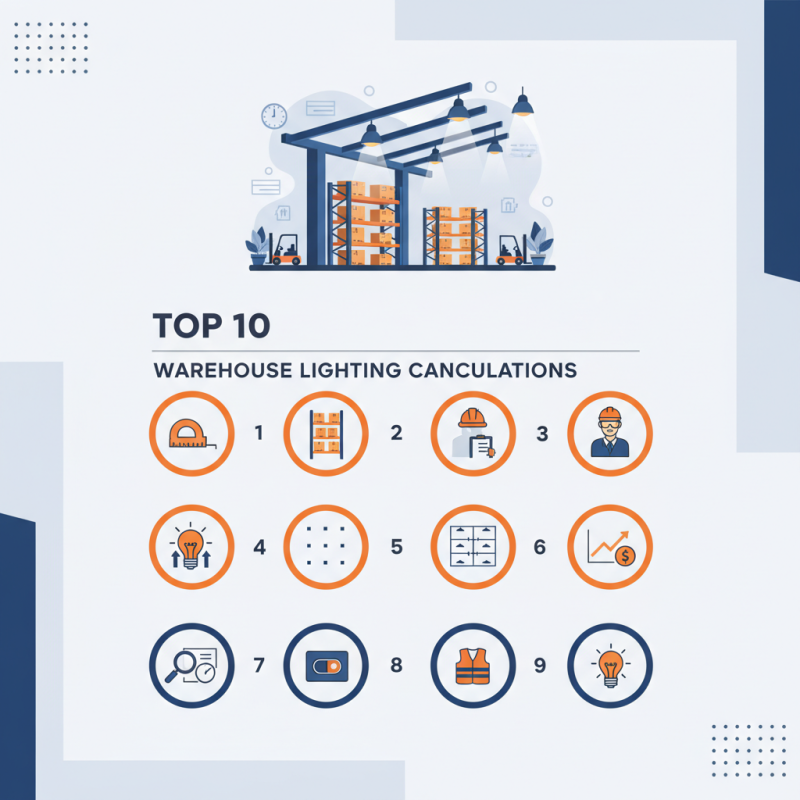
| Tip No. | Tip Description | Importance | Energy Efficiency Rating | Maintenance Frequency (Months) |
|---|---|---|---|---|
| 1 | Calculate Total Area to be Lit | High | B | 12 |
| 2 | Determine Required Lux Level | High | A+ | 24 |
| 3 | Select Appropriate Light Source | Medium | A | 18 |
| 4 | Consider Fixture Placement | High | B+ | 12 |
| 5 | Account for Light Loss Factors | Medium | B | 30 |
| 6 | Use Lighting Simulation Software | Medium | A | 6 |
| 7 | Evaluate Energy Consumption | High | A++ | 24 |
| 8 | Plan for Future Expansion | Medium | B | 36 |
| 9 | Set a Budget for Lighting | High | C | 12 |
| 10 | Regularly Review Lighting Performance | High | A+ | 6 |
: Accurate measurements of length, width, and height are crucial for optimal lighting levels.
Illumination levels usually range from 100 to 300 lux depending on the area.
Different areas need varying brightness. Packing zones require brighter lighting for precision.
High ceilings can lead to greater light loss. Placing fixtures near the goods improves visibility.
Multiply the warehouse's square footage by the recommended foot-candle level for specific activities.
Consider light output, energy efficiency, and the durability required for specific tasks.
Yes, they offer long lifespan and lower energy costs. However, weigh initial costs against long-term savings.
Use reflections from surfaces and experiment with different configurations to achieve better brightness.
Softer, indirect lighting is suitable. It ensures safety while handling fragile items.
Inconsistent lighting can create shadows and increase the risk of accidents.
In the quest to optimize warehouse lighting, understanding how to calculate required lamp quantity for warehouse lighting layout is essential. First, one must assess the importance of adequate illumination, which not only enhances safety but also boosts productivity. Determining the warehouse size and layout lays the groundwork for effective lighting calculations, as different areas may require varying levels of brightness.
Next, calculating the required lumen output is crucial for effective illumination, ensuring that every corner of the warehouse is sufficiently lit. Choosing the appropriate type of lamps tailored for warehouse applications will greatly impact both performance and energy efficiency. Finally, considering the maintenance of lighting systems is vital, as it directly correlates to long-term operational costs and efficiency. By following these strategies, warehouse managers can achieve a well-lit environment that meets both functional needs and energy-saving goals.