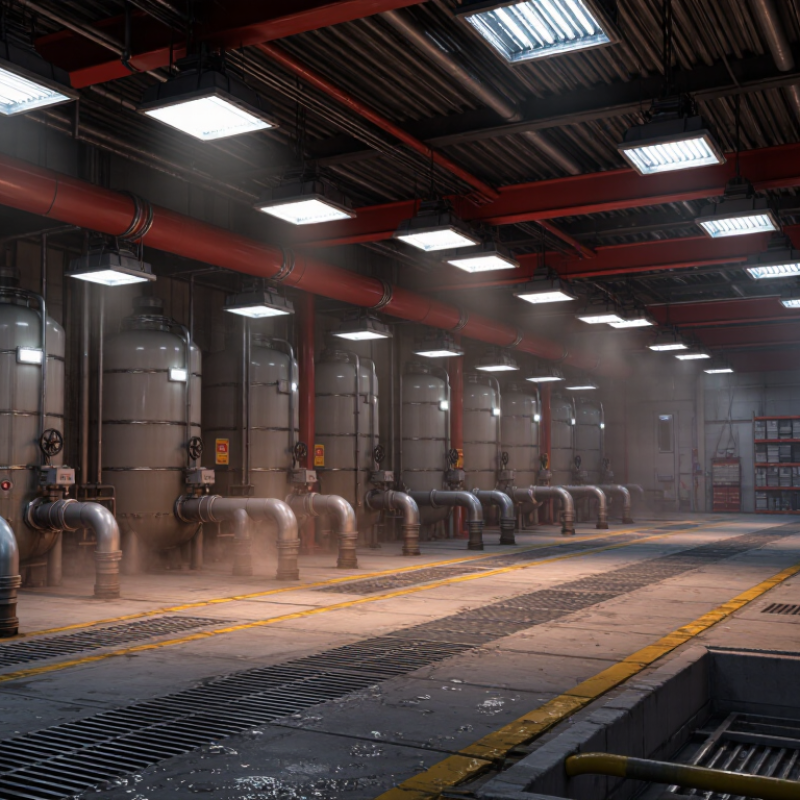
Top 10 Tips for Choosing Fire Resistant Industrial Lighting

Time:2026-09-20 Author:Sophia
0%

Choosing lighting for hazardous industrial areas requires more than comparing brightness, price, and energy ratings. The real question is: How to select fire-resistant lighting for special industrial premises? This guide introduces ten practical tips for safer decisions. It considers flammable gases, combustible dust, extreme heat, moisture, vibration, and restricted maintenance access. A fixture that works well in a clean warehouse may fail beside a solvent tank. Small details matter.

Elena Marquez, an industrial hazardous-area lighting specialist, explains: “Fire-resistant lighting is not selected by appearance; it is matched to the hazard, the zone, and the installation conditions.” Her observation reflects a common field lesson. Many buyers check the enclosure first, then overlook temperature ratings or certification boundaries. That mistake can become expensive. Sometimes dangerous.

The guide examines explosion-protected construction, ingress protection, surface temperature, emergency lighting, photometric performance, and installation quality. It also discusses inspection routines and replacement planning. Reliable lighting must remain visible through dust, smoke, and aging lenses. It should illuminate walkways, valves, gauges, and emergency exits without creating additional ignition risks. Product documentation deserves close attention. Certification marks, test conditions, and approved cable entries should match the actual site.

No checklist replaces a competent site assessment. Conditions change after equipment, chemicals, or ventilation systems are added. A reflective decision process is essential. Measure the environment, question assumptions, and confirm compatibility before ordering. That discipline supports safer operations, stronger compliance, and more dependable industrial visibility.

Top 10 Tips for Choosing Fire Resistant Industrial Lighting

Define Fire-Resistant Industrial Lighting Requirements

Define fire-resistant industrial lighting requirements before comparing fixtures or prices. Start with the hazard. Identify whether the area contains flammable gas, vapour, dust, or fibres. Each material can require a different protection method.

Record the operating temperature, humidity, dust level, and cleaning chemicals. Note the highest surface temperature permitted near combustible materials. A fixture exposed to hot machinery may need a lower temperature rating. Check the required protection against water and dust ingress. Impact risk also matters near forklifts, cranes, and loading bays. Details matter. Measure the actual illumination needed on work surfaces, not only the lumen output listed on a datasheet. Shadows around valves or inspection points can create practical safety problems.

Review the site classification, equipment certification, wiring method, and emergency lighting needs with a qualified specialist. Local regulations and inspection rules should guide the final specification. Maintenance access deserves equal attention. A sealed enclosure may improve protection, but difficult access can encourage unsafe repairs or delayed cleaning. That gap matters. In field assessments, specifications often look complete until temperature, mounting height, or chemical exposure is checked. Revisit those assumptions. Ask whether the light remains suitable after years of vibration, dirt, and repeated cleaning. Record every requirement in a written schedule, including testing intervals and acceptable replacement parts.

Identify Hazardous Areas and Applicable Safety Standards

Top 10 Tips for Choosing Fire Resistant Industrial Lighting

Identify the hazardous area before comparing fixtures or wattage. Record gases, vapors, combustible dust, operating temperatures, and cleaning chemicals. A paint room, grain conveyor, and battery-charging area require different protection methods. Do not treat every dusty room as the same hazard.

In the United States, OSHA 1910.307 requires electrical equipment to suit the classified location. NFPA 70 Articles 500–506 define Class I, II, and III areas, including gas, dust, and fiber hazards. IEC 60079 uses Zone 0, 1, and 2 for explosive gases, with separate dust zones. These systems are not interchangeable without engineering review. Check the area classification drawings, not only a supplier’s product label.

The numbers deserve attention. The U.S. Bureau of Labor Statistics recorded 5,283 fatal workplace injuries in 2023, showing why assumptions around hazardous equipment remain costly. NFPA’s Electrical Fires report found electrical distribution and lighting equipment involved in 24% of reported U.S. home structure fires from 2015 to 2019. Industrial conditions can be harsher. Look for certification matching the exact gas or dust group, temperature class, ingress protection, and ambient range. A sealed housing may still fail if its surface temperature exceeds the ignition threshold. Inspect cable entries, seals, and mounting points during commissioning. Small gaps matter. My practical concern is simple: classifications can become outdated after production changes. Reassess them when solvents, powders, processes, or ventilation systems change.

Top 10 Tips for Choosing Fire Resistant Industrial Lighting - Identify Hazardous Areas and Applicable Safety Standards

No. Selection Tip Key Data Dimension What to Identify or Verify Typical Technical Criteria Applicable Standards or References
1 Classify the Hazardous Area Gas, vapor, mist, or combustible dust classification Determine whether the location contains flammable gas or vapor, combustible dust, or fibers, and how often the hazard may be present. IEC Zones: 0, 1, 2 for gases; 20, 21, 22 for dusts. NEC divisions may be Class I, II, or III, with Division 1 or 2. IEC 60079-10-1, IEC 60079-10-2, NFPA 70 hazardous-location requirements, and the site-area classification document.
2 Match the Protection Concept Type of explosion protection Select equipment whose protection method is approved for the specific zone, substance, installation method, and maintenance conditions. Common markings include Ex d flameproof enclosure, Ex e increased safety, Ex ec equipment protection level, and Ex t protection by enclosure for dust. IEC 60079 series; for European installations, verify conformity with the applicable ATEX equipment requirements.
3 Check Gas or Dust Group Substance group compatibility Compare the certified group on the luminaire with the actual gas, vapor, or dust present in the area. Gas groups: IIA, IIB, IIC. Dust groups: IIIA combustible flyings, IIIB non-conductive dust, IIIC conductive dust. A higher-risk group generally covers lower-risk groups within the same protection system. IEC 60079-0 and the relevant protection-type standard; confirm the substance data in the hazardous-area assessment.
4 Verify Temperature Class Maximum surface temperature Ensure the luminaire’s maximum surface temperature remains below the ignition temperature of the hazardous substance under the specified ambient conditions. Gas temperature classes: T1 ≤450°C, T2 ≤300°C, T3 ≤200°C, T4 ≤135°C, T5 ≤100°C, T6 ≤85°C. Dust applications require a marked maximum surface temperature. IEC 60079-0, IEC 60079-14, and the substance’s published ignition-temperature data.
5 Confirm Certification and Markings Certificate, marking, and documentation Review the complete nameplate marking, certificate number, equipment protection level, ambient-temperature range, and permitted installation conditions. The marking should correspond to the area classification, gas or dust group, temperature class, ingress protection, and electrical ratings. IECEx certification where applicable, ATEX 2014/34/EU for applicable European equipment, and the jurisdiction’s electrical code.
6 Select Suitable Ingress Protection Dust and water resistance Consider dust accumulation, washdown, rain, humidity, condensation, and temporary immersion risks. IP65 is dust-tight and protected against water jets; IP66 provides protection against powerful water jets; IP67 provides temporary immersion protection. The required rating depends on the installation environment. IEC 60529 and the enclosure requirements specified by the hazardous-location certification.
7 Match Electrical and Environmental Ratings Voltage, frequency, temperature, and corrosion Check supply voltage, frequency, inrush current, ambient temperature, humidity, vibration, chemicals, salt spray, and mechanical impact. Use a fixture rated for the full ambient-temperature range and the actual electrical supply. Select impact and corrosion resistance according to the site conditions. IEC 60598-1, IEC 60079 installation requirements, IEC 62262 for impact protection where specified, and the project electrical specification.
8 Evaluate Lighting Performance Illuminance, uniformity, glare, and color quality Base the selection on task requirements, mounting height, beam distribution, visual comfort, and inspection needs rather than wattage alone. Verify maintained illuminance and uniformity through a lighting calculation. Consider color-rendering requirements for inspections and process monitoring. ISO 8995-1/CIE S 008 for workplace lighting principles and the applicable local occupational-lighting requirements.
9 Plan Emergency and Control Functions Emergency lighting, controls, and system integration Determine whether emergency illumination, dimming, occupancy control, remote monitoring, or battery backup is required in the hazardous area. All control devices, battery compartments, connectors, and communication components installed in the hazardous area must be suitably certified for that area. Applicable portions of IEC 60598-2-22, IEC 60079-14, local emergency-lighting rules, and the site electrical safety plan.
10 Review Installation and Maintenance Requirements Cable glands, inspection, cleaning, and replacement Confirm approved cable entries, earthing or bonding provisions, torque requirements, inspection intervals, cleaning methods, and replacement procedures. Use only compatible certified glands and stopping plugs. Keep flamepaths, seals, and enclosure surfaces undamaged; remove combustible dust deposits according to the risk assessment. IEC 60079-14 for design and installation, IEC 60079-17 for inspection and maintenance, and the equipment certificate instructions.

Compare Lighting Enclosures, Materials, and Protection Ratings

Choosing fire-resistant industrial lighting starts with the enclosure, not the lamp. A sealed enclosure limits dust and vapor entry, while a robust body protects wiring from impact, heat, and corrosion. IEC 60529 defines IP ratings: the first digit covers solids, and the second covers water. IP66 resists dust and powerful water jets, but it does not automatically prove fire resistance. That distinction is often missed.

Tip 1: Match the enclosure to the hazard.

Stainless steel suits washdown areas, while coated aluminum reduces weight and improves heat transfer. Polycarbonate can resist impact, but confirm its temperature limits. The U.S. DOE reports that lighting represents roughly 15% of global electricity use, so efficient LED systems can reduce heat and energy demand. Still, efficiency cannot replace proper hazardous-area certification.

Tip 2: Check the protection rating and test evidence.

IECEx or equivalent certification should match the actual gas, vapor, or dust classification.

Tip 3: Inspect seals, cable glands, and mounting points together.

A strong fixture can fail through a poor gland. NFPA 70 requires equipment selection for classified locations, yet field conditions are rarely perfect. Dust may collect above the fixture, and maintenance teams may overlook damaged seals.

A higher IP number is not always safer. Verify temperature class, surface temperature, impact rating, and inspection access before purchase.

Evaluate Illumination, Energy Efficiency, and Maintenance Needs

In industrial areas, fire-resistant lighting must do more than survive heat. It must reveal hazards clearly, from leaking fluid to a blocked emergency route. Begin with measured illumination, not wattage alone. Check lux levels at floor height, work surfaces, stairs, and inspection points. Uneven light creates dark pockets where mistakes become easy. Confirm fixture suitability against the area classification and risk assessment. Use photometric data from a competent supplier, then verify it on site. Dust, mounting height, and aging lenses can change actual performance.

Energy efficiency deserves a wider view. Compare useful light output, driver losses, operating hours, and heat production. A low-wattage fitting is not efficient if workers need extra fixtures. For large halls, occupancy controls may reduce wasted runtime, but test their behavior carefully. A delayed restart or false sensor reading can interrupt inspections. I have seen calculations look excellent on paper and disappoint after installation. That gap should be recorded, not disguised.

Maintenance planning starts before the first fitting is installed. Choose sealed housings with accessible terminals and replaceable service parts. Keep cleaning methods, inspection intervals, and spare components documented. Inspect lenses for soot, corrosion, cracks, and trapped moisture. Never assume a fire-resistant enclosure is maintenance-free. Ask for credible test evidence, temperature limits, ingress protection, and clear installation instructions. I would question any claim based only on a perfect laboratory result. Real plants are noisy, dusty, and sometimes poorly organized. That reality matters.

Top 10 Tips for Choosing Fire-Resistant Industrial Lighting

Use this practical screening framework to compare fire-resistant industrial lighting options across illumination, energy efficiency, and maintenance requirements. Scores range from 0 to 10, with higher values indicating greater evaluation priority.

Prioritize task-appropriate illuminance and uniformity, then verify hazardous-area certification, ingress protection, temperature ratings, controls, emergency-lighting requirements, and safe maintenance access against applicable local codes and lighting standards.

Verify Certifications, Installation Methods, and Long-Term Reliability

Top 10 Tips for Choosing Fire Resistant Industrial Lighting

A fire resistant light is only as trustworthy as its documentation. Ask for current certificates from recognized, independent testing bodies. Check the exact model, protection rating, temperature class, and approved operating conditions. A certificate covering a similar product is not enough. Read the small print.

Installation details deserve equal attention. Confirm whether the fixture requires conduit, certified cable glands, grounding, or a specific mounting angle. Follow the manufacturer’s torque values, because loose terminals can create heat. Keep seals clean and undamaged during installation. A rushed installation can defeat a well-tested enclosure. Local electrical requirements must also be checked by a qualified professional.

Long-term reliability is harder to judge from a product sheet. Look for evidence of thermal cycling, vibration testing, corrosion resistance, and light-output maintenance. Ask how replacement parts, inspections, and repair records will be handled. In dusty areas, examine the lens and sealing points after cleaning.

I once focused too heavily on the initial price and overlooked maintenance access. That decision created unnecessary downtime.

Real reliability includes stable performance, clear service procedures, and honest limits. Test one installed unit under actual site conditions before approving a larger quantity. Small mistakes become expensive later.

FAQS

How should a facility define fire-resistant lighting requirements?

Start by identifying the hazard: flammable gas, vapour, combustible dust, or fibres. Different hazards need different protection methods. Record temperature, humidity, dust, chemicals, and nearby combustible materials. Do not compare prices too early.

Why does area classification matter?

Classification shows which equipment protection method is suitable for each location. A paint room, grain conveyor, and charging area may require different specifications. Check current site drawings, not only fixture labels. Old drawings can mislead.

What temperature information should be checked?

Record the highest ambient temperature and the permitted surface temperature. A fixture near hot machinery may need a lower temperature rating. The housing must stay below the ignition threshold of nearby materials. This detail is easy to miss.

Does a sealed enclosure solve every safety problem?

No. A sealed enclosure can limit dust and water entry. However, poor cable seals or damaged gaskets can weaken protection. Inspect cable entries, mounting points, and enclosure joints during commissioning. Small gaps matter.

What environmental conditions should influence fixture selection?

Consider humidity, dust, vibration, impact, and cleaning chemicals. Fixtures near forklifts, cranes, or loading bays may need stronger impact protection. Repeated washing can damage unsuitable seals. The room may look clean today.

How should lighting performance be assessed?

Measure illumination at actual work surfaces, not only listed lumen output. Check valves, inspection points, walkways, and machine controls for shadows. A bright ceiling can still leave a dangerous dark corner. Lumens are not everything.

What maintenance issues should be included?

Review access, cleaning intervals, testing schedules, and approved replacement parts. A difficult enclosure may delay cleaning or encourage unsafe repairs. Plan maintenance before installation. That gap matters.

When should hazardous-area requirements be reviewed again?

Reassess requirements when solvents, powders, processes, or ventilation systems change. Also review them after temperature, mounting height, or chemical exposure changes. Ask whether the fixture remains suitable after years of dirt and vibration. Assumptions age badly.

Conclusion

Choosing suitable fire-resistant industrial lighting begins with clearly defining the site’s operational, environmental, and safety requirements. The process should assess the type of hazardous area, possible fire or explosion risks, temperature conditions, dust or moisture exposure, and the safety standards that apply. Comparing enclosure designs, construction materials, ingress protection ratings, and resistance to heat or corrosion can help ensure that the lighting is appropriate for demanding industrial environments. In this context, How to select fire-resistant lighting for special industrial premises depends on matching product performance with the specific risks and working conditions of each location.

In addition to safety, selection should consider illumination quality, energy consumption, service life, and maintenance access. Reliable lighting should provide consistent visibility while reducing replacement frequency and operating costs. Before installation, verify relevant certifications, approved installation methods, wiring requirements, and compatibility with the facility’s electrical system. A careful evaluation of durability, inspection needs, and long-term reliability will support safer operations and help maintain dependable lighting performance over time.

Sophia

Sophia

Sophia is a dedicated marketing professional with an exceptional depth of knowledge about her company's products and services. With a keen understanding of market trends and customer needs, she crafts insightful blog posts that not only inform but also engage readers, enriching the company’s online......