Ledlot Lighting
LED light decay is the gradual loss of brightness during a lamp’s service life. It is not always obvious at first. A ceiling panel may still switch on normally, yet its light output can fall after months of long daily use. Heat is a major factor. When a lamp’s LED junction runs too hot, its components can age faster. Excessive drive current, poor airflow, and an unsuitable power supply can also contribute. The exact effect depends on the lamp’s design and operating conditions.
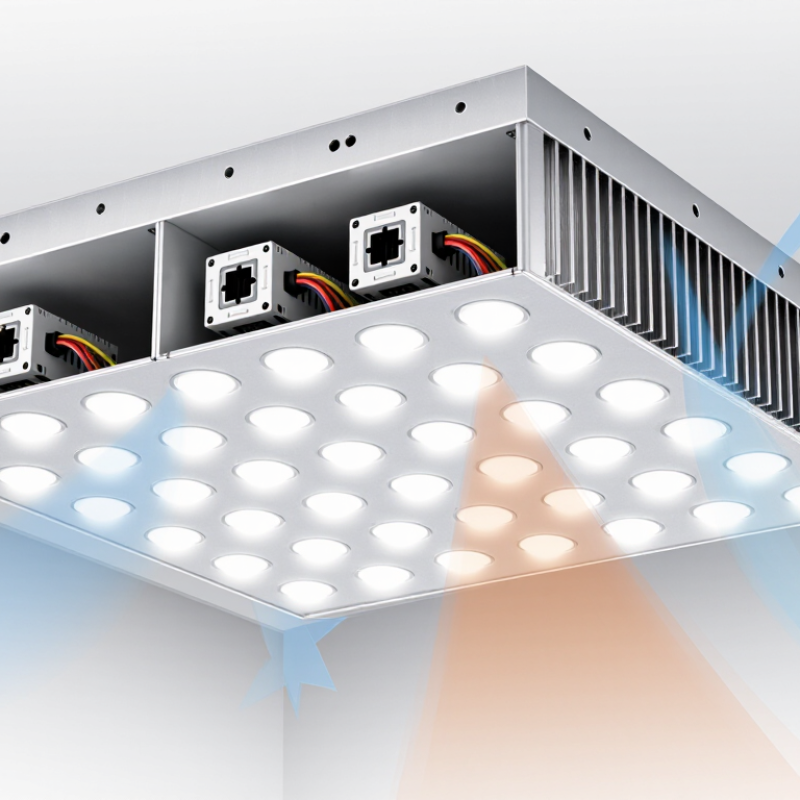
How to reduce light decay of lamps under long-time continuous operation starts with controlling heat and electrical stress. LED lighting and reliability specialist Dr. Jianzhong Jiao’s work informs this practical principle: “Control heat and electrical stress to help preserve light output.” This is a paraphrase, not a verified verbatim quotation. In practice, choose lamps with well-designed heat sinks, keep ventilation openings clear, and use compatible drivers. Avoid trapping fixtures above insulation or inside cramped enclosures unless their specifications allow it. Track brightness and operating temperature when lamps run for long shifts. Small changes matter. Still, maintenance alone cannot prevent all decay; materials, manufacturing quality, and usage patterns also shape results. It is worth checking the product data rather than assuming every LED lasts equally long.
LED light decay is the gradual reduction in light output as an LED operates over time. The lamp may still turn on, yet produce fewer lumens than it did when new. That is light decay. It is different from sudden failure, such as a dead driver, and from flicker or a noticeable color shift, though these issues can sometimes appear together.
Manufacturers describe light output retention as a percentage of the initial output. For example, an L70 rating refers to the point when output reaches 70% of its starting level under specified test conditions; it does not mean the LED suddenly stops working. Heat is a major influence. A poorly ventilated fixture above a warm ceiling can run hotter than an open fixture in a cool room, which may speed component aging. Drive current, materials, and operating hours also matter.
A practical check is to compare light readings over time with a meter, keeping its position, room lighting, and measurement conditions consistent. One reading can mislead. Dust on a lens or a changed measuring angle may look like decay, even when the LED itself has not weakened much. The distinction is fussy, but useful when diagnosing dimmer lighting.
LED light decay is measured by tracking how much light a source produces over time. Technicians compare its later luminous-flux readings with an initial baseline, usually reported in lumens or as a percentage. The setup matters. Drive current, ambient temperature, and operating temperature can all affect results, so these conditions are controlled and recorded. Small changes matter.
For LED packages and modules, IES LM-80 testing records light output and color maintenance at set intervals under specified conditions. Tests commonly run for thousands of hours, not just a few days. An integrating sphere can capture total light output, while a photometer measures illuminance at a defined point. These tools answer different questions; a bright spot on a workbench does not reveal the fixture’s total output.
LM-80 data can support projections made using IES TM-21, but a projection is not a direct measurement of the product’s full service life. For a complete fixture, testing should consider the lens, driver, and heat sink, since heat buildup can change performance.
In practice, readings can be messy: setup differences or dust may distort comparisons. That part is easy to overlook. A careful report states the test conditions, measurement intervals, and whether results come from a component or a complete fixture.
LEDs usually lose brightness gradually, not overnight. Heat is a quiet culprit. When a fixture traps heat around its LED package, the phosphor and semiconductor materials age faster. High drive current also raises temperature and can speed lumen loss. In a ceiling downlight, for example, a tight, poorly ventilated housing may run hotter than an open fixture. Dusty optics and yellowing lenses can make the light look dimmer, even when the LED itself has changed little. Driver wear matters too: unstable output or component failure can reduce light or cause flicker.
The U.S. Department of Energy’s report, “LED Luminaire Lifetime: Recommendations for Testing and Reporting,” emphasizes that a luminaire’s life depends on more than its LED package; thermal conditions and electronics also matter. The IES LM-80 method measures LED package lumen maintenance for at least 6,000 hours under controlled conditions. That is useful evidence, but it is not a direct guarantee of how bright a complete fixture will remain in a real room. Installation temperature, airflow, and operating hours all change the result. I would be cautious about treating a single lifetime figure as a promise. A hot fixture may age differently from the same model tested in a laboratory.
What Is LED Light Decay and How to Reduce It?
How Usage and Environment Affect LED Lifespan
LED light decay is the gradual loss of brightness, not usually a sudden failure. Usage conditions matter: a lamp burning for many hours runs hotter for longer, especially inside a sealed ceiling fixture. Heat can accelerate lumen depreciation and stress the driver, the electronics that regulate power. A dusty, poorly ventilated fitting can make that thermal problem worse. Small details count.
The U.S. Department of Energy’s report, LED Luminaire Lifetime: Recommendations for Testing and Reporting, explains why LED life is often expressed as L70: the time until light output reaches 70% of its initial level. It is not a promise that every component lasts that long. IES LM-80 testing measures LED light-source maintenance at specified temperatures, commonly including 55°C and 85°C. IES TM-21 uses those results to project maintenance, with limits on how far test data can be extrapolated. Projections have boundaries.
For slower decay, keep fixtures clear of insulation unless rated for contact, remove dust from vents, and avoid enclosing lamps in fittings they are not designed for. In hot rooms, choose a fixture with suitable thermal management and follow its installation instructions. Frequent switching is less likely to dim the LED itself than excess heat, but it can add wear to driver components. The exact effect varies; room temperature and fixture design are easy to overlook.
LED light decay is the gradual loss of brightness as an LED ages. Heat, excessive drive current, and poor operating conditions can speed it up. Reducing decay starts with choosing a fixture suited to its task and expected operating hours.
Heat matters. Install fixtures with space around their heat sinks, and keep ventilation openings clear. Avoid placing enclosed fixtures in sealed housings unless they are designed for that use. A driver that supplies stable current also helps prevent unnecessary stress on the LEDs. Dimming can reduce operating temperature, but only when the fixture and dimmer are compatible.
Dust adds up. Clean lenses and vents gently, following the manufacturer’s instructions; blocked airflow can trap heat. In workshops or kitchens, inspect fixtures more often because dust and grease collect quickly. It is easy to focus only on rated lifespan, but actual performance also depends on ambient temperature and daily use. Record brightness changes in critical areas, such as stairwells or workbenches, and replace units when light levels no longer meet the task. Maintenance cannot stop aging entirely, and replacement timing may be less predictable than a datasheet suggests.
It is a gradual drop in light output as an LED operates. The lamp may still turn on but look dimmer.
No. L70 marks the point when output reaches 70% of its starting level under specified test conditions. It is not sudden failure.
Heat can speed component aging. A fixture trapped above a warm ceiling may run hotter than one in an open, cool room. Drive current and operating hours matter too. Conditions matter.
Compare readings over time with a light meter. Keep its position, room lighting, and measurement conditions consistent. One reading can mislead.
Dust on the lens or a changed measuring angle can affect the reading. It is an easy detail to overlook.
Lumens describe total light output. Illuminance measures light at a specific spot, such as a workbench. One bright spot does not show the fixture’s full output.
No. Test data can support projections, but a projection is not a direct measurement of a fixture’s full service life. I would treat it cautiously.
Its lens, driver, and heat sink can affect performance. Heat buildup may change output, so testing only an LED component can miss useful details.
LED light decay is the gradual reduction in a lamp’s brightness over time. It is commonly assessed by tracking lumen maintenance: measurements compare the light output after a period of use with the lamp’s initial output. A rating such as L70 indicates the point at which output has fallen to 70 percent of its starting level; it does not mean the lamp has stopped working. Heat, electrical stress, aging components, and changes in optical materials can all contribute to declining brightness.
Usage patterns and surroundings affect how quickly decay occurs. Long periods of continuous operation, high ambient temperatures, poor ventilation, and unstable power can place extra stress on a lamp. To slow the decline, choose suitable lighting for the environment, allow heat to dissipate, keep fixtures and heat sinks clean, and use stable power. How to reduce light decay of lamps under long-time continuous operation depends especially on effective thermal management, appropriate operating conditions, and regular checks for changes in brightness.