When considering lighting systems, many people ask, "What is the key difference between industrial and indoor household lighting?" This question uncovers significant contrasts that are often overlooked. Industrial lighting caters to large spaces like factories and warehouses. It focuses on bright, durable fixtures that withstand harsh conditions. Safety is a primary concern in these settings.
In contrast, indoor household lighting emphasizes comfort and aesthetic appeal. Home lighting creates a warm ambiance and improves well-being. It uses various styles, from ceiling lights to decorative lamps. Each choice reflects personal preferences and interior designs.
Both types of lighting serve unique purposes. Yet, there are common misconceptions. Some may think industrial lighting lacks variety. Others might underestimate the functionality of home lighting. Understanding these differences helps in making informed choices for any space.
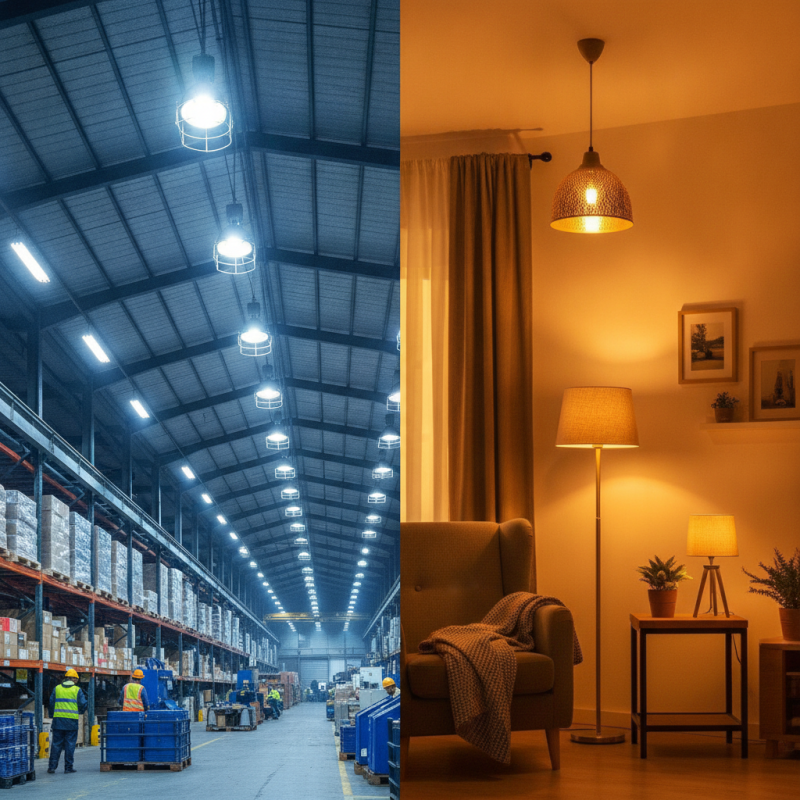
Difference in Purpose: Industrial vs. Indoor Household Lighting
Industrial and indoor household lighting serve distinct purposes that significantly impact their design and function. Industrial lighting is designed to enhance visibility and safety in workplaces like warehouses and factories. According to the U.S. Department of Energy, industrial lighting accounts for nearly 30% of total energy use in facilities. These lights are typically brighter and utilize high-output LEDs for efficiency. They often employ protective housings to withstand harsh environments, such as dust and moisture.
In contrast, indoor household lighting focuses on comfort and aesthetics. The aim is to create inviting environments in living rooms, bedrooms, and kitchens. A report from the American Lighting Association indicates that ambient lighting can influence mood and productivity. Homeowners often choose softer, warmer tones, which are suitable for relaxation. Yet, as LED technology advances, the lines between industrial and residential lighting blur. More households now seek energy-efficient options formerly reserved for industrial use.
Ultimately, both lighting types need careful consideration of purpose and impact. Industrial setups prioritize functional brightness, while households look for an appealing atmosphere. This disparity reflects broader needs in design and energy consumption, inviting reflections on how we illuminate our environments effectively.
Types of Lighting Fixtures Used in Industrial and Indoor Settings
In industrial settings, lighting fixtures often prioritize functionality and durability. High-intensity discharge (HID) fixtures are common. They provide bright illumination needed for large spaces. According to the U.S. Department of Energy, these lights can last up to 24,000 hours. Another popular option is LED high bay lights. They are energy-efficient and reduce operating costs significantly.
In contrast, indoor household lighting favors aesthetics and comfort. Common types include ceiling fixtures, table lamps, and recessed lighting. Warm LED bulbs are popular for their soft glow, enhancing the home atmosphere. The National Lighting Bureau suggests that layering different light sources can improve mood and productivity in living spaces.
Industrial lighting often lacks the design elements seen in home lighting. However, this can lead to harsh working conditions. On the other hand, home lighting sometimes falls short in brightness for tasks like reading. The balance between functionality and design is crucial in both settings. Choices made can directly impact efficiency and well-being.
Energy Efficiency Considerations in Industrial and Household Lighting
Energy efficiency is crucial in both industrial and household lighting, yet their approaches differ significantly. In industrial settings, lighting needs to cater to large spaces and high ceilings.
LED fixtures are often utilized for their low energy consumption and longevity. Companies may invest in smart lighting systems, which can adapt to real-time usage, reducing power waste. However, these systems can be complex, and not all workers are trained to manage them effectively. This can lead to inefficient energy practices.
In contrast, household lighting typically prioritizes comfort and aesthetic appeal. Homeowners often choose warm-toned bulbs that consume more energy than necessary. While compact fluorescent lamps (CFLs) and LEDs are widely recommended, many still opt for traditional incandescent lights. This choice reflects a lack of awareness about energy savings.
Maintaining a balance between functionality and energy efficiency is key, yet many homes fall short in this regard. Adjusting habits can lead to significant reductions in both energy use and costs, but often requires a mindset shift.
Impact on Work Environment: Industrial Lighting vs. Home Lighting
The work environment significantly differs between industrial and home lighting. Industrial lighting focuses on functionality and safety. It often uses high-intensity fixtures to illuminate large spaces. Bright, uniform light helps workers see clearly, reducing accidents. However, this stark lighting can feel harsh over time. Workers may experience eye strain in environments that lack softer illumination.
In contrast, home lighting aims for comfort and ambiance. Warm tones create a welcoming atmosphere, ideal for relaxation. Task lighting, such as desk lamps, offers focused light for specific activities. Yet, some homes struggle with inadequate lighting in corners or cluttered areas. This can hinder productivity, especially during evening hours. Workers in these settings might find themselves squinting or straining to see.
The transition between these two types of lighting reveals their unique impacts. Industrial settings emphasize visibility for safety, while home environments prioritize comfort. Both have their pros and cons. An effective balance can enhance productivity, whether at work or home. Thoughtful lighting design is essential for fostering a conducive work environment.
Safety Regulations and Standards for Industrial and Indoor Lighting
Safety is paramount in both industrial and indoor household lighting. Each setting has distinct regulations to follow. Industrial lighting must meet rigorous safety standards. These standards ensure employee protection in hazardous environments. Indoor household lighting adheres to different safety criteria, focusing on comfort and energy efficiency.
For industrial spaces, it’s crucial to select fixtures that reduce glare and promote visibility. High-quality lights can prevent accidents. Consider using motion sensors to enhance safety further. Look for areas that could benefit from better lighting. Reflect on current setups. Are there dark corners where accidents could happen?
In homes, compliance with safety codes is just as important. Use lamps that minimize fire hazards and ensure they are suitable for the space. Regularly check the condition of light fixtures. This can prevent possible risks. Think about the brightness levels in your rooms. Is the lighting adequate for various tasks? Evaluate how lighting affects mood and productivity.
Key Difference Between Industrial and Indoor Household Lighting
| Aspect |
Industrial Lighting |
Indoor Household Lighting |
| Intensity |
High intensity for safety and productivity |
Moderate intensity for comfort |
| Standards Compliance |
Strict compliance with safety standards |
General compliance with household safety standards |
| Durability |
Built for heavy use and harsh conditions |
Designed for comfort and aesthetic appeal |
| Installation |
Professional installation often required |
Typically DIY-friendly installations |
| Energy Efficiency |
Focus on energy-saving technologies |
Maximize comfort and energy savings |
| Control Systems |
Advanced control systems for efficiency |
Simple control systems for ease of use |
Conclusion
The key difference between industrial and indoor household lighting lies primarily in their purpose and functionality. Industrial lighting is specifically designed to enhance visibility and safety in working environments such as factories, warehouses, and manufacturing plants, often requiring robust fixtures that withstand harsher conditions. In contrast, indoor household lighting focuses on aesthetic appeal and comfort, creating a pleasant atmosphere for daily activities.
Additionally, various types of lighting fixtures are utilized in both settings, each tailored to meet specific requirements. Energy efficiency plays a vital role, with industrial lighting often employing high-efficiency systems to reduce operational costs, while households prioritize effective yet economical solutions. Safety regulations and standards further distinguish these lighting types, ensuring that industrial environments adhere to stricter guidelines to protect workers, while indoor lighting standards aim for comfort and convenience in residential spaces.
 Ledlot Lighting
