Ledlot Lighting
How to reduce monthly electricity cost by selecting high efficiency lighting is no longer a simple bulb replacement question. It is a practical operating decision. The International Energy Agency reports that lighting consumes about 15% of global electricity use. For factories, warehouses, hotels, and shops, inefficient fixtures can quietly increase every monthly bill.
The U.S. Department of Energy states that LED products use at least 75% less energy than incandescent lamps. They can also last up to 25 times longer. That difference becomes visible on a real ceiling: fewer ladder visits, fewer replacement boxes, and less heat above workers or merchandise. China’s leading lighting manufacturers now offer high-efficacy LED systems, smart controls, occupancy sensors, and products certified for international markets. However, efficiency claims must be checked carefully. Lumens per watt, power factor, warranty terms, thermal design, and testing standards matter more than attractive packaging.
James R. Brodrick, former lighting technology manager at the U.S. Department of Energy, said, “LED lighting is a rapidly evolving technology that offers significant energy savings and improved performance.” His observation remains useful, although product quality varies widely. A cheap fixture may consume less power but fail early. That weakens the savings calculation. The U.S. DOE’s Energy Saver guidance and ENERGY STAR testing criteria provide reliable reference points for comparing products. Payback depends on operating hours, electricity tariffs, installation costs, and maintenance conditions. The best choice is not always the lowest purchase price. It is the fixture that delivers stable brightness, efficient operation, and dependable service over time.
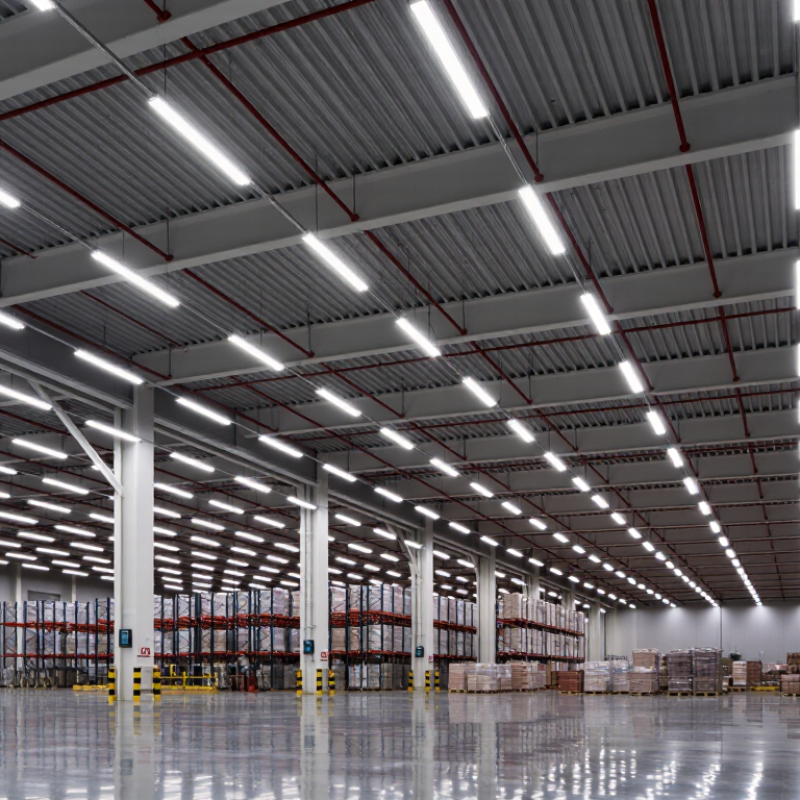
China’s top efficient lighting differs through careful engineering, not only lower electricity use. In a warehouse audit, I saw efficient fixtures maintain brighter aisles with fewer units. Their optical lenses directed light downward, reducing wasted brightness on ceilings and walls. This matters in factories, shops, and storage areas with high operating hours.
Many leading products combine high-efficacy LED chips with stable drivers and improved heat control. Better heat sinks keep temperatures lower, helping light output remain consistent over time. Some models also support sensors, dimming, and daylight adjustment. These controls can reduce energy consumption further when rooms are empty or naturally bright. However, efficiency figures need independent testing. Marketing claims alone are not enough.
Installation quality changes the real result. An excellent fixture can perform poorly when spacing, voltage, or mounting height is ignored. I recommend checking photometric reports, safety documentation, warranty terms, and applicable electrical standards before purchase. A small pilot area can reveal glare, shadows, and flicker that specifications miss. No fixture is perfect. I once focused too heavily on wattage and underestimated maintenance access. That mistake increased labor costs. Reliable suppliers should explain test methods, replacement parts, and performance over time.
How to Cut Electricity Costs with China’s Top Efficient Lighting
Comparing energy-efficient lighting from China requires more than checking the lowest price. Start with measured efficacy, expressed in lumens per watt. Quality LED fixtures often deliver strong output with lower power consumption, but performance varies between samples. Ask for independent test reports, photometric files, color rendering data, and driver efficiency. A reliable supplier should explain expected lifetime, flicker control, operating temperature, and warranty terms clearly.
Compare technologies by application. LED panels suit offices and classrooms, while high-bay LEDs work better in warehouses with tall ceilings. Smart controls can reduce consumption further through occupancy sensors, daylight dimming, and scheduled operation. Solar street lighting may lower grid demand, but battery life and winter performance need careful review. Check the complete system, not only the lamp. A cheap fixture can become expensive after frequent replacement.
Tips: Request three samples and test them for one week. Measure light levels, power draw, glare, and heat near the driver. Compare total cost over five years, including installation, maintenance, controls, and electricity. Certifications support trust, but they do not replace independent verification. A spreadsheet may look precise. Real rooms can still expose uneven lighting or uncomfortable glare. Do not ignore those details. The best choice balances efficiency, visual comfort, service support, and verified performance.
Before buying China top efficient lighting, calculate savings from real operating conditions, not attractive wattage claims. Start with the existing fixture’s wattage, the proposed fixture’s wattage, quantity, daily operating hours, and local electricity rate.
Use this formula: annual savings = (old watts − new watts) × units × hours per day × operating days ÷ 1,000 × electricity price. For example, replacing ten 60-watt fittings with ten 24-watt fittings, used ten hours daily, saves 1,314 kWh yearly. At $0.15 per kWh, the energy saving reaches $197.10. Check the result against your electricity bill. Tariffs may change.
Do not compare watts alone. Compare useful lumens, beam angle, color temperature, power factor, and rated lifetime. A lower-watt fixture may produce poor light or need earlier replacement. Include purchase, installation, maintenance, and disposal costs in the payback calculation. Payback period equals total upgrade cost divided by annual savings. My first estimate was too optimistic because I ignored delivery and electrician fees. That mistake changed the payback period by several months. Ask for independent test reports and a clear warranty before ordering. Also verify performance at the expected room temperature. Real rooms are messier than laboratory sheets. In warehouses, sensors or timers can create extra savings, but their controls need testing. Otherwise, the lights may remain on all night.
Estimated annual electricity cost for 100 fixtures operating 8 hours per day, 300 days per year, at $0.15 per kWh.
The calculation uses: Annual Cost = Fixture Quantity × Wattage ÷ 1,000 × Operating Hours × Electricity Rate. Replacing 60 W incandescent lamps with 10 W LED lamps can reduce annual electricity use from 14,400 kWh to 2,400 kWh, saving approximately $1,800 per year for every 100 fixtures under these operating conditions.
Cutting electricity costs with efficient lighting starts with choosing a reliable Chinese lighting manufacturer, not simply selecting the lowest quotation. The International Energy Agency reports that lighting uses about 15% of global electricity. The U.S. Department of Energy states that LED lighting can use at least 75% less energy than incandescent lamps. However, efficiency claims need evidence. Ask for LM-80 and TM-21 reports, measured lumen output, power factor, flicker data, and tested lifetime ratings. A bright sample can still hide poor heat management.
Visit the factory remotely or in person. Check production records, aging-test rooms, integrating spheres, and incoming-component controls. Request ISO 9001 documentation and relevant safety certificates for your target market. Confirm whether testing covers the complete luminaire, not only the LED chip. Independent laboratory reports are more useful than attractive brochures. This step feels slow, but failed batches cost more than careful verification.
Tips: Order samples from two or three suppliers. Test them for 500 hours under real voltage conditions. Compare lux levels, temperature, color consistency, and power consumption. Read the warranty terms closely. Clarify replacement procedures, spare parts, inspection rights, and delivery tolerances. Factory experience matters, yet it is not perfect proof. I would still request a small pilot order before a large contract. The IEA and DOE provide useful benchmarks, but project savings depend on operating hours, controls, installation quality, and local electricity prices.
High-efficiency lighting sourced from China can reduce electricity costs, but installation determines the real result. The U.S. Department of Energy reports that LED products use at least 75% less energy than incandescent lamps. They can also last up to 25 times longer. Measure before buying.
Start with a room-by-room lighting audit. Record fixture wattage, operating hours, lux levels, and replacement dates. Choose lumen output, not only wattage. A warehouse may need 200–300 lux, while detailed workspaces often require higher levels. Replace damaged sockets and check cable connections before installation. Use compatible drivers, correct voltage, and suitable ingress protection in dusty or damp areas. The International Energy Agency estimates that lighting represents about 15% of global electricity consumption, so small errors matter. An oversized fixture wastes power and creates glare.
Tips: Install occupancy sensors in storage rooms and corridors. Add daylight controls near windows. Set different schedules for offices, production areas, and emergency paths. After commissioning, measure lux and energy use for one month. The U.S. Department of Energy recommends controls and daylight harvesting as major efficiency measures. In practice, sensors sometimes switch off too quickly, frustrating workers. Adjust the delay after observing real movement patterns. A cheaper fixture may fail earlier, so compare warranty terms, thermal performance, color consistency, and maintenance access. Track kWh savings instead of trusting estimates. Needlessly bright rooms are not automatically safer.
| Category | Application or Optimization Measure | Conventional System | Efficient System or Practice | Typical Energy Reduction | Annual Operating Basis | Estimated Annual Electricity Savings | Installation and Optimization Guidance |
|---|---|---|---|---|---|---|---|
| Fixture Replacement Benchmarks | |||||||
| Commercial office | 2 × 4 ft ceiling troffer | 64 W fluorescent fixture | 40 W LED fixture with approximately 4,000–5,000 lumens | 37.5% | 3,000 operating hours per year | 72 kWh per fixture per year | Verify ceiling dimensions, remove obsolete ballasts when required, and use a compatible driver and emergency-lighting circuit. |
| Warehouse | High-bay lighting | 250 W metal-halide fixture | 150 W LED high-bay fixture with suitable beam angle | 40.0% | 4,000 operating hours per year | 400 kWh per fixture per year | Measure mounting height and aisle width before selecting optics; aim light at the working plane instead of simply increasing wattage. |
| Retail and hospitality | Accent or recessed downlight | 50 W halogen lamp | 10 W LED downlight with comparable color quality | 80.0% | 2,500 operating hours per year | 100 kWh per fixture per year | Match beam angle and color temperature to the merchandise or interior surface; confirm that dimmers are LED-compatible. |
| Parking area | Outdoor pole or area light | 150 W high-pressure sodium fixture | 80 W LED area light with a controlled distribution pattern | 46.7% | 4,000 operating hours per year | 280 kWh per fixture per year | Use photocells or astronomical time controls, maintain required uniformity, and avoid excessive uplight and glare. |
| Residential room | General-purpose lamp | 60 W incandescent lamp | 9 W LED lamp with similar light output | 85.0% | 1,000 operating hours per year | 51 kWh per lamp per year | Choose the correct base, enclosed-fixture rating, color temperature, and dimming compatibility before installation. |
| System Installation and Control Optimization | |||||||
| Lighting layout | Spacing and mounting-height review | Fixtures installed without photometric planning | Layout based on illuminance, uniformity, mounting height, and task requirements | 10–25% potential reduction | Applies during design or major renovation | Avoids unnecessary fixture quantity and over-lighting | Use a lighting plan or photometric calculation; compare maintained illuminance with the applicable local standard rather than maximizing initial brightness. |
| Occupancy control | Motion or presence sensors | Lights remain on during unoccupied periods | Automatic shutoff or dimming in intermittently occupied zones | 20–40% of lighting energy | Best suited to storage rooms, restrooms, corridors, and meeting rooms | Depends on vacancy duration and operating schedule | Set a practical time delay to prevent frequent switching; use vacancy mode where occupants should manually turn lights on. |
| Daylight harvesting | Daylight-linked dimming | Full output maintained near windows or skylights | Dimmable drivers with photosensors and daylight zoning | 10–30% of lighting energy | Most effective in perimeter areas and skylit spaces | Depends on daylight availability and control calibration | Separate daylight zones from interior zones, prevent sensor obstruction, and commission minimum-dimming levels after installation. |
| Scheduling | Time-clock or networked lighting schedule | Fixed manual operation with lights left on after hours | Automatic schedules matched to occupancy and business hours | 5–20% of lighting energy | Particularly useful in offices, schools, warehouses, and retail buildings | Depends on after-hours operating time | Include holiday and seasonal schedules, plus local override controls for cleaning and maintenance staff. |
| Maintenance | Cleaning and lumen-maintenance program | Dust accumulation and failed lamps reduce usable light | Scheduled cleaning, group replacement, and periodic inspection | 5–15% lower installed capacity requirement | Inspection interval commonly ranges from 6 to 24 months | Reduces premature replacement and over-lighting | Record failures, driver issues, glare complaints, and measured illuminance; clean lenses and reflectors according to site conditions. |
| Calculation Reference | |||||||
| Energy-savings formula | Annual electricity savings | (Conventional watts − Efficient watts) × Annual operating hours ÷ 1,000 | Example: (64 W − 40 W) × 3,000 hours ÷ 1,000 = 72 kWh per fixture per year. | ||||
| Cost reference | Electricity-price assumption | US$0.15 per kWh | Actual savings vary by electricity tariff, demand charges, operating schedule, maintenance cost, climate, and control performance. | ||||
The fixture figures are typical engineering benchmarks for comparable light output and are intended for preliminary planning. Final selection should be verified against local electrical codes, required illuminance, glare limits, emergency-lighting requirements, voltage, environmental conditions, and control compatibility.
It uses optics, heat control, and stable drivers to deliver more useful light with less wasted electricity.
They direct light toward floors, shelves, and work areas. Less brightness disappears on ceilings and walls.
Sometimes. In a warehouse, brighter aisles may require fewer fixtures, but spacing and mounting height still matter.
Ask for measured lumen output, power factor, flicker data, lifetime tests, safety documents, and photometric reports.
Check aging-test rooms, production records, component controls, and complete-luminaire testing. Brochures are not enough.
Order samples from two or three suppliers. Test lux levels, temperature, color consistency, and power use under real voltage.
It can expose glare, shadows, flicker, uneven color, and difficult maintenance access before a larger purchase.
No. They help when rooms become empty or daylight is strong. Poor settings may reduce the expected savings.
Not necessarily. Weak heat management, unclear testing, or expensive replacement work can make the cheaper option costly.
I once focused too much on wattage and overlooked maintenance access. Labor costs increased. Specifications miss real problems.
This guide explains how to reduce monthly electricity cost by selecting high efficiency lighting for homes, offices, warehouses, and commercial facilities. It examines what distinguishes China’s top efficient lighting, including advanced LED performance, improved heat management, stable drivers, longer service life, and consistent light output. Readers will learn how to compare lighting technologies by efficacy, color quality, lifespan, controls, maintenance needs, and total ownership cost rather than focusing only on the purchase price.
The article also presents a practical method for estimating electricity savings before buying by comparing wattage, operating hours, electricity rates, and the number of fixtures. It outlines how to evaluate a reliable Chinese lighting manufacturer through product certifications, quality-control procedures, customization capabilities, warranty terms, and communication. Finally, it explains how correct installation, suitable spacing, smart controls, regular cleaning, and ongoing performance checks can help efficient lighting systems deliver their expected energy savings and maintain comfortable illumination over time.