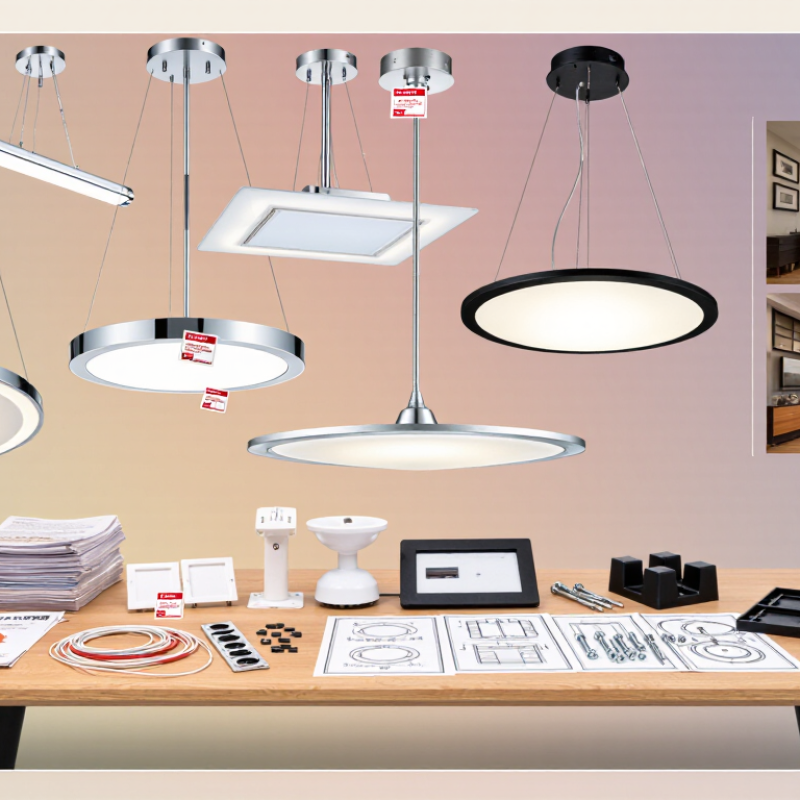
China Top 10 Lighting Suppliers With Local Safety Certifications

Time:2026-09-30 Author:Liam
0%

Choosing a lighting supplier involves more than comparing prices or browsing polished product photos. A ceiling fixture may look identical online, yet differ in wiring, labeling, test documentation, or certification scope. Those details matter when products are installed in homes, offices, hotels, and commercial spaces.

This guide introduces ten China-based lighting suppliers and considers their experience, product focus, and available safety-certification information. Certification requirements vary by destination, product type, and installation conditions, so a certificate for one model should not be assumed to cover every product. Ask suppliers for current reports and verify that model numbers match the fixtures you plan to purchase. Small detail. Important difference.

How to choose lighting complying with local regional safety certifications depends on the destination market, the product category, and the evidence a supplier can provide. Check labels, test reports, and certification databases where available. Clarify who handles testing, documentation updates, and changes to components. A supplier’s claims can be useful, but they are not a substitute for independent verification. This overview offers a practical starting point, not a guarantee; some information may need direct confirmation before procurement.

China Top 10 Lighting Suppliers With Local Safety Certifications

Understanding Local Safety Certifications for Lighting Products

Local safety certification helps buyers judge whether a lighting product has been assessed for the market where it will be sold. Requirements can differ by country, product type, voltage, and intended use. A ceiling fixture and a low-voltage desk lamp may need different evidence. Details matter.

When reviewing a supplier, compare the certificate and test report with the exact product model, electrical rating, and factory shown in the quotation. Check the issuing body, document date, and whether the certificate covers the destination market. A familiar-looking mark alone is not enough. Ask for clear copies and confirm important details with the relevant certification body or qualified local specialist. Keep the model number consistent across labels, manuals, and shipping documents; even a small mismatch can delay a review.

Paperwork is rarely perfectly tidy. A scan can look convincing, yet still leave a gap. It is worth asking one more question before production begins.

Good suppliers can explain what was tested, which components were included, and whether design changes affect the existing approval. For example, changing a driver or plug may alter the product’s safety assessment. Certification does not replace incoming inspection: check label legibility, wiring condition, and packaging protection on delivered samples. Buyers should also confirm that translated instructions match the shipped version. The process takes time, but a careful document check can prevent avoidable surprises.

How Lighting Suppliers Are Evaluated and Ranked

Lighting suppliers are evaluated through evidence, not polished catalog pages.

A credible review checks whether products carry safety certifications accepted in the target market. Inspect certificate numbers, issuing bodies, product models, and validity dates. The paperwork should match the exact fixture being offered. Details matter.

Technical performance is assessed alongside compliance. Reviewers may examine insulation, grounding, heat management, ingress protection, and electrical test reports.

Sample units can reveal loose terminals, uneven finishes, or labels that are hard to read. These checks are useful, but one sample cannot represent every production batch. That limitation should be stated, not hidden.

Ranking also considers manufacturing consistency, traceability, warranty terms, and the clarity of technical support. Factory records and quality-control procedures help show whether standards are followed beyond a single inspection.

Local certification requirements differ, so a certificate accepted in one region may not satisfy another. The strongest evaluations explain their criteria and distinguish verified documents from supplier claims. Scores still involve judgment. A small supplier with limited public records may be overlooked, even when its products perform well. Reviewers should note missing evidence and avoid treating an incomplete file as proof of poor quality.

China’s Top 10 Lighting Suppliers with Local Safety Certifications

China’s Top 10 Lighting Suppliers with Local Safety Certifications should be judged by traceable evidence, not catalogue claims. For products covered by China’s compulsory certification rules, check the CCC status and confirm that the certificate matches the exact model. Ask for test reports referencing applicable GB 7000 safety standards. A polished sample proves little if the production unit carries a different driver or wiring layout.

Energy performance also deserves careful checking. The U.S. Department of Energy’s Energy Saver guidance says LED bulbs use at least 75% less energy and last up to 25 times longer than incandescent bulbs. These figures are useful benchmarks, not guarantees for every fixture. Compare rated wattage, lumen output, colour temperature, and declared lifetime against independent test documents. Small details matter.

For a shortlist of ten suppliers, request certificate numbers, issuing-body details, and recent factory quality records. Match product labels to the paperwork, then inspect a sample for secure terminals, clean seals, and consistent light output. Still, a valid certificate cannot guarantee every shipment. Batch control can be uneven, and documents may not reflect later design changes. That gap is worth discussing openly before placing a large order.

China’s Top 10 Lighting Suppliers with Local Safety Certifications Certification and compliance checklist for evaluating China-based lighting suppliers
No. Market Local mark, scheme, or standard What buyers should verify Important qualification
1 United States UL Listed; relevant luminaire standards may include UL 1598 and LED equipment requirements such as UL 8750. Check the certification directory for the exact product, model, factory, and permitted certification mark. Applicable standards vary by product type. A supplier’s general claim of “UL certified” does not establish that every model is listed.
2 Canada CSA certification; applicable luminaire requirements may include CSA C22.2 No. 250.0. Confirm Canadian certification and that the product label and model details match the certification record. Requirements depend on the product and installation. Verify the specific certification scope rather than relying on a test report alone.
3 European Union / EEA CE marking under applicable EU legislation, including the Low Voltage Directive where applicable; relevant safety standards include EN 60598-1 and applicable part 2 standards. Request the EU Declaration of Conformity, technical documentation, and test evidence for the exact product configuration. CE is a manufacturer’s conformity marking, not a general third-party safety certificate. Applicable legislation and standards depend on the product.
4 European markets ENEC voluntary third-party certification for eligible electrical products. Check the ENEC mark, certification body, product model, and certificate validity in the scheme directory. ENEC is voluntary and does not replace the manufacturer’s obligations under applicable EU legislation.
5 United Kingdom UK conformity marking and applicable UK product-safety requirements. Confirm the applicable rules for the product, destination market, declaration, technical file, and marking. Marking and market-access rules can change and may differ between Great Britain and Northern Ireland; check current official guidance.
6 China China Compulsory Certification (CCC), where the product is included in the applicable compulsory certification catalogue. Verify the CCC certificate and certified product scope against the exact model and manufacturing site. CCC does not apply to every lighting product. Catalogue coverage and implementation requirements determine whether certification is mandatory.
7 Japan PSE marking under Japan’s Electrical Appliances and Materials Safety Act, where the product falls within its scope. Check the product category, required conformity route, Japanese importer responsibilities, and marking details. PSE obligations differ by product classification. Do not assume that one PSE document covers all lamps, luminaires, or power supplies.
8 Australia / New Zealand RCM marking for applicable electrical safety and electromagnetic compatibility requirements. Confirm the responsible local supplier, applicable standards, supporting evidence, and required registration for the product class. RCM is a compliance mark, not a single universal safety test certificate. Requirements depend on product risk classification and local rules.
9 South Korea KC safety certification or other applicable KC conformity route for regulated products. Verify the product category, certificate or registration record, model coverage, and Korean labeling requirements. The required route depends on the product’s classification under Korean regulations; confirm the current category before shipment.
10 India BIS certification or registration under applicable compulsory requirements for covered lighting products. Check whether the exact lamp, luminaire, or component is covered by a current order and verify its BIS record. Coverage is product-specific and may change through regulatory orders. Confirm the current requirement for the intended product and sale date.

This table is a market-by-market procurement checklist, not a verified ranking of individual suppliers. It does not claim that any particular supplier or product holds these marks. Always verify certificates and registrations against the exact model, factory, destination market, and current official requirements.

Comparing Product Ranges, Markets, and Certification Coverage

A useful comparison of ten lighting suppliers starts with the products they actually make. Some focus on indoor panels and downlights, while others offer streetlights, high-bay fixtures, or landscape fittings. Check whether the range includes matching drivers, controls, and replacement parts. These details matter when a project needs consistent color temperature across rooms or dependable spares several years later. Ask for model-specific datasheets, not just a broad catalog. Catalogs can look more complete than production reality.

Markets shape certification coverage. A supplier may provide test reports for one product family but not every wattage or configuration. Confirm the certificate holder, model numbers, issuing body, and validity directly against the documents. Local requirements can differ between markets, even for similar fixtures. Also check whether the stated certification covers the driver and other supplied components. Small details count. A regional distributor’s paperwork may not cover a custom order. Request samples and inspect labels, wiring terminals, and packaging before approving bulk production. This takes time, and I would not skip it. One practical comparison sheet can track product range, target markets, certificate scope, and lead time side by side.

How to Verify Supplier Certifications Before Purchase

Before purchasing lighting products, verify the certificate against the exact model number, not just the supplier’s company name. Ask for the complete certificate and test report, then confirm the issuing body, applicable standard, product scope, and validity dates. Check the issuing body’s public directory or contact it directly. A cropped logo or a certificate for a similar-looking fixture is not enough. Compare the model and factory details with the quotation and product label. Small mismatches matter.

This check is useful beyond paperwork. The OECD and EUIPO estimated that counterfeit goods represented up to 2.5% of world trade in 2019; that figure does not measure false certificates, but it shows why claims deserve scrutiny. For local safety marks, confirm acceptance in the destination market with the relevant authority or an accredited testing body. Also ask whether changes to drivers, wiring, or housing affect the tested configuration. A scan is not proof. One weak point in many checks is relying on the supplier’s explanation alone. Keep dated copies of records and clarify who will notify you if certification status changes.

FAQS

Why should a lighting certificate match the exact product model?

Different models may use different drivers, plugs, or wiring. Match the model number, electrical rating, and factory to the documents. Small mismatches matter.

What details should buyers check on a safety certificate?

Check the issuing body, certificate number, document date, and destination market. Ask for a clear copy and verify uncertain details with a qualified local specialist. Scans can leave gaps.

Does a certificate guarantee every shipment will be consistent?

No. A certificate covers specific evidence, not every delivered unit. Inspect samples and review factory quality records. Batch control can vary.

Which sample details are worth inspecting?

Look for secure terminals, readable labels, clean seals, and protected packaging. Check the wiring and light output, too. One sample has limits.

Can a product change affect its existing approval?

Yes. Replacing a driver or plug may affect the safety assessment. Ask whether design changes require updated documents before production begins. Worth checking twice.

How can buyers check energy performance claims?

Compare wattage, lumen output, colour temperature, and stated lifetime with test documents. LED benchmarks are useful, but they do not guarantee every fixture’s performance.

What else helps evaluate a lighting supplier?

Review traceability, quality-control records, warranty terms, and technical support. Clear criteria help separate verified documents from supplier claims. Scores involve judgment.

Why should labels, manuals, and shipping documents agree?

Consistent model numbers make reviews easier and may help prevent delays. Confirm translated instructions match the shipped product. Paperwork is rarely tidy.

Conclusion

This article presents a practical guide to China’s top 10 lighting suppliers that provide products supported by local safety certifications. It explains why regional certification requirements matter, including electrical safety, energy efficiency, electromagnetic compatibility, and installation standards. Suppliers are evaluated according to certification validity, product quality, manufacturing capability, market experience, documentation, and ability to support different application environments. The article also compares their product ranges, target markets, certification coverage, and suitability for residential, commercial, industrial, and outdoor projects.

For buyers, How to choose lighting complying with local regional safety certifications depends on identifying the destination market, confirming the correct certification category, checking product markings, and requesting complete test reports and certificates. The final section offers a verification checklist to help purchasers confirm that certifications match the specific model, manufacturer, and production site. By following these steps, buyers can reduce compliance risks, improve procurement transparency, and select lighting products that are safer and more suitable for regional use.

Liam

Liam

Liam is a dedicated marketing professional with a profound expertise in the industry, where he excels at highlighting the unique advantages of our core products. With a keen understanding of market trends and consumer needs, Liam frequently updates our company’s professional blog, providing......